Category: Uncategorized

  • A message from our Executive Director

    2019-07-11

    COLUMBUS, OH — During a recent quality control review, we discovered some AEMT examination forms (versions) recently in circulation included a small number of questions that an AEMT candidate may not be expected to correctly answer. 

    We take seriously our mission of protecting the public and our commitment to offer fair examinations to all candidates. We reviewed the responses from every candidate who had a failed examination attempt on one of these examination forms to determine if any of the questions at issue could have possibly impacted any candidate’s success on the examination.   

    We apologize for this error and we are going to make this right for all AEMT candidates who may have been affected. We are taking steps immediately to provide solutions for each AEMT candidate based on their individual situation.

    The public was never at risk as a result of this incident. No one was certified who should not have been certified.  Rather, a few AEMT candidates were administered questions that potentially could have negatively impacted their success with the examination. We are confident in this conclusion because the questions at issue were more difficult than should have been administered to an AEMT candidate.   

    Out of an abundance of caution, we performed a comprehensive review of the other examinations offered by the National Registry. Our review determined that the EMR, EMT and Paramedic examinations were not impacted by the error.

    Furthermore, the review confirmed that our cognitive examinations are fair, reliable and legally defensible. Despite this, we are taking additional, precautionary quality control steps to ensure that the errors that happened with AEMT will not happen with any other examination administered by the National Registry. 

    We appreciate your partnership with us and want to assure you that we take this situation very seriously.  Measures have been taken and additional processes are being put in place to prevent this type of issue from happening again in the future.  

    About the National Registry of Emergency Medical Technicians

    Since its founding in 1970, the National Registry of Emergency Medical Technicians (NREMT) has offered the nation assurance that the men and women providing emergency treatment in the out-of-hospital setting are capable of providing the care that patients and their loved ones deserve. As the Nation’s EMS Certification organization, the NREMT provides psychometrically-valid proof of entry-level competence for Nationally Certified EMS personnel through rigorous cognitive and psychomotor examinations. National EMS Certification is offered at four levels and must be maintained biennially by demonstrating continued education and skills competence. To date, the NREMT has certified more than 1.8 million EMS professionals. To learn more, please visit the National Registry.

    Media Contact:

    Shane Cartmill
    Communications & Marketing Manager
    scartmill@nremt.org

  • The National Registry of EMTs Releases New iOS Mobile App

    2018-04-25

    Platform Offers Streamlined Tracking and Management of National EMS Certification

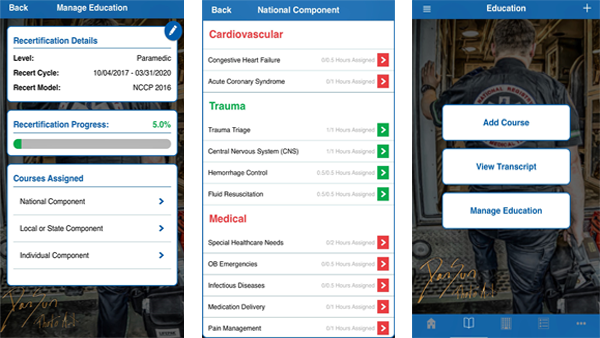
    COLUMBUS, OH – 25 April 2018 — The National Registry of EMTs (National Registry) today announced its first mobile app is now available for EMS personnel to efficiently manage all components of their continuing education and recertification. Compatible with iOS devices, the National Registry mobile app allows EMS providers, training officers, and medical directors to track education, manage agency affiliations, verify skills and recertify.

    ” The launch of the new National Registry iOS app is an exciting milestone for us as we’re dedicated to making National EMS Certification processes easy for every level of EMS professional, from providers to leadership,” said Drew Dawson, Interim Executive Director for the National Registry. “Our IT staff has been diligently working to produce a mobile platform that is intuitive and user-friendly, allowing Nationally Certified EMS professionals to effortlessly navigate education and certification”

    The official National Registry mobile app makes it easier for EMS personnel – EMR, EMT, Advanced-EMT and Paramedics – to maintain their National Registry Recertification from any location with their mobile device. Providers can access their personal account via the app on their device and track education, renew certification and manage agency affiliations all in real-time. Specific features include:

    • Managing education for recertification, submitting recertification applications and tracking their status and cycle
    • Accessing transcripts, adding courses and uploading attachments easily, including supporting documentation and certificates
    • Updating account profiles quickly, including personal information and email notifications
    • Viewing, adding, and removing agency affiliations
    • Fulfilling payments securely

    Additionally, training officers and medical directors are given the ability to view agency information and keep up to date with their providers using features including:

    • Viewing agency rosters to identify providers that are due to recertify
    • Managing agency education including adding courses and assigning attendees
    • Signing off on providers’ EMS skills and education quickly and efficiently
    • Approving agency affiliation requests, including inactive and active requests

    All users of the National Registry mobile app can securely sign-in to accounts by using Touch ID or Face ID; search and verify National Registry status with a name or registry number; and directly communicate with National Registry customer service representatives using the app’s contact feature.

    The National Registry mobile app is currently available for iOS devices only and can be downloaded for free from the Apple App Store. An Android version of the app is in production and will be released at a later date. For more information on the app and its features please visit mobile 

    About the National Registry of Emergency Medical Technicians

    Since its founding in 1970, the National Registry of Emergency Medical Technicians (NREMT) has offered the nation assurance that the men and women providing emergency treatment in the out-of-hospital setting are capable of providing the care that patients and their loved ones deserve. As the Nation’s EMS Certification organization, the NREMT provides psychometrically-valid proof of entry-level competence for Nationally Certified EMS personnel through rigorous cognitive and psychomotor examinations. National EMS Certification is offered at four levels and must be maintained biennially by demonstrating continued education and skills competence. To date, the NREMT has certified more than 1.8 million EMS professionals.To learn more about the National Registry please visit NREMT

    Media Contact:

    Shane Cartmill
    Communications & Marketing Manager
    scartmill@nremt.org

     
  • NEW REPORT SHOWS INCREASING TREND OF EMS-ADMINISTERED NALOXONE FOR OVERDOSES

    2018-08-08

    COLUMBUS, OH — A study conducted by researchers with the National Registry of Emergency Medical Technicians (The National Registry) and The Ohio State University Wexner Medical Center shows a significant increase in EMS administration of naloxone during a recent five-year period. Naloxone is a life-saving drug that can quickly reverse the effects of an opioid overdose.

    The report, published in the Morbidity and Mortality Weekly Report, states the rate of naloxone administration events increased by 75.1 percent from 2012 to 2016. That mirrors the nearly 80 percent increase in opioid overdose deaths in the U.S. during the same time.

    “This important work shows the National Registry has an impact beyond the test you take,” said Dr. Robert Swor, Chairperson of the National Registry. “EMS professionals can contribute to and participate in research on a daily basis. The work EMS professionals put into documentation directly contributes to improving public health in our communities.”

    While naloxone administration is not a perfect predictor of an opioid overdose, this report demonstrates that data from the National EMS Information System’s (NEMSIS) National EMS Database could be a valuable tool in finding ways to prevent future overdoses and overdose deaths.

    Dr. Ashish Panchal, the study’s senior author, stressed that EMS professionals should understand and appreciate that their work on the front lines has a much larger impact than they may realize.

    “Our research highlights importance of EMS data in helping to define public health problems – in this case the opioid overdose epidemic, said Dr. Panchal, Research & Fellowship Director for the National Registry and Associate Professor of Emergency Medicine at The Ohio State University. “The data can be used to not only define the problem, but also develop better interventions.

    The National Registry of EMTs has an active research department and a unique EMS Research Fellowship – an opportunity for EMS providers to be trained to perform research while obtaining a doctoral degree at The Ohio State University. Under the direction of Dr. Panchal, the research team partnered with researchers at National Highway Traffic Safety Administration and the Centers for Disease Control and Prevention to perform this work.

    The MMWR and the complete study can be found here: LINK

    About the National Registry
    Since its founding in 1970, the National Registry of EMTs (National Registry) has offered the nation assurance that the men and women providing emergency treatment in the out-of-hospital setting are capable of providing the care that patients and their loved ones deserve. As the Nation’s EMS Certification organization, the National Registry provides psychometrically-valid proof of entry-level competence for Nationally Certified EMS personnel through rigorous cognitive and psychomotor examinations. National EMS Certification is offered at four levels and must be maintained biennially by demonstrating continued education and skills competence. To date, the National Registry has certified more than 1.8 million EMS professionals. To learn more about the National Registry please visit www.nremt.org.

    NEW REPORT SHOWS INCREASING TREND OF EMS-ADMINISTERED NALOXONE FOR OVERDOSES

    Media Contact:

    Shane Cartmill
    Communications & Marketing Manager
    scartmill@nremt.org

  • Rob Wagoner Recognized with the 2017 Rocco V. Morando Lifetime Achievement Award

    2018-04-03

    Former National Registry COO Honored for EMS Leadership
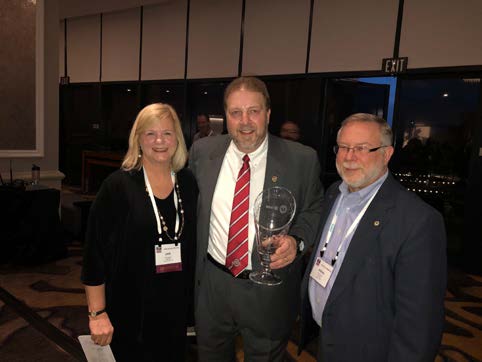
    From Left to Right: Debbi Cason, Rob Wagoner and Dennis Rowe, after Wagoner was presented with the Rocco V. Morando Award at the 2018 NAEMSP Annual Meeting in San Diego.

    COLUMBUS, OH – 3 April 2018 — The National Registry of EMTs (National Registry) announced Rob Wagoner as the recipient of the 2017 Rocco V. Morando Lifetime Achievement Award. The award, presented by the National Association of Emergency Medical Technicians (NAEMT) and sponsored by the National Registry, is a prestigious honor recognizing a lifetime of commitment, contribution and leadership to Emergency Medical Services (EMS). The presentation was made during the NAEMSP Annual Meeting on Jan. 13, 2018.

    “For over three decades, Rob has demonstrated an unwavering commitment to the EMS industry,” said Deb Cason, Immediate Past Chair of the National Registry Board of Directors. “His work with the National Registry helped advance our mission to maintain the integrity of the EMS profession, and we are proud to recognize his contributions as he continues to promote safe EMS practices and improve patient care.”

    Wagoner has dedicated his entire professional life to the improvement of EMS with many impactful contributions. After beginning his career as a paramedic and EMS educator, he joined the National Registry in 1987 as the advanced level certification coordinator and worked his way up to chief operating officer, where he served until 2017. During his time at the National Registry, Wagoner played an integral role in the development and maturation of safe EMS practices, specifically in the areas of cognitive and psychomotor testing through national certification.

    As an industry leader, Wagoner has taught educators, state officials, and EMS providers to strive for better patient care, and worked with EMS regulatory systems to ensure that fair standards of care were met. Wagoner has consistently advocated for evidence-based changes for clinical care and supported research that verifies these changes, and his leadership and selfless giving of his time, talent, and expertise has advanced EMS as a profession.

    “Rob Wagoner’s dedication to improving the education and training of EMS practitioners through his work at NREMT is greatly appreciated,” said NAEMT President Dennis Rowe. “His life-long commitment to quality EMS patient care was recognized as the 2017 recipient of the Rocco V. Morando Lifetime Achievement Award.”

    Named after the inaugural recipient and founding NAEMT member, Rocco V. Morando, the Lifetime Achievement Award was first presented 30 years ago in Mississippi, honoring significant contributions made by EMS professionals in the forms of advancement, leadership and education.

    About the National Registry
    Since its founding in 1970, the National Registry of EMTs (National Registry) has offered the nation assurance that the men and women providing emergency treatment in the out-of-hospital setting are capable of providing the care that patients and their loved ones deserve. As the Nation’s EMS Certification organization, the National Registry provides psychometrically-valid proof of entry-level competence for Nationally Certified EMS personnel through rigorous cognitive and psychomotor examinations. National EMS Certification is offered at four levels and must be maintained biennially by demonstrating continued education and skills competence. To date, the National Registry has certified more than 1.8 million EMS professionals. To learn more about the National Registry please visit www.nremt.org.

    About NAEMT
    Formed in 1975 and more than 65,000 members strong, the National Association of Emergency Medical Technicians is the only national association representing the professional interests of all emergency and mobile healthcare practitioners, including emergency medical technicians, advanced emergency medical technicians, emergency medical responders, paramedics, advanced practice paramedics, critical care paramedics, flight paramedics, community paramedics, and mobile integrated healthcare practitioners. NAEMT members work in all sectors of EMS, including government agencies, fire departments, hospital-based ambulance services, private companies, industrial and special operations settings, and in the military.

    Rob Wagoner honored with Rocco V. Morando Award

    Media Contact:

    Shane Cartmill
    Communications & Marketing Manager
    scartmill@nremt.org

  • NATIONAL REGISTRY LAUNCHES THE NATIONAL EMS-ID

    2020-02-05

    THE NATIONAL REGISTRY OF EMERGENCY MEDICAL TECHNICIANS DISTRIBUTES THE FIRST EMS-ID.

    COLUMBUS, OH —On Thursday, January 23, the National Registry of Emergency Medical Technicians made history by officially launching the National EMS-ID number system. The first national EMS-ID was ceremonially issued to the National Registry’s Chief Operating Officer, Donnie Woodyard, Jr., a Nationally Registered Paramedic since 1997.

    “Launching the EMS-ID is a significant milestone for the EMS profession, the national EMS system, and the National Registry. As we celebrate the 50th anniversary of the National Registry, part of our heritage was to facilitate a national EMS system in the United States by keeping a Registry of EMS personnel; the EMS-ID is another way of fulfilling our organization’s mission,” said Bill Seifarth, the Executive Director of the National Registry of EMTs

    Woodyard was issued the first EMS-ID because of his work and dedication to the project.

    An interview with Donnie Woodyard, Jr., about the EMS-ID.

    What is the National EMS ID?

    The EMS-ID is a unique 12-digit identification number issued for free to all EMS professionals and students seeking to enter the profession. The EMS-ID number is automatically generated by the National Registry when an individual first creates an account. For the nearly two-million EMS professionals that created an account prior to January 23, 2020, an EMS-ID is being retroactively created.

    The EMS-ID is randomly generated and the number does not contain any encoded data about the EMS professional. The EMS-ID was modeled after the National Provider Identifier (NPI) issued by the Centers for Medicare and Medicaid Services for physicians.

    What’s the difference between an EMS-ID and a National Registry number?

    Since 1970, the National Registry has issued a unique National Registry Number (NR Number) when an individual becomes certified. Although National Registry Numbers are unique to an individual, they are not static. For example, all Advanced-EMTs and Paramedics will have multiple valid National Registry numbers issued during their career – first as an EMT, then as a Paramedic. National Registry Numbers are not going away; they are linked to the specific certification earned. However, National Registry numbers were never designed to be a unique identifier and because the numbers change with time, it is difficult to cross-reference databases with only a National Registry number.

    The EMS-ID number, is issued once and does not change or expire. The EMS-ID number is like a master account number, individual certification numbers will each be linked to the EMS-ID.

    Why is an EMS-ID number needed?

    When the Interstate Commission for EMS Personnel Practice requested the National Registry to stand-up a database to meet the needs of the EMS Compact, it was quickly evident that a mechanism was required to link EMS licensure records across multiple state licensure systems, platforms, and the National Registry. Due to the privacy concerns surrounding the use and transmission of Social Security Numbers, combined with the rare opportunity to build a new database for the EMS Compact, we leveraged the opportunity to create a new, national, unique identifier for the EMS profession.

    The implementation of the EMS-ID marks a progression of the EMS profession. In today’s work environment, EMS personnel are part of a national EMS system – a system where EMS personnel are mobile and can cross state borders during the progression of their career. During my own career, I trained as an EMT in Virginia, as a Paramedic in Ohio, and have been licensed in five different states. In 2018, the National Registry looked at a sample of 900 EMT students that completed their training in one specific state, and then determined the students had home residency addresses in 26 different states. After completing education and National EMS Certification, we know that EMS personnel are frequently licensed in multiple states. We also know that the EMS Compact – which has been enacted to law in 18 states and is expected to be operational by this summer – facilitates a multi-state privilege to practice for EMS personnel.

    All of these examples require states, agencies, educational institutions, employers and the National Registry to share information related to licensure or certification status of the EMS provider. With the EMS-ID, in the near future, employers will have the ability to enter that unique EMS-ID number and not only verify an individual’s National Registry status, but also their current EMS licensure status in the 18 states participating in the EMS Compact.

    Even for the EMS professional that is not licensed in multiple states or performs cross-border operations, the introduction of the EMS-ID will – in the future – streamline the process of transferring continuing education course information earned in multiple states or while attending regional or national conferences to the National Registry and/or the systems used by states to track continuing education. The EMS-ID will be the key that will enable these databases to share this information. This will eventually eliminate the current practice of duplicate data entry.

    The EMS-ID will also provide State EMS Officials a new tool as they protect the public and regulate the EMS system in their jurisdictions. Self-regulation is a fundamental element of any profession, especially that of a medical profession. In the future, the EMS-ID will make it easier for State EMS Officials to search, discover, research and share discipline actions for EMS personnel, including actions recorded in federal databases such as the HHS-OIG exclusion list, the sex-offender registry, and the Social Security Administration’s death records information.

    In addition to all these uses, the EMS-ID will provide key information on the total EMS Workforce in the United States. For the first time in the history of EMS in the United States, there will be a mechanism to identify and de-duplicate the EMS workforce. Although the National Registry’s database provides information on how many people are entering the profession (in 48 states), currently no one knows exactly how many unique EMS providers are currently licensed in the United States (because State EMS licensure data cannot be de-duplicated across states).

    An example of how the EMS-ID will link together information from multiple trusted sources is demonstrated in the chart below.

    National EMS-ID
    National Registry
    • EMT Number (Lapsed)
    • Paramedic Number (Expired)
    • Paramedic Number(Current)
    State A License
    • Current License Number
    • Expired License Number
    State B License
    • Current License Number
    • Expired License Number
    EMS Compact
    • Multistate Privilage to Practice
    EMS Education
    • CAPCE Approve Continuing Education
    • Initial EMS Education
    • Conferences
    • State Specific Education
    Federal Data
    • HHS-OIG List of Excluded Individuals
    • Social Security Death Notification List
    • Sex Offender Registry

    What happens if an individual’s National Registry certification lapses or for EMS providers that were never certified by the National Registry?

    National Registry certification is not required for an EMS-ID to be issued. When an individual creates an account with the National Registry, an EMS-ID is automatically generated. We are also working with individual states – starting with the EMS Compact states – to de-duplicate the state licensure data against the national EMS database, and then issue EMS-ID numbers for anyone identified in the state system that is not already in the national EMS database.

    Is the EMS-ID private? How do you think it will be used in the future?

    No, the EMS-ID is designed to a public number. In the future, as the EMS-ID is fully implemented, I would anticipate others to start incorporating the EMS-ID into daily operations. For example, employers may choose to incorporate the EMS-ID as a scannable barcode on name badges: one scan and the employer can identify the individual and verify their current licensure status in multiple states. For regional or national disasters, rapid verification of EMS personnel’s licensure and certification status could be nearly instantaneous. For EMS Education programs, students will be issued an EMS-ID number, that could be used by proctors to validate that the student is not only authorized as an EMS Student, but authorized by the program to perform individual procedures or skills. As ET3 (Emergency Triage, Treat, and Transport) and Community Paramedicine models continue to develop in parallel with other funding models, a single national identifier for EMS personnel will certainly play an important role.

    How do individuals find or claim their EMS-ID and use it?

    EMS-IDs are not ready to be displayed publicly yet. Today is the exciting starting line of this initiative, not the finish line. The process of implementing the EMS-IDs and working with States to incorporate the EMS-ID into their systems will take time. However, in coordination with the anticipated launch of the EMS Compact later this year, we expect the EMS-ID will be part of the National Registry’s website and a number of state licensure systems by June (2020).

    About the National Registry of Emergency Medical Technicians

    For 50 years, since its founding in 1970, the National Registry of EMTs (National Registry) has offered the United States assurance that the men and women providing emergency treatment in the out-of-hospital setting are capable of providing the care that patients and their loved ones deserve. As the Nation’s EMS Certification organization, the National Registry provides psychometrically-valid proof of entry-level competence for Nationally Certified EMS personnel through rigorous cognitive and psychomotor examinations. National EMS Certification is offered at four levels and must be maintained biennially by demonstrating continued education and skills competence. To date, the National Registry has certified more than 1.8 million EMS professionals. To learn more about the National Registry please visit nremt.org.

    Media Contact:

    Shane Cartmill
    Communications & Marketing Manager
    scartmill@nremt.org

  • First Provider Renews National EMS Certification in 2017-18 Season

    2017-10-04

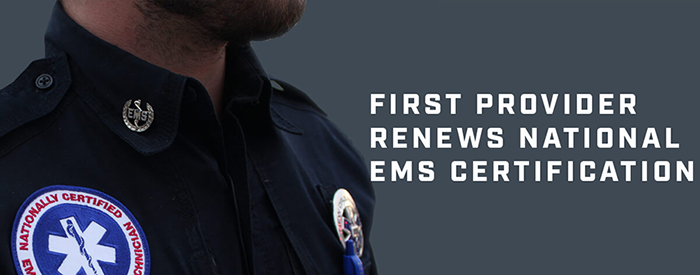
    COLUMBUS, OH — 4 October 2017 — The National Registry of Emergency Medical Technicians is proud to recognize Mr. Drew Piehl as the first person to renew his National EMS Certification during the 2017-18 recertification season.

    Mr. Piehl, an Emergency Medical Technician of Poynette, WI, was the first Nationally Certified EMS professional to successfully complete the recertification process after the 2017-18 recertification period opened on Sunday.

    “It is good to see EMS providers recognize the value of maintaining National EMS Certification,” said NREMT Chief Certification Officer Jeremy Miller. “Congratulations to Mr. Piehl for his initiative and dedication.”

    National EMS Certification is offered at four levels and must be maintained biennially by demonstrating continued education and skills competence.

    Mr. Piehl has been a Nationally Registered Emergency Medical Technician since 2010.

    The recertification period for EMTs, AEMTs and Paramedics opens on October 1 each year and runs until March 31. About 150,000 personnel are due to recertify during the 2017-18 season.

    Mr. Piehl received a commemorative letter from the NREMT in recognition of his diligence.

    About the National Registry of Emergency Medical Technicians

    Since its founding in 1970, the National Registry of Emergency Medical Technicians (NREMT) has offered the nation assurance that the men and women providing emergency treatment in the out-of-hospital setting are capable of providing the care that patients and their loved ones deserve. As the Nation’s EMS Certification organization, the NREMT provides psychometrically-valid proof of entry-level competence for Nationally Certified EMS personnel through rigorous cognitive and psychomotor examinations. National EMS Certification is offered at four levels and must be maintained biennially by demonstrating continued education and skills competence. To date, the NREMT has certified more than 1.8 million EMS professionals.

    ###

    Media Contact:

    Shane Cartmill
    Communications & Marketing Manager
    scartmill@nremt.org

  • NATIONAL REGISTRY CREATES CERTIFICATION PATHWAY FOR EMS FELLOWS & PHYSICIANS

    2020-06-04

    COLUMBUS, OH — The National Registry of Emergency Medical Technicians (National Registry) is pleased to announce a new pathway to National Certification for all board-certified EMS physicians and individuals who have completed an EMS fellowship.

    Those who meet the eligibility criteria and wish to proceed forward with this pathway will follow these steps:

    1. Email support@nremt.org with the subject line EMS Fellow or EMS Physician 
    2. Include the National Registry level (EMT, AEMT, Paramedic) at which you wish to be certified.
    3. Provide proof of board certification as an EMS physician or enrollment in EMS fellowship program.
      1. Examples of acceptable proof include: letter from the approved program, copy of board certificate or transcripts 
      2. A .pdf file format is preferred; A .jpg or .png is acceptable
    4. The National Registry will confirm receipt of documentation and provide next steps to complete the process.  

    The eligibility criteria for National Registry certification requires the completion of a State EMS Office approved or accredited training program. Any EMS physician that can provide verification of enrollment in, or completion of, an approved EMS Fellowship, or current Board Certification in the subspecialty of EMS can seek National Certification as an EMT, AEMT or Paramedic.

    This pathway was created because a review of Physician EMS Certification requirements showed to cover all parts of the National EMS Education Standards.  It was approved at a recent National Registry of EMTs board meeting.

    Anyone with questions should contact support@nremt.org.

    Media Contact:

    Shane Cartmill
    Communications & Marketing Manager
    scartmill@nremt.org

  • National Registry Brings Uniformity to Certification Schemes

    2020-07-09

    COLUMBUS, OH — For several months, the National Registry has committed itself to aligning with leaders in the certification industry and adding greater value to the EMS profession. An important step in that process is updating the certification schemes for each of the Nationally Registered level – Paramedic, AEMT, EMT and EMR.

    The National Registry’s Board of Directors voted to bring consistency and uniformity to certification schemes, as well as aligning all National Registry levels with the current National EMS Scope of Practice Model. The new policy also addresses the need for a reentry pathway for AEMTs.

    “These certification schemes were passed to clearly communicate requirements for certification in a single policy,” said Mark Terry, Chief Certification Officer. “Additionally, the new policy aligns each level with the National EMS Scope of Practice Model and the National Registry’s Practice Analysis, which identified necessary knowledge, skills and abilities for the profession.”

    Among the important highlights:

    • For the first time ever, there is a reentry path for AEMTs whose National Registry has lapsed. 
    • Paramedics now have a clear re-entry path that aligns with national standards, making it easier for those whose National Registry has lapsed.
    • The new certification scheme aligns with the National EMS Scope of Practice Model and the National Registry’s Practice Analysis.

    The policy, with the new certification schemes, goes into effect on July 9, 2020.

    Media Contact:

    Shane Cartmill
    Communications & Marketing Manager
    scartmill@nremt.org

  • The Nation’s First EMS Compact Announces Date for First Official Meeting

    2017-07-28

    INTERSTATE COMMISSION TO BE SEATED

    July 28, 2017 (Falls Church, Va.) The Recognition of EMS Personnel Licensure Compact (REPLICA) participating states announce that the first full meeting will be held on Oct. 7-8, 2017, in Oklahoma City, Oklahoma. Member state representatives will be officially seated on the Interstate Commission for EMS Personnel Practice (Interstate Commission). In addition, the public is invited to participate in a public hearing on Sunday, Oct. 8, 2017, as part of the second day of Interstate Commission’s meeting. REPLICA member states include Alabama, Colorado, Georgia, Idaho, Kansas, Mississippi, Tennessee, Texas, Utah, Virginia and Wyoming.

    Established through the REPLICA legislation, each member state is allocated one seat on the Interstate Commission. The Interstate Commission serves, as the Compact’s governing body and state delegates are representatives of their state’s EMS authority. Released in 2014, REPLICA’s model legislation creates a formal pathway for the licensed individual to provide pre-hospital care across state lines under authorized circumstances.

    Doug Wolfberg, attorney with Page, Wolfberg and Wirth, will serve as the group interim chairperson until member states adopt bylaws and elect officers. Rick Masters, special counsel for REPLICA from the National Center for Interstate Compacts will lead the meeting along with REPLICA Advocate Sue Prentiss.

    The meeting will be held at the Oklahoma Museum of Fine Arts, starting Saturday Oct. 7, at 1:00 p.m., and continuing on Sunday, Oct. 8, 8:00 a.m.-4:30 p.m. A public hearing for the purposes of adopting an administrate rule on rulemaking will be held Oct.8, at 9:30 a.m. All meetings are open to the public and are available via virtual participation. For more information contact Sue Prentiss, advocate for REPLICA, at (603) 381-9195 or by email at Prentiss@emsreplica.org. Meeting and public hearing notices will be available on emsreplica.org
     

    ###

    Media Contact:

    Shane Cartmill
    Communications & Marketing Manager
    scartmill@nremt.org

  • REPLICA meets Goal. Interstate Compact becomes official!

    2017-05-08

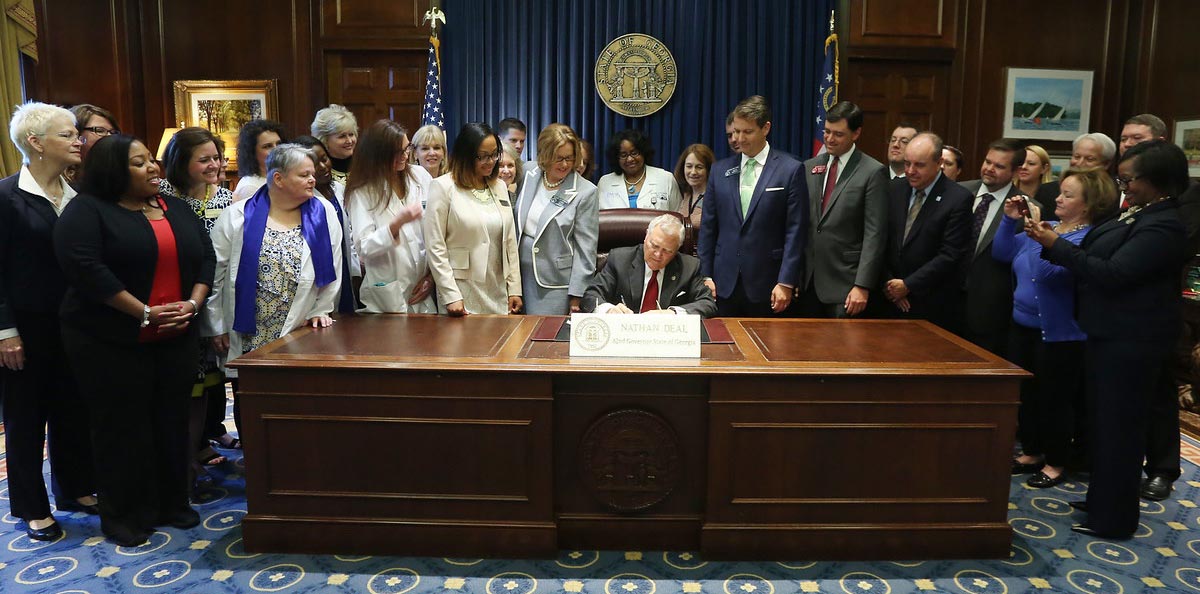
    May 8, 2017 (Columbus, OH) With the 10th member state enactment, the Recognition of Emergency Medical Services Licensure Interstate Compact (REPLICA) has become official. Governor Nathan Deal of Georgia signed Senate Bill 109 on today activating the nation’s first EMS licensure compact. States that have passed REPLICA to date include: Colorado, Texas, Kansas, Virginia, Tennessee, Idaho, Utah, Mississippi, Wyoming and Georgia.

    Released in 2014, REPLICA’s model legislation creates a formal pathway for the licensed individual to provide pre-hospital care across state lines under authorized circumstances. According to Keith Wages, president of the National Association of State EMS Officials (NASEMSO), “REPLICA represents a collective, nationwide effort to address the problems faced by responders when needing to cross state borders in the line of their duties.” Wages highlighted the compact’s abilities to “increase access to healthcare, reduce regulatory barriers for EMS responders, and place an umbrella of quality over cross border practice not previously seen in the EMS profession.” Wages also noted that the partnership with the National Registry of Emergency Medical Technicians (NREMT) has been essential during the advocacy and implementation phases. “We are grateful for their continued support and contributions.”

    Through funding provided by the Department of Homeland Security (DHS), NASEMSO led 23 EMS, fire, law enforcement organizations and associations as well as key federal partners in the design and drafting of REPLICA. The National Registry of EMTs (NREMT) currently provides funding to finalize the development of the Commission.

    The compact calls for establishment of an Interstate Commission with each state that has passed REPLICA holding a seat, as well as a national EMS personnel coordinated database. Member states will be able to rapidly share personnel licensure information, develop policy focused only on cross border EMS practice, and hold EMS personnel originating in other states accountable in an unprecedented way. The National Registry of EMT’s (NREMT) has committed to the development and hosting of the coordinated database.

    Twelve national associations and organizations support REPLICA. Three states have REPLICA bills under consideration in their legislative sessions. Learn more about replica here

    Colorado – Georgia – Idaho – Kansas – Mississippi -Tennessee – Texas – Utah – Virginia – Wyoming

    ###

    Media Contact:

    Shane Cartmill
    Communications & Marketing Manager
    scartmill@nremt.org