September 1, 2016 – Effective immediately, continuing education hours can be earned for your next NREMT recertification as soon as you complete your current recertification. Previously, hours would not count for the next recertification period unless they were earned after the March 31 expiration date—regardless of when you recertified. Now, hours begin to count for the next period immediately.
For example: Complete your recertification on October 1, and you can count education beginning October 2 for the next recertification cycle.
July 2016 – The NREMT is excited to announce a commitment to supporting REPLICA, the Recognition of EMS Personnel Licensure Interstate Compact project. Every day, EMS practitioners cross state lines while caring for patients, responding to disasters, or performing other work duties. These routine occurrences present an assortment of legal, regulatory and compliance challenges: Each state has laws protecting and regulating the EMS profession, so before an individual can practice—or in most states, even utilize titles such as EMT or Paramedic—the individual must complete the credentialing or license process specific to that state.
As a result, many of the nation’s EMS professionals maintain licenses and certifications in multiple states. Not only is this a cumbersome (and often expensive) process, this approach only works for individuals that anticipate far in advance the potential need for them to utilize their EMS profession in a secondary state. However, EMS personnel often encounter the need to practice across state lines with little to no advanced notice.
REPLICA provides a mechanism for EMS practitioners to easily overcome this barrier. When a state signs on to the EMS Compact—by the passage of a law adopting REPLICA—EMTs or Paramedics that are licensed/certified in that state are extended a privilege to practice in the other Compact states.
In addition, the compact also provides the legal framework for the State’s EMS regulatory agency to share enforcement actions or disciplinary actions taken with other Compact states.
Currently, states rely primarily on self-disclosure of disciplinary actions when new or renewal applications are submitted. A single, reliable database of these reports does not currently exist.
As an extension of the NREMT’s mission to protect the public and nation through national EMS certification, the NREMT will be providing this database, as well as the infrastructure and information technology solutions that are vital to the EMS Compact. In addition to serving as a repository for state officials to identify individuals whose license/certification has been revoked, suspended or restricted, the database will also provide a central location for the management of credential, licensure and privilege to practice information.
REPLICA was developed jointly between the Council of State Government’s National Center for Interstate Compact, The National Association of State EMS Officials, and a drafting team of subject matter experts. The compact was also reviewed and vetted extensively through a larger advisory committee, including the NREMT.
** Disclaimer: This news article is maintained for historical purposes only. The information contained here does not reflect the current model or recent changes. For current Recertification information, please visit: https://www.nremt.org/document/recertification**
In 2012, the NREMT introduced a new recertification model, the National Continued Competency Program (NCCP). While reduced hours are just one of the many benefits with the new model, the change allows a platform for evidence-based medicine to reach EMS professionals all over the country. Additionally, it gives state and local agencies the control to dictate a portion of the recertification requirements and provide a foundation for the EMS professional to embrace life-long learning.
The new model streamlines the recertification process into three categories of continuing education: National, Local, and Individual. The National requirement (NCCR) or the ‘new’ refresher makes up 50% of the new recertification model. Topics will be updated every four years and will reflect current trends and changes in EMS. The Local requirement (LCCR) accounts for 25% of your recertification. These hours will be decided by local entities, including the state, region or agency. Finally, the Individual requirement (ICCR) will complete the remaining 25% of your recertification. Much like the “additional continuing education” section for the traditional model, an individual is free to take any EMS related education.
Another benefit of using this model is an increase in the amount of distributive education that can be used towards your recertification. Distributive education is defined as an approved Commission on Accreditation for Pre-Hospital Continuing Education (CAPCE) (Formerly known as CECBEMS)F3 course. You can now take just over half of your hours as distributive education. This breaks down to allow for 1/3 of your national component, 2/3 of your local component, and your entire individual component to be distributive education (Table 1).
States across the nation are beginning to implement this new recertification model. Please check with your state EMS office for information on the upcoming implementation in your state. The NREMT website has NCCP Recertification Resources available to assist you and your state through the transition to the new model.
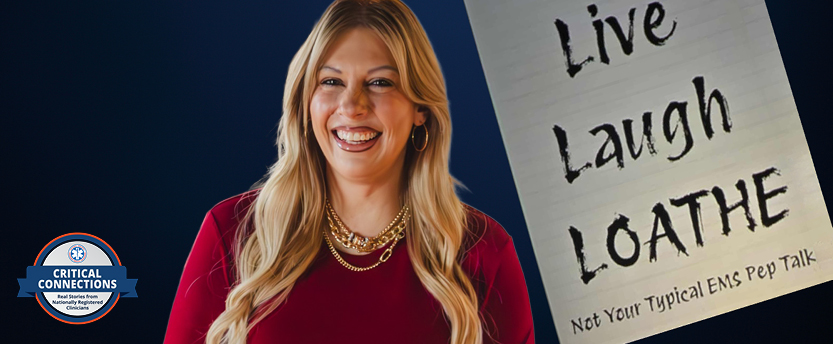
There are moments in a person’s life that last far beyond the moment itself, and for Liz Harney, one of those moments happened when she was at her lowest. She had relapsed after a year of sobriety and had spent so long in a contorted position that she developed rhabdomyolysis and could no longer walk. Her kidneys were failing. She was defensive, ashamed, and overwhelmed, surrounded by EMS Clinicians urging her onto a stretcher, unable to understand that she physically could not move.
Through the chaos, one Paramedic approached her and knelt down beside her. “She just stopped what she was doing and looked at me.” The Paramedic took Liz’s hands and looked directly into her eyes. “There’s still life behind those eyes. You can do this. You’re going to be able to get through this.”
Liz remembers something else about that moment. She believed her. “When you’re at that level, you can kind of sense it,” Liz said. “You can sense someone being so truly authentic in their words and what they’re saying to you. They’re really, truly talking to you.”
For a woman who had spent years being defined by her addiction, her mistakes, and the worst moments of her life, someone had finally looked past all of it. She saw a human being, and Liz never forgot it.
She Didn’t Just Get Sober, Liz Started Living
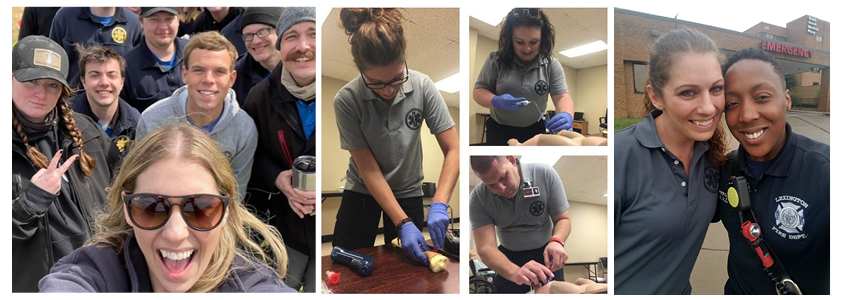
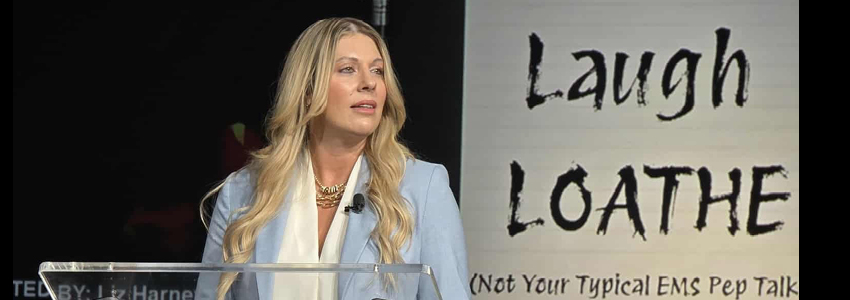
Today, Liz is a Board-Certified Critical Care Paramedic and Community Paramedic, Educator, former Program Director, advocate, national speaker, published author, and co-founder of Paramedic Pathways, a nonprofit supporting future Paramedics through scholarships. She is one class away from a master’s degree in business, recently added another board certification, and is even considering a doctorate.
Degrees and certifications hang on the wall behind her, but another accomplishment means something different. “I had this idea the other day,” Liz shared. “I just had this idea of showcasing all of these hard-earned degrees, and then my one-day chip of being sober. I wouldn’t have any of that if it wasn’t for this.”
Perhaps that is the simplest way to understand Liz. She did not get sober merely to survive. She got sober and chose life, a life she had to rebuild one day at a time. “I just haven’t stopped going,” she said with a laugh. At first, that meant living in a car, then moving into her mother’s basement, working an $11-an-hour job an hour away, attending four or five recovery meetings a week, and staying close to her sponsor. Little by little, she was learning how to build a life that could hold her sobriety.
Sometimes, she explained, it was not even one day at a time. “It was like one hour, one second sometimes.” At that point, survival was the goal. She had no idea that something was waiting around the corner that would give her a reason to dream about what came next.
Finding Something to Live For
Only a few weeks into sobriety, Liz saw a woman at church wearing a shirt that said “Paramedic,” and remembers looking at her and thinking, I want to do that. The thought stayed with her, but then came the questions. Could she do this? Was she legally able to become a Paramedic with her past? What would it take?
She didn’t wait for all the answers. Four months into sobriety, Liz started EMT school, and when she finished, she went straight into Paramedic education. “I had to have a goal,” she said. That goal eventually led her into a career that, as she describes it, “completely reignited the passion in me as a human being.”
Getting there was not easy. Some agencies would not hire her because of her past, and she worried about what people would think if they learned her history and saw what might show up on her background checks. She had worked so hard to build a new life, yet parts of her old one were still following her.
Eventually, one service took a chance on her, and years later, Liz learned just how much of a chance they had taken. Before hiring her, the service had contacted the Kentucky Board to determine whether they could legally do so. They knew her history, and they knew what might appear on a background check. They simply never told her.
They gave her a chance, and Liz made the most of it. That experience became part of what she carried with her into every patient encounter that followed. She knew what it felt like to be judged by your past, but she also knew what it could mean when someone chose to see what was still possible.
The Full-Circle Call
It was not until her first overdose call that everything came full circle. The patient was a young woman whose children were in the back of the house, terrified and screaming while their mother lay unconscious. Liz’s partner was a veteran Paramedic, clinically excellent but, as Liz described him with a laugh, “grumpy.” It was a difficult scene.
When the patient woke up, she was distraught, and she told Liz she had just relapsed after a year of sobriety. Liz did what she needed to do clinically, but she also saw something beyond the call. She saw herself. She knew what it was like to have a year of sobriety behind you and suddenly find yourself back in that place. So, she hugged her.
On the ride to the emergency department, the woman worried about her children and what would happen next. Liz reassured her that there would be steps to take, and that it would be hard, but she could do it. Then, quietly, Liz shared something of her own. She had been there, too. “I had, like, X number of years sober at the time,” Liz recalled. “And she just looked at me like, ‘You did?’”
For Liz, the moment felt like a full circle. Years earlier, someone had looked at her when she was at her lowest and offered her something she desperately needed, hope. Now, Liz was sitting beside someone in that same place, offering it back.
Then the moment changed. At the hospital, a nurse arrived with paperwork for the patient to leave against medical advice and immediately told her that Child Protective Services had already been called. Liz watched the woman go from calm and willing to face what came next to completely overwhelmed. The compassion she had felt on the ride to the hospital seemed to disappear the moment they walked through the doors. The focus shifted to consequences, while the person at the center of it all seemed to disappear.
Liz couldn’t stop thinking about it. Soon, she began noticing the same thing everywhere. Patients struggling with addiction were being treated as though they did not matter, reduced to their diagnosis, their behavior, or the number of times they had called 911. She recognized it because she had lived it. “I was watching patients being treated like they didn’t matter, just like I had been treated like I did not matter for a long time,” Liz says.
Eventually, she could no longer stay quiet. She describes it as an “explosion moment.” People around her could see that she was angry, but they did not understand why. Then, Liz told them the truth. Her truth.
You Can’t Teach Someone to Care, But You Can Show Them What It Looks Like
Liz now carries that experience into her work as an educator, but she learned quickly that empathy cannot simply be assigned as a classroom expectation. “You can’t stand in front of the classroom and just be like, ‘You all need to be nicer,’” she laughed. “That’s not gonna go.” So instead, Liz gave her students an opportunity to understand why it matters.
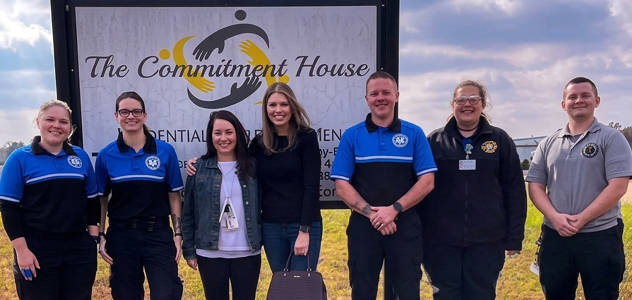
She began bringing them into the “trenches” at an inpatient rehabilitation center. Before each visit, she would share her own story with the people in recovery, explain why she had asked her students to come, and tell them what she hoped they would take away from the experience.
Then she brought the students in, where they sat with people from all walks of life who were fighting their way through recovery. They listened to stories that were deeply personal, painful, and raw. Some students sat one-on-one with people whose lives could have easily been reduced to a diagnosis, a chief complaint, or a label in a patient care report.
Instead, they heard the person behind the story. “There was never a dry eye in the house,” Liz said, and something began to change. Not for everyone, and not all at once, but many students left with a different understanding of the people they would eventually care for. They carried that perspective back into the classroom, into simulations, and eventually, into the EMS services where they worked.
“That’s when you know, like, as a Program Director, that you’re effectively preparing these folks to go out there and see people for who they really are,” she says. “Not just the addiction. Not just the worst moment.” Some became advocates in their own agencies, while others asked their leaders to bring people in recovery into their services so their colleagues could hear those stories, too.
Liz may never know how many patients were treated differently because one of those students once sat in a rehabilitation center and listened, how many Clinicians saw someone differently, or how many patients felt, even for a moment, that the person standing over them actually saw them.
“You can’t even ascertain as to how many people are going to be truly affected by one little…” she says, trailing off before finishing the thought with a smile. One story can change the way someone sees a patient, and that changed perspective can follow a Clinician back to an agency, into a classroom, or onto the next call.
We Never Get to See the Hope
Liz believes one reason EMS struggles to see people with addiction as whole human beings is that Clinicians rarely get to see what comes after the worst moment. “They only ever see an overdose,” she says. “We only ever see the screaming kids. We only ever see the devastation and destruction that it brings.”
What they often do not see is what comes next, the recovery, the families reunited, the homes regained, the careers rebuilt, and the lives slowly put back together. “We never get to see the hope,” Liz said quietly. She wants to change that. “Show your people the hope. Bring in people in recovery.”
Liz encourages EMS leaders to let people in recovery tell their stories and let Clinicians see what is possible on the other side of addiction. Sometimes the most powerful intervention is not a statistic, a protocol, or a clinical skill. Sometimes it is sitting across from someone who has lived through addiction and seeing, firsthand, that recovery is possible. “People underestimate the power of storytelling,” Liz says. She knows because she has lived it.
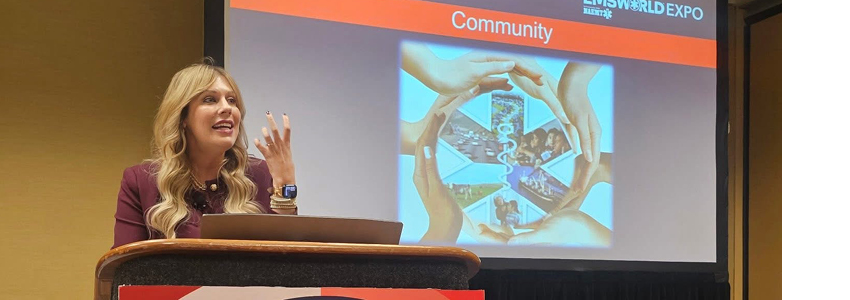
That belief is also part of why Liz is so passionate about community paramedicine. To her, it represents a different way of practicing EMS, one that moves beyond simply transporting a patient, and instead takes the time to understand the person behind the call. “It truly is human,” she said with a smile.
Community paramedicine gives Clinicians the opportunity to build relationships with patients, understand the circumstances affecting their health, and connect them with resources such as food, transportation, housing, insurance, and rehabilitation. Instead of simply arriving during a crisis, Clinicians can listen, follow up, and help patients take a more active role in managing their health, creating opportunities to meet people outside of their worst moment. “It’s improving the perspective that those highly stigmatized patient populations have toward entities like EMS or fire,” Liz says. “It’s a beautiful thing.”
Presence Is an Intervention
Ask Liz what happens when clinical skills grow faster than humanity, and her answer is immediate. “You can do everything clinically right, and you can still cause harm.” For Liz, being present with a patient is not something separate from clinical care, it is part of the care itself.
“People have to understand that their presence is an intervention,” she says. “They’re not going to remember what you did,” Liz says. “They’re not going to remember what medication you drew up, but they are going to remember how you made them feel.” That interaction may have an impact far beyond what a Clinician can see. “Some will never tell you, some are never going to come back, and some are going to change because of you, and you will never know.”
Every patient encounter is an opportunity to remind someone, perhaps at a moment when they have forgotten it themselves, that they are still a person worthy of being seen, heard, and cared for.
There Is a Way
Liz describes herself as a dreamer, but her optimism is not rooted in naiveté. It comes from knowing what it feels like to be told there is no hope and then spending the next decade proving that hopelessness is not the same thing as an ending.
She still remembers a doctor telling her mother that she had a better chance of becoming a brain surgeon than of overcoming a heroin addiction. Those words could have defined who she was, but instead, they became something she carried with her as she built a life the doctor had never imagined for her. “When you are discarded as somebody that there’s no hope for, and then you’re able to come on the other side of that and not just stay at a level, but continue to pursue and succeed,” she says, “you feel like there is literally nothing else in the world you cannot do.”
Liz knows how easily someone can be reduced to the worst thing they have done, the hardest thing they have faced, or the moment when everyone around them has stopped believing they can change. She also knows what can happen when even one person refuses to see them that way. Her optimism is not about pretending the road will be easy, it is about knowing that a difficult road can still lead somewhere. “There is never a no in my vocabulary,” Liz says. “There is a way.”
Beyond the Story
There is a particular vulnerability that comes with becoming known for the hardest chapter of your life, especially when that chapter is the very thing you have spent years transforming into something that can help other people. Liz is beginning to experience that now. As more people hear her story, she sometimes wonders what happens when the story is no longer new, when the shock of it has worn off, and people simply know her as the person who has already told that part of her life.
“Once everybody kind of knows who you are and hears the story, there’s going to come a point where it’s going to be like, ‘Yeah, we know,’” she says. Yet Liz has built a remarkable career since those years, becoming a Paramedic, Educator, Program Director, mentor, advocate, speaker, author, and leader while continuing to learn, grow, and imagine what might come next.
“I have done so much with my career,” she says. “People had no idea about that part of my life.” For years, Liz kept those two parts of herself separate, and now she is learning how to let people see both, the woman who survived addiction and the woman who went on to build a life she once could not imagine. There is still so much more ahead of her.
Leave It Better Than You Found It
When asked what she hopes people understand about the person behind her story, Liz does not point to her degrees or certifications, the stages she has stood on, or the people who know her name. She talks about something much simpler. “I truly believe we all want to enact some sort of good in life,” she said. “Enact some sort of change. Enact some good. Leave this profession, leave this world, leave anything just a tad better than it was found.”
Even something as small as returning a shopping cart can be part of that, she said, laughing as she explained the idea. The example may seem insignificant, but the belief behind it is not. Liz wants to leave things better than she found them, and she wants the people around her to believe they have the ability to do the same.
That belief is there in the way she teaches her students to see patients differently, in the way she advocates for people who have been stigmatized, and in the way she continues to tell a story that once belonged to the most painful years of her life. “If anything comes out of the freaking 10 years of pure hell and loneliness and despair, and the days that I never even wanted to wake up, if I can make something good out of something so bad and somebody else can learn from that, then that’s all worth it.”
Liz does not deny how dark those years were, and she doesn’t romanticize what she went through. They are part of her story, but they will never define her, and they are not where her story ends.
The Ripple
That may be the most meaningful part of Liz’s story. Years ago, someone looked at her when she could barely see a future for herself and saw something she could not yet see, a human being who was still there, still worthy, and still capable of becoming something more.
Liz has spent the years since then carrying that moment forward. She does it with her patients, with her students, with the Clinicians she teaches, and with the people who hear her story and begin to see addiction, recovery, and even their own work a little differently. She may never know exactly where those moments lead, just as the Paramedic who knelt beside her could never have known where her words would eventually take her.
That is the nature of a ripple. One person chooses to see another person differently, and that moment can travel farther than either of them will ever know. For Liz, that is what makes it all worth it. The difficult years, the recovery, the education, the career, the vulnerability of telling her story, and the hope she now tries to give to others are all connected by the same belief that what happens to us does not have to be where our story ends.
Sometimes, the person who was once given a reason to believe in a future becomes the person who gives that reason to someone else. “There is still life behind those eyes.” Liz knows because someone once saw it in hers.
About the National Registry of Emergency Medical Technicians
Guided by our mission to support the EMS profession through partnerships, research, and lifelong assessment of clinical competence, the National Registry was established in 1970 as a non-profit organization and serves as the Nation’s Emergency Medical Services certification organization. It is accredited by the National Commission for Certifying Agencies (NCCA), the accreditation body of the Institute for Credentialing Excellence. The National Registry maintains NCCA accreditation for each of the four certification programs: Emergency Medical Responder (NREMR), Emergency Medical Technician (NREMT), Advanced Emergency Medical Technician (NRAEMT), and Paramedic (NRP). Credentialing protects the public, assures consumers that Clinicians have met standards of practice, advances the EMS profession, and establishes standards of professional knowledge, skills, and practice. Additional information is available at NREMT.org, and BlueSky, TikTok, Facebook, Instagram, LinkedIn, Reddit, and YouTube.
Media Contact: Kelly Schroeder Manager of Integrated Content & Communications kschroeder@nremt.org
Collaborative study aims to clarify how occupational exposures, injuries and stress shape health over time.
COLUMBUS, OH — September 14 — The National Registry of Emergency Medical Technicians today announced the launch of the website for the LIFE Study, the Longitudinal Inquiry into Fire and EMS Health Study, a collaborative research effort designed to better understand the cumulative health risks firefighters and EMS Clinicians face throughout their careers.
Firefighters and EMS Clinicians routinely encounter harmful substances, job-related injuries, workplace violence, and significant physical and psychological stress. These risks may contribute to cardiovascular disease, cancer, and mental health disorders, but their combined effects over time remain poorly understood. Although individual occupational risks have been studied, no large-scale effort has evaluated these combined risks longitudinally in this population.
The LIFE Study will follow firefighters and EMS Clinicians over time and gather information about occupational exposures and health outcomes. By identifying how risks accumulate and intersect, the research aims to generate evidence that can inform future policies, safety practices, health interventions, and additional research.
“Firefighters and EMS Clinicians dedicate their careers to protecting others, yet we still do not fully understand how the exposures, injuries, and stress they experience accumulate over time,” said Ashish Panchal, MD, PhD, lead primary investigator for the LIFE Study, professor of emergency medicine at The Ohio State University and research director at the National Registry of EMTs. “The LIFE Study brings together experts and organizations from across fire, EMS, and occupational health to build the long-term evidence needed to better protect the people who protect our communities.”
Led by the National Registry of Emergency Medical Technicians, the LIFE Study brings together the Emergency Medicine Network (EMNet), The Ohio State University College of Medicine, National Development and Research Institutes, Inc. (NDRI USA), the University of Arizona, and Uniformed Services University/NIDHC. The multidisciplinary investigator team includes experts in emergency medicine, fire and EMS health, public health, psychiatry, epidemiology, occupational health, and research operations.
The new website explains the need for the study, its longitudinal approach, the participating organizations, and the research and advisory teams. It also includes frequently asked questions, study news, and an email sign-up for future updates. While the study is not currently recruiting research participants or investigators, you can sign up for email updates, which will include opportunities for participation.
To learn more about the LIFE Study and sign up for updates, click the link below.
The LIFE Study, or Longitudinal Inquiry into Fire and EMS Health Study, is a collaborative research effort designed to better understand the long-term health effects of occupational exposures, injuries, and stress among firefighters and EMS Clinicians. By following these first responders over time, LIFE aims to build evidence that can guide future policies, interventions, and research to improve first responder health and safety.
About the National Registry of Emergency Medical Technicians
Guided by our mission to support the EMS profession through partnerships, research, and lifelong assessment of clinical competence, the National Registry was established in 1970 as a non-profit organization and serves as the Nation’s Emergency Medical Services certification organization. It is accredited by the National Commission for Certifying Agencies (NCCA), the accreditation body of the Institute for Credentialing Excellence. The National Registry maintains NCCA accreditation for each of the four certification programs: Emergency Medical Responder (NREMR), Emergency Medical Technician (NREMT), Advanced Emergency Medical Technician (NRAEMT), and Paramedic (NRP). Credentialing protects the public, assures consumers that Clinicians have met standards of practice, advances the EMS profession, and establishes standards of professional knowledge, skills, and practice. Additional information is available at NREMT.org, and BlueSky, TikTok, Facebook, Instagram, LinkedIn, Reddit, and YouTube.
Media Contact: Kelly Schroeder Manager of Integrated Content & Communications kschroeder@nremt.org
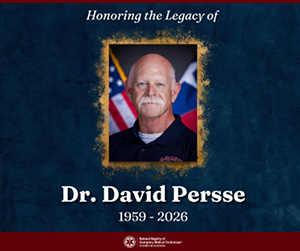
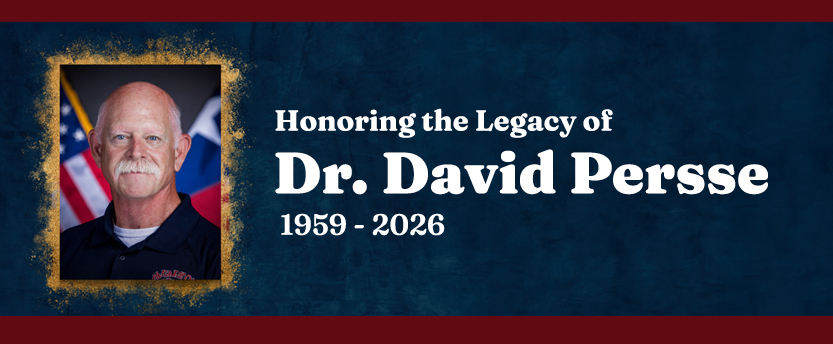
The National Registry of Emergency Medical Technicians joins the EMS community in honoring the life and legacy of Dr. David Persse, MD, FACEP, FAEMS, a distinguished emergency physician, public health leader, former National Registry Board Chair, and lifelong advocate for emergency medical services.
For decades, Dr. Persse dedicated his career to serving patients, supporting EMS Clinicians, and strengthening emergency response systems. A leader whose integrity earned the trust and respect of colleagues across EMS, healthcare, and public service, he left an indelible mark on the profession and the communities he served.
Dr. Persse began his career in EMS as a field paramedic and instructor in New York and New Jersey before earning his medical degree from Georgetown University School of Medicine and completing his residency in Emergency Medicine at Harbor-UCLA Medical Center. Those early experiences shaped a career defined by service, compassion, and an unwavering commitment to improving patient care.
In 1996, Dr. Persse became Houston’s EMS Medical Director and Public Health Authority, roles he would hold for nearly three decades. Throughout his tenure, he guided one of the nation’s largest metropolitan areas through some of its most challenging moments, including Hurricanes Katrina, Rita, Ike, and Harvey, as well as the COVID-19 pandemic. During times of crisis, he became a trusted voice for both healthcare Clinicians and the public, providing steady leadership and practical solutions when they were needed most.
Known for his innovative approach to emergency care, Dr. Persse championed new models of healthcare delivery, including Houston’s groundbreaking Emergency Tele-Health and Navigation (ETHAN) program. His efforts helped demonstrate how EMS systems could improve patient outcomes while expanding access to appropriate care.
Dr. Persse’s influence extended well beyond Houston. Through his work as an educator, mentor, researcher, and physician leader, he helped shape the future of EMS nationally. He served as a professor and leader within academic emergency medicine, sharing his knowledge and experience with generations of clinicians, physicians, and EMS Clinicians.
The National Registry benefited greatly from Dr. Persse’s leadership and service as a member of the Board of Directors and as Board Chair. Throughout his time with the organization, he brought thoughtful guidance, clinical expertise, and a deep understanding of both medicine and prehospital care. Under his leadership, the organization strengthened examination security, helping protect the integrity of National Registry certification, and oversaw significant improvements to the National Registry’s call center to better serve EMS Clinicians, educators, and stakeholders. His contributions helped advance the National Registry’s mission to support the EMS profession through partnerships, research, and lifelong assessment of clinical competence.
In recognition of his exceptional career and lasting impact on EMS, Dr. Persse was honored with the National Association of Emergency Medical Technicians’ Rocco V. Morando Lifetime Achievement Award, one of the profession’s highest distinctions. The award reflected what many throughout EMS already knew: Dr. Persse’s career was defined by service, leadership, innovation, and an enduring commitment to improving care for patients and communities.
Those who worked alongside Dr. Persse remember him not only for his accomplishments, but also for his humility, integrity, and unwavering commitment to doing what was right for patients, communities, and the EMS profession. He earned the trust of colleagues and stakeholders through his honesty, sound judgment, and willingness to mentor others. He was a respected physician, a trusted advisor, and a tireless advocate for EMS Clinicians across the country.
“Dr. Persse exemplified the very best of our profession,” said National Registry CEO Bill Seifarth. “He devoted his life to serving patients, strengthening EMS systems, and improving the health of the communities he served. Whether responding to disasters, advancing innovative approaches to care, or mentoring the next generation of EMS and healthcare leaders, his impact was profound and far-reaching. His contributions to the National Registry and the EMS community will continue to be felt for generations.”
“Dr. Persse was a remarkable leader whose influence extended far beyond the organizations and communities he directly served,” said National Registry Board Chair Dr. Scott Gilmore. “As Board Chair, he brought wisdom, perspective, and an unwavering commitment to advancing EMS and public health. Under his leadership, the National Registry strengthened examination security and enhanced customer service to better support EMS Clinicians nationwide. He earned the respect of everyone around him through his integrity, thoughtful leadership, and dedication to doing what was best for the profession. On behalf of the Board of Directors, we extend our deepest gratitude for his service and our heartfelt condolences to his family, friends, and colleagues.”
The National Registry extends its deepest condolences to Dr. Persse’s family, friends, colleagues, and the many EMS Clinicians whose lives and careers were influenced by his leadership.
His legacy lives on in the systems he strengthened, the Clinicians he mentored, and the countless patients who benefited from his life’s work.
About the National Registry of Emergency Medical Technicians
Guided by our mission to support the EMS profession through partnerships, research, and lifelong assessment of clinical competence, the National Registry was established in 1970 as a non-profit organization and serves as the Nation’s Emergency Medical Services certification organization. It is accredited by the National Commission for Certifying Agencies (NCCA), the accreditation body of the Institute for Credentialing Excellence. The National Registry maintains NCCA accreditation for each of the four certification programs: Emergency Medical Responder (NREMR), Emergency Medical Technician (NREMT), Advanced Emergency Medical Technician (NRAEMT), and Paramedic (NRP). Credentialing protects the public, assures consumers that Clinicians have met standards of practice, advances the EMS profession, and establishes standards of professional knowledge, skills, and practice. Additional information is available at NREMT.org, and BlueSky, TikTok, Facebook, Instagram, LinkedIn, Reddit, and YouTube.
Media Contact: Kelly Schroeder Manager of Integrated Content & Communications kschroeder@nremt.org
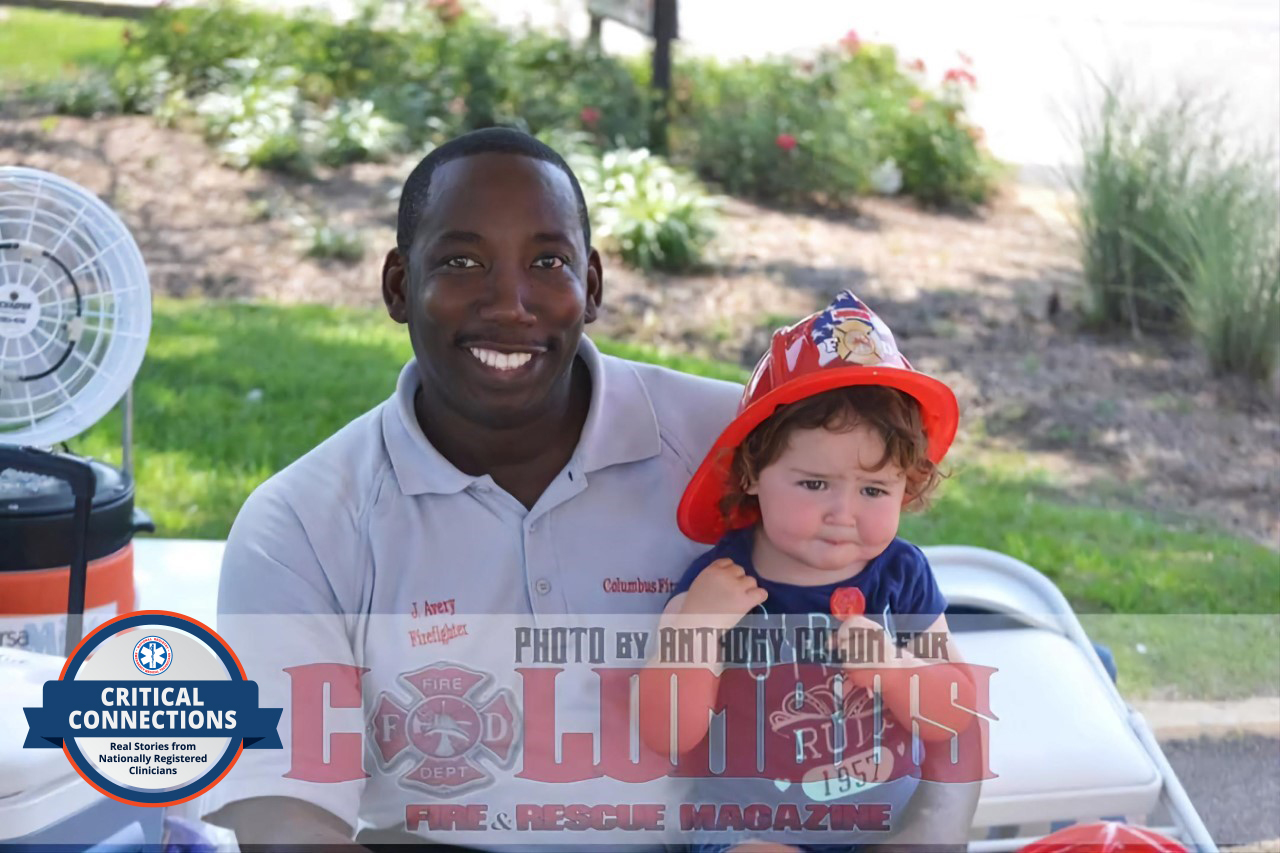
Fresh out of high school, James Avery had no idea what he wanted to do in life. “I didn’t know what I wanted to do after high school,” Avery said. “I was thinking at first about the military because that’s what a lot of my friends did. But I decided to go to college at Mississippi State and got my degree there. I had a few jobs after I graduated, but they weren’t really what I wanted to do.”
When a close friend was hired as a firefighter at Columbus Fire and Rescue in Mississippi, he encouraged Avery to apply for a position. After achieving a perfect score on the written exam, Avery began his career as a firefighter in 2000 and became certified as an Emergency Medical Technician (EMT) two years later, passing the National Registry of Emergency Medical Technicians exam and maintaining his certification for 20 consecutive years!
Technically, Avery never chose Emergency Medical Services (EMS), but as fate would have it, EMS chose him. Two years after becoming a firefighter, certification requirements for fire personnel expanded beyond the traditional training to include EMS; a move Avery has embraced wholeheartedly. “Well, early in my career as a firefighter, they switched to include EMS as part of our required training,” said Avery. “My interest in medicine just sort of took off from there.”
Over the years, Avery has achieved additional certifications that supplement his EMS training, including underwater dive rescue, hazmat training, and structural collapse search and rescue.
“9 out of 10 times, we’d be the first ones to arrive on the scene of an accident, and we didn’t have the medical training required to give patients the best possible chance of survival,” Avery recalls. “We’re out there trying to maintain the pace in a life-threatening environment, but quite frankly, we were underqualified. Adding EMS training and becoming certified changed everything; we can now save lives and provide crucial medical assistance immediately upon arrival. Every second counts; it excites me.”
For Avery, the decision to maintain his certification with the National Registry for 20 consecutive years is a no-brainer. “Being certified lets us know we are a part of something; I mean, we are on a larger scale because of certification that has opened doors within the EMS community that would not be possible without it.” But it’s more than that, he says. “In my eyes, being registered means that I have met and exceeded a certain standard required not just locally but nationally. I can go anywhere and apply this knowledge to anything, and because I maintain this level of certification, people know that I hold myself to that standard to be the best I can be.”
Avery also believes in the importance of younger EMS professionals taking advantage of the resources available and staying connected through continued National Registry certification. “My advice to these younger providers is to learn all you can and to keep abreast of constant changes happening all the time in public service.” Avery continued, “Look at the American Heart Association, they have changed CPR requirements more than once, and they aren’t alone. The Registry helps me stay current on what’s changing and what those changes mean for my department and me.”
If you were to go back in time and ask that young graduate to predict a memorable day on the job for his future self, he most likely wouldn’t tell you that it involved a fatal car accident, but as Avery knows all too well, fate had other plans for him.
It was his first fatal motor vehicle accident; the car had flipped several times and lay overturned on the side of the road. As he approached the chaotic scene, he could see that the driver was unscathed, and another occupant had taken off running into the woods with first responders in quick pursuit.
The sirens and air horns seemed distant as his eyes moved to the third passenger, who had been thrown from the vehicle and lay motionless on the pavement. “He had landed in such a way that most of his face and forehead were completely missing. He was face down and had slid for several feet before coming to a stop,” Avery recalls. “Seeing that, I knew this was not television; this was real.”
He knew at that heart-wrenching moment that he was meant for this, to save lives. “To see that, one person relatively unscathed with, you know, a scratch on their arm to seeing a man not breathing on the asphalt puts it all into perspective. That has had a lasting impression on me.”
From that day on the road all those years ago and every day since, Avery has gone above and beyond in service to his community. Choosing to stay current with his National Registry certification allows him to remain committed to always being ready for anything in a fast-paced and ever-changing field.
Published article text migrated; source images remain unavailable
This substantive published article is partially migrated. Two inline source images and the separate source card image remain unavailable. The verified original hero is shown only as the article hero; it is not a substitute for those missing images.
2022-12-20T00:00:00-05:00
Growing up in a small town outside of Pittsburgh, Justin Solobay watched his parents work hard to provide care within their community. His mother was an OR nurse, and his father was a CT/MRI technician who also volunteered as a firefighter and worked at a private ambulance company. Justin often went with his dad to the firehouse and knew he was destined to follow them in service.
After completing firefighter training in high school, Justin enlisted in the Pennsylvania Air National Guard, the 171st Refueling Wing, and became a KC-135 Stratotanker crew chief. That experience, along with his security clearance, eventually led to a junior analyst job at the Pentagon. But for Justin, it still wasn’t enough. Fire and EMS pulled at his heart.
Justin continued his fire and EMS training and found the perfect place to put it to great use – the Morningside Volunteer Fire Department in Prince George’s County, Maryland.
Morningside’s Station 27 is one of the busiest all-volunteer fire and EMS departments in the nation, answering as many as 7,000 calls annually out of a single station. The nationally-recognized department is comprised completely of volunteers who run EMS, rescue and fire response 24/7/365.
Even now, in the middle of the holiday season, with a wife, two children, a full-time job and his military service, Justin says the decision to volunteer is simple for two reasons.
“Number one, I’m a part of a great organization with other men and women who are all committed to serve; and number two, the opportunity to have a direct impact on saving lives is abundantly real at Morningside, every day,” says Justin. “Both reasons are very clear to me, and I can’t point to one or the other as to why I do it.”
“At the end of the day, it is the full depth of the meaning that goes along with both reasons,” Justin added.
The National Registry plays a vital role in Justin’s work as an EMT/Firefighter at Morningside.
“Our ambulance does over 3,000 runs annually, and the National Registry certification establishes the foundation of knowledge to prepare our providers. When you hit the street as an EMT here, you better be ready,” said Justin, who has been Nationally Registered for nearly two years. In 2022, Morningside expanded its EMS program with the addition of ALS services after several members built from their BLS education and earned their National Registry Paramedic certifications. “We’re one of few volunteer departments in the county certified to provide ALS services, and we are tremendously proud of this accomplishment.”
Training and education, really all of Justin’s skills, came together on the night of his most challenging and memorable call. It was an early morning house fire with people trapped. Justin was driving the second due engine and he recalls assisting the first due engine with the water supply, then quickly putting the culmination of his EMS knowledge and skills to work.
“As I pushed the hose into the front door, out comes a firefighter who just kind of hands the baby to me – a lifeless infant,” recounts Justin. “I quickly grabbed an aid bag and O2 kit and got to work.”
After restoring stable circulation and breathing, he looks up and sees another firefighter with a second child. This time, an unconscious toddler. “I grabbed another aid bag and O2 kit and began working on this patient who was also not breathing and perfusing adequately.”
For many, this would have been a call for the ages. But before additional help arrived, another firefighter brought a teenager out of the blaze. In the short few minutes after arriving on the scene, Justin was leading three resuscitations along with members of the first arriving crew. The three critical patients were lined up 1-2-3 right in the front yard with high-quality care well underway before the first medic unit even arrived on scene.
“It was days before my birthday, and here I am doing CPR, administering O2 and watching this scenario play out,” says Justin. “I remember being very calm and intently focused on the first principles of care; airway-breathing-circulation. It’s a rare occurrence to save one person under these circumstances, but that night we were three for three; that was the best birthday present I’ve ever gotten.”
At that moment, Justin was a long way from a combat refueling flight, the hallowed halls of the Pentagon, or that suburban Pittsburgh firehouse from his childhood, but he was right where he was supposed to be.
Source image unavailable
The published source image could not be retrieved. Source GUID: 547a7525-8cab-4b14-abf6-60855668b9d3. Original alt text: empty. Source reference (not a link): ~/getattachment/547a7525-8cab-4b14-abf6-60855668b9d3/Solobay_Web-(2).png?lang=en-US. The shared published caption is retained below the two original image positions.
Source image unavailable
The published source image could not be retrieved. Source GUID: 1389ef01-59ff-4c9e-9dd7-10a12d04275e. Original alt text: empty. Source reference (not a link): ~/getattachment/1389ef01-59ff-4c9e-9dd7-10a12d04275e/Solobay_Web.png?lang=en-US. The shared published caption is retained below the two original image positions.
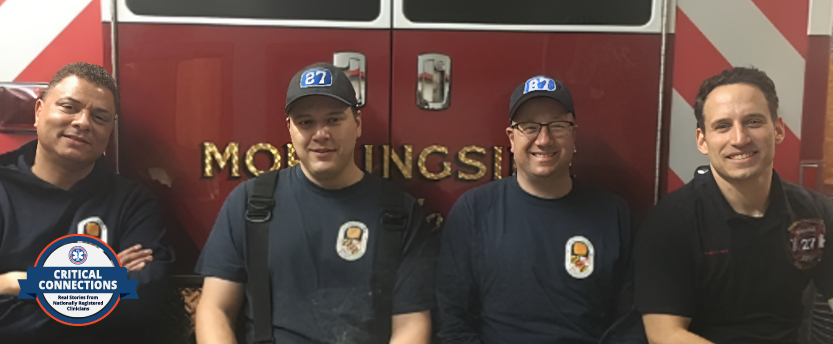
Pictured from left to right are Morningside VFD members Jon Hart, Matt Verlaque, Tom Winship, and Justin Solobay. For more information about Morningside VFD and how to become a volunteer, visit www.morningsidevfd27.com
This is the second in a series of articles about Nationally Registered EMRs, EMTs, AEMTs and Paramedics. The National Registry invites you to be part of the series. If you would like to celebrate your National Registry service, or the service of a fellow provider, you are encouraged to contact the National Registry at CommDept@nremt.org.
Bill Wood’s “sense of belonging” and giving back to his community
It was a rather dreary day in New Hampshire when firefighter-paramedic Bill Wood and his partner received a call for a basic transfer of a patient going home after more than six months in the hospital. Wood looked out the window at the chilly rain pouring down and thought to himself, “this patient is finally going home, and the weather could not be worse.” He didn’t know it at the time, but this would be a transport that he would remember for the rest of his life.
Flashback to the late 1960s, Wood was an enthusiastic first-year student at the University of New Hampshire in Durham with the world in front of him and a fairly good idea of how he wanted to make his mark in it. With a background in public safety and having always been interested in the medical field, he decided to take a first aid course being offered on campus, solidifying his future place within the world of Emergency Medical Services (EMS).
Around this same time, Durham commissioned an ambulance agency in honor of an influential community doctor who had recently passed away. In 1970, Wood took the first Emergency Medical Technician (EMT) course and certification exam offered in New Hampshire. He then took and passed the first certification examination for the National Registry of Emergency Medical Technicians and has maintained his certification for 50 consecutive years!
Wood remained in New Hampshire and joined a local fire department working as a firefighter and paramedic since the early 1970s. As an active public safety officer, it has been particularly important for him to maintain his certification with the National Registry. “For me it’s such a natural fit; I mean, we’re out here helping people, making a difference and honestly, remaining certified with the National Registry has always been a top priority,” said Wood. “It gives me an advantage over those in the profession who chose not to maintain their certification because I’m a part of something greater. This vast, dynamic community of EMS professionals and resources working together to keep us informed on critical issues and changes within a profession that’s constantly transforming.”
“Being certified by the National Registry gives me a sense of belonging,” Wood continued. “Everyone is a part of the same team, we’re all proficient in our respected EMS levels, and this is our opportunity to stay informed, educate ourselves and give back to the community.”
Over the last 50 years, there have been significant advancements in healthcare, and the role of EMS professionals has changed drastically in that time. “Technology has changed everything; the various levels of certification, EMTs and paramedics, we’re performing procedures now on the side of the road or in the back of the rig that we had never even dreamed of before,” Wood explained.
As younger generations of EMS hopefuls enter the field, Wood believes that inspiring these new professionals to maintain their certification with the National Registry is an essential part of his job. “The camaraderie, the respect, the resources, it’s something that can’t be explained, it can only be felt and being certified by the National Registry is a distinguished accomplishment that I’m extremely proud of, and I don’t want to give that up.”
In 50 years of public service, Wood has seen it all, but still, nothing sticks with him quite like the transfer on that drab day in Durham. The rain continued to pour as he assisted the patient, who happened to be a minister – getting him comfortable and secured for the transport home. The minister was thrilled to be going home, the positive energy radiating from him. He did not even notice the rain.
As they neared the minister’s residence, the rain suddenly stopped, the clouds broke away, allowing the sun to shine through. As they backed into his driveway, the minister’s entire family came outside to welcome him home. They cheered and embraced him one by one; everyone was smiling and laughing.
Wood stood very still; the rays beat down on his face when a feeling came over him. He was exactly where he was supposed to be, and he knew it. “The feeling was indescribable. The hard calls, the unpleasant ones, it all balances out, and we are making a difference in people’s lives every day. It’s extremely rewarding,” said Wood. “We are well-trained to handle any challenge thrown at us, and there have been some stressful situations for sure, but standing there that day, I knew every challenge was worth it.”
Wood was given the National Registry’s first 50 Years of National EMS Certification in October 2022.