
Category: Uncategorized

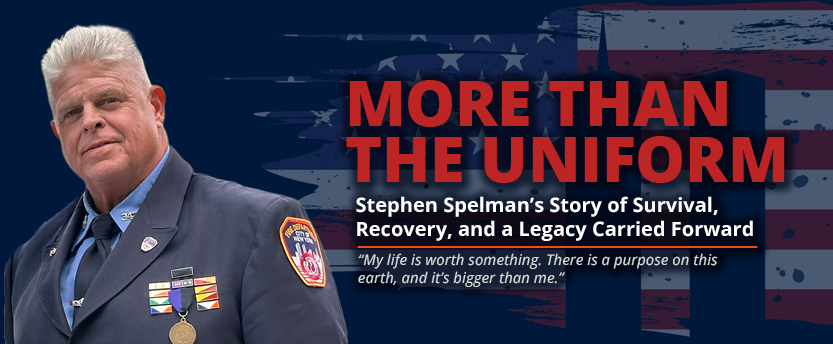
  • More Than the Uniform: Stephen Spelman’s Story of Survival, Recovery, and a Legacy Carried Forward

    2026-09-11T00:00:00+00:00
    On the morning of September 11, 2001, Stephen Spelman was sitting in a classroom at the New York City Fire Academy. 

    An FDNY EMT and instructor, Spelman was completing refresher training to renew both his instructor credentials and his EMT certification. It was an ordinary act in a career built around readiness: return to the classroom, sharpen the skills, and remain prepared for the next call. 

    Then several officers’ pagers sounded. They stood and left the room. Soon, Spelman and the others were directed to the day room and told to turn on the television. 

    Like millions of people watching that morning, they initially tried to make sense of the image on the screen. An aircraft had struck the North Tower of the World Trade Center against a clear blue sky. Perhaps, they thought, it had been a terrible accident. 

    Then the second aircraft struck. 

    “Obviously, we knew it was an attack,” Spelman recalled. “And we were mobilized.” 

    In that moment, the refresher course ended, and everything Spelman had learned across nearly two decades in emergency medical services was about to be tested on a scale for which no classroom could fully prepare him. 

    Beyond Anything They Had Trained For 
    Screenshot-2025-12-10-at-4-26-21 PM.png

    Spelman began working in New York City’s 911 system in 1984 and with the FDNY in 1986. By September 2001, he had responded to countless emergencies and trained for mass-casualty incidents, aircraft accidents, and building collapses. 

    Those exercises might involve dozens of patients, perhaps even 100 or more. What unfolded in Lower Manhattan was beyond anything he had imagined. 

    Four responders traveled together from the academy, with Spelman driving. As they crossed from Queens toward Brooklyn and then Manhattan, the voices coming across the radio told them how quickly the response was being overwhelmed. The transmissions were crowded and sometimes difficult to understand, but the urgency was unmistakable. 

    From the Kosciuszko Bridge, Spelman could see the familiar New York skyline. He had made that drive thousands of times. Now, both towers were burning, with black smoke rising into the otherwise brilliant morning sky. 

    “It was just very surreal,” he said. 

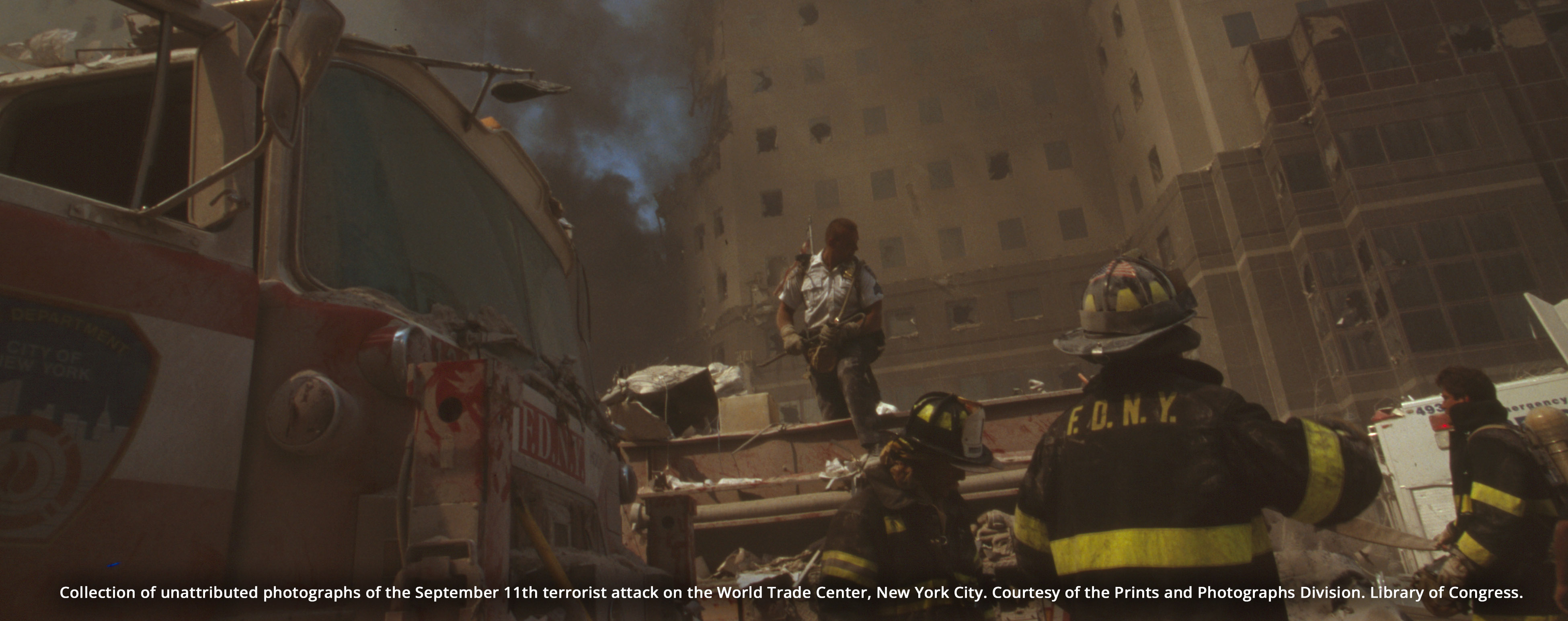
    By the time the crew reached Lower Manhattan, unreliable radio communications left many responders uncertain about exactly what had happened. Papers drifted through the air. Dust and debris covered the streets. Spelman stopped approximately three blocks away, positioned the vehicle for a rapid departure, and joined his partner in gathering a stretcher, oxygen, and medical bags. The two Paramedics who had ridden with them staffed a nearby Mobile Emergency Response Vehicle. 

    Spelman and his partner started toward the command post near the North Tower. Moving in the opposite direction was what he remembers as a wall of people … thousands trying to escape. 

    EMS training took over. People who could walk were directed away from the danger. Spelman and his partner continued forward, carrying their equipment against the flow of the crowd. 

    At Vesey and West streets, an FDNY lieutenant asked them to search vehicles buried beneath debris and determine whether anyone inside could be helped. They completed the search and returned to report their findings. 

    Spelman barely had time to address the lieutenant before he heard a deep rumble. 

    The Moment Everything Slowed Down 
    NewsArticlesPgHeader-9_11_26.jpg

    The sound grew as the floors of the North Tower began collapsing onto one another. Spelman turned and ran north on West Street. 

    For nearly every moment before that, his mind had been focused on reaching patients and helping others. Now, instinct took over. 

    “My mind just went completely into survival mode,” he said. “I thought that was it. I thought, ‘This is how I’m going to die.’” 

    He knew he could not outrun a falling skyscraper. Yet he ran. Time seemed to slow, and he became aware of every stride and every muscle moving his body forward. Then the cloud overtook the street. 

    Spelman survived. 

    The lieutenant who had sent Spelman and his partner away from the immediate area did not. Spelman believes that assignment saved their lives. 

    As light became visible through the dust, Spelman continued north until he reached the emergency vehicle. Responders loaded as many people as they could inside and even on top of it, then moved farther from the site. At a small tourist stand, they found water and tried to clear the dust from their faces and equipment. 

    Around them, a reality no one could yet fully comprehend was taking shape. 

    For Spelman, surviving the collapse was not the end of the story. In many ways, it marked the beginning of a struggle that would take years to understand. 

    The Emergencies Responders Carry Home 
    WTC-Fireman_requests_10_more_colleagues-copy.jpg 

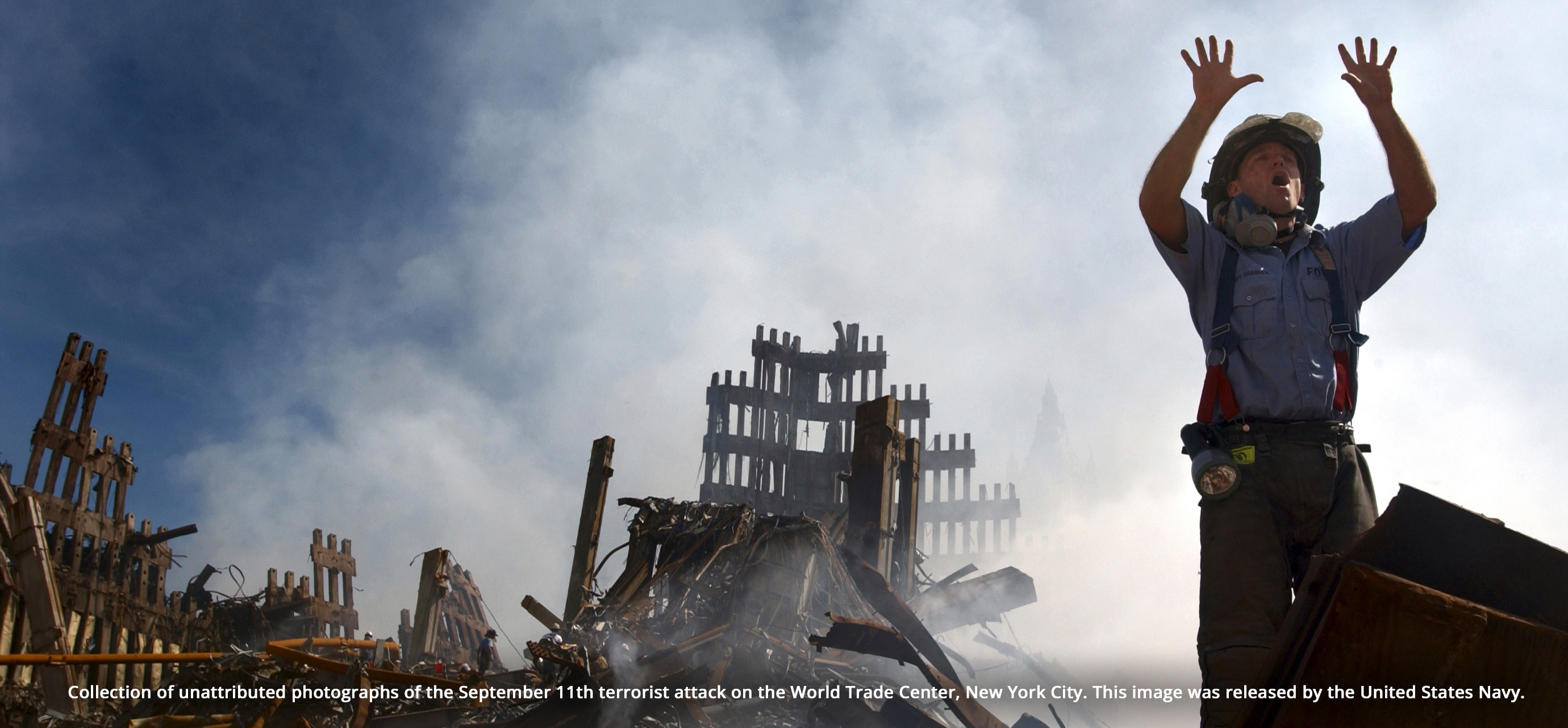
    Spelman returned to the World Trade Center site repeatedly during the days that followed. After roughly nine days, he could no longer bring himself to go back. The conditions were overwhelming, and he feared discovering that one of the many missing responders was someone he knew. 

    Then came the difficult transition back to ordinary calls. 

    There was no switch that could return life to what it had been before September 11, 2001. Spelman remembers grief, anger, and uncertainty. Responders held onto hope that missing colleagues might be alive somewhere within a survivable pocket. At the same time, they returned to answering routine calls while people continually asked them what they had seen. 

    “It was like a bad movie or a dream that you don’t wake up from,” he said. “And it was reality.” 

    Spelman increasingly turned to alcohol to manage what he was carrying. He is careful not to attribute everything that followed solely to September 11. His trauma had accumulated during years of EMS work in the 1980s and 1990s, he said, and the attacks became an accelerant for pain he had never learned how to address. 

    In EMS, Clinicians routinely enter someone else’s worst moment. They respond to devastating injuries, sudden deaths, and families whose lives have changed without warning. Responders are prepared to manage the scene and care for the patient, but Spelman’s generation was not always taught what to do with the memories afterward. 

    He learned to appear unaffected in front of coworkers, police officers and others on the scene, even when an experience followed him home. Drinking became a way to quiet what he could not leave behind. 

    “We take care of everybody else, but not ourselves,” he said. 

    By early 2003, Spelman had reached a crisis point. On February 7, he no longer wanted to live. In that decisive moment, however, he picked up the telephone and called his counseling unit for help. 

    That call saved his life. 

    Recovery did not happen instantly. Spelman entered treatment, experienced a setback, and returned. Through rehabilitation, counseling, and sobriety, he began to understand the cumulative effects of a career spent witnessing trauma. He also discovered that asking for help was not a failure of strength. It was an act of survival. 

    He has remained sober ever since. 

    “My life is worth something,” Spelman said. “There is a purpose on this earth, and it’s bigger than me.” 

    A Message for the Next Generation 
    IMG_1240-2.jpg

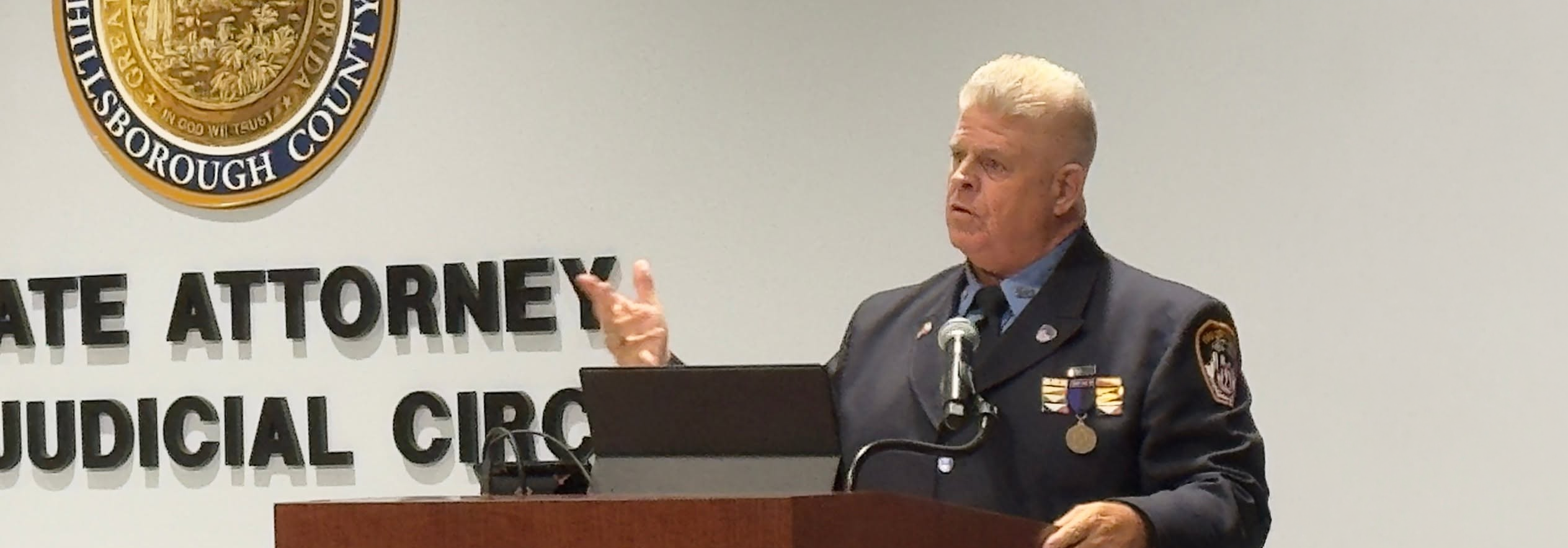
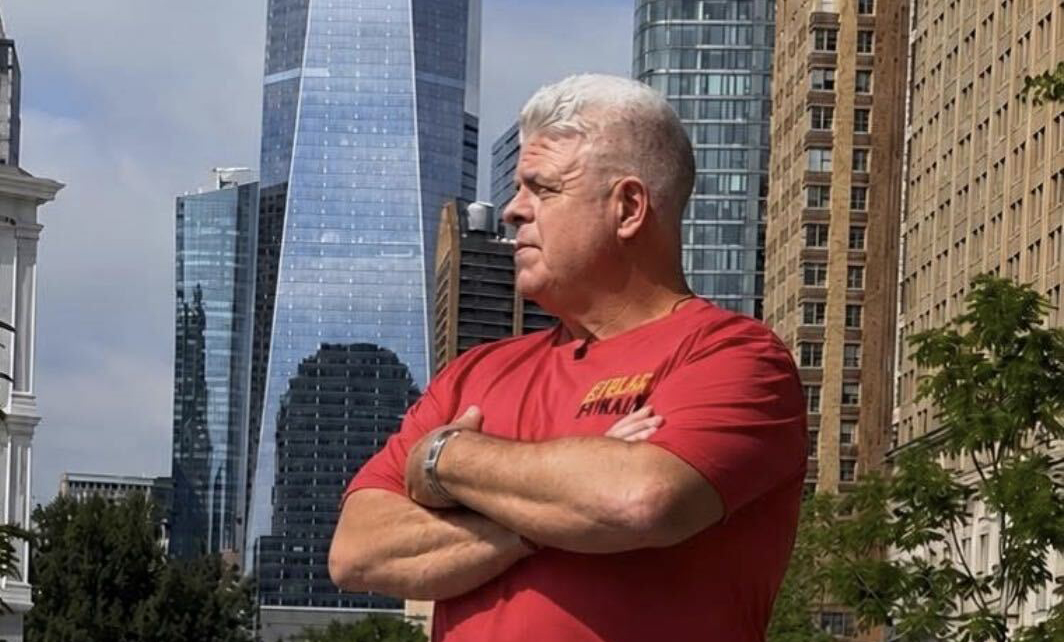
    Today, Spelman speaks openly about his experience because he wants the next generation of EMTs, Paramedics, firefighters and other public safety professionals to have tools his generation often lacked. 

    His advice begins with an important distinction: the uniform may be part of a responder’s identity, but it should never become the entirety of that identity. 

    “Hobbies, mental health and family are so important,” he said. “Don’t make the uniform your complete life.” 

    He encourages responders to build meaningful lives away from work, stay connected with family and friends, seek counseling, and find trusted people with whom they can speak honestly. Support might come from a mental health professional, a peer, a family member, a faith community, or a veteran Clinician who understands the work. 

    He also recommends writing. Journaling after an important call can give responders a healthier place to put what they have experienced. That does not mean recording only tragedy. Spelman encourages them to remember the unusual calls, the funny moments, the people whose lives they helped save and the quiet encounters in which simple kindness made a difference. 

    Kindness, he believes, is itself an essential clinical skill. 

    The person struggling with substance use or lying on the floor is still someone’s parent, child, sibling or spouse. That person’s life was not always defined by the condition in which an EMS crew finds them. Responders may never know the experiences that brought a patient to that moment. 

    “Instead of taking them down, lend a hand,” Spelman said. “You might be surprised at what you can do to change somebody’s life when you’re kind to them.” 

    He knows because someone extended that hand to him. 

    A Ladder Rung Finds Its Way to Ohio 

    The path that eventually connected Spelman to Ohio began with a note tucked inside a pair of work gloves in Lower Manhattan. 

    In the aftermath of September 11, volunteers from across the country found ways to support those working at the World Trade Center site. Food, supplies and services arrived from nearly everywhere. When Spelman’s boss, Lt. Dominick Maggiore, received a new pair of gloves, he found a handwritten message inside thanking whichever responder received them for serving. 

    The note had been written by a Boy Scout from Ohio. Through an extraordinary coincidence, Maggiore discovered that the Scout belonged to the same numbered troop as his own son’s troop in New York. The young man was the nephew of Warren Motts, founder of the Motts Military Museum in Groveport, a suburb of Columbus, and about 30 minutes southeast of the National Registry of EMTs headquarters. 

    From that note grew a lasting relationship between New York City responders and an Ohio community hundreds of miles away. Maggiore became connected with the museum, and efforts were later made to bring a piece of FDNY Ladder 18 to Groveport for preservation and remembrance. 

    Spelman entered the story in 2017, when Maggiore asked him to travel to Ohio and speak about his experience. A hurricane prevented Spelman from making the trip. About a month later, however, a package from the Motts Military Museum arrived at his home. 

    Inside was a rung from Ladder 18, sent in appreciation for his willingness to share his story. 

    When Spelman opened the package with his young son, Mathew, the artifact immediately transported him back to the World Trade Center site. Both were overwhelmed with emotion.  

    Mathew, then only eight or nine years old, saw the importance and knew it needed to be shared. 

    “Dad, let’s memorialize it,” he said. 

    Those four words changed the direction of the gift, and it helped give new direction to Spelman’s own story. 

    A Son Carries the Story Forward 
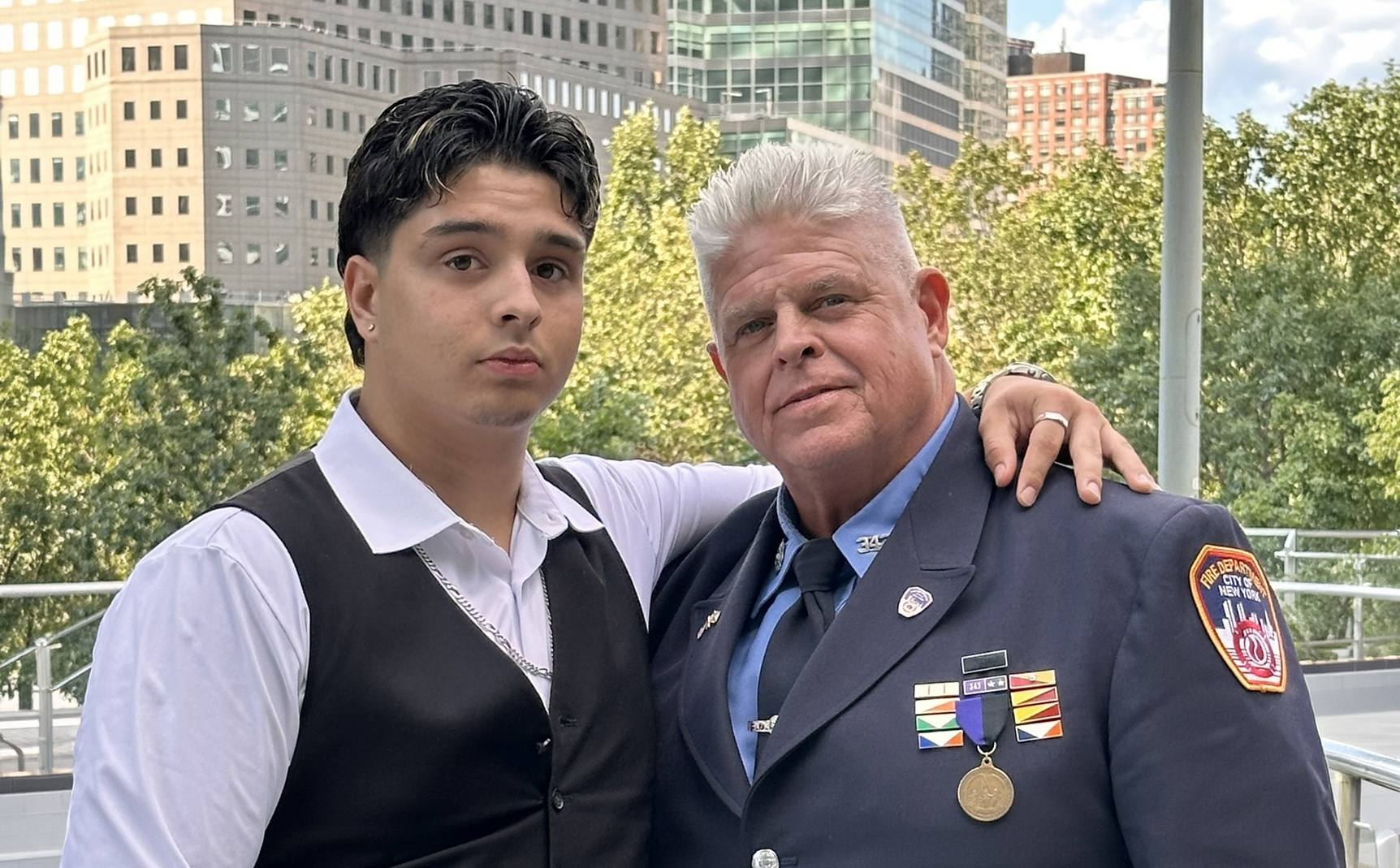
    IMG_7413-2.jpg

    Spelman and Mathew began looking for opportunities to display the ladder rung and teach others about September 11. At first, finding interested venues was difficult. Eventually, they established an annual memorial near their Florida home and began traveling together to remembrance events. 

    Each year, Spelman and Mathew return to Groveport, where Madison Township Fire & EMS and Motts Military Museum host the community’s September 11 remembrance. For Spelman, the connection is a reminder that the work of EMS transcends geography. 

    “It doesn’t matter where we’re from,” he said. Whether someone serves in New York, Columbus, or a community across the world, responders encounter the same fear, grief, and human vulnerability. “It’s a different patch,” he said, but the responsibility to care for people and for one another is shared. 

    What began with a Boy Scout’s note and a ladder rung has become an extended family for Spelman and Mathew. Their annual visit to Groveport offers a place to remember without the intensity of returning to Lower Manhattan, while keeping alive the names and lives of those who were lost. 

    Mathew has grown up alongside that mission. Now 17, he is no longer simply accompanying his father. He is speaking publicly and carrying the story to people for whom September 11 is history rather than lived memory. He recently spoke at an FDNY firehouse in Manhattan and is preparing to speak in Groveport. 

    Spelman describes his son as focused, compassionate, and unusually purposeful for his age. Mathew plans to study business and is considering military service. He may not follow his father into EMS, but he is already carrying forward the most important parts of his father’s legacy: service, remembrance, and care for others. 

    “That’s my goal,” Spelman said, “to keep that legacy alive and keep the brothers’ memories and their names in everybody’s ears.” 

    More Than the Uniform 

    Spelman served with the FDNY for 23 years, from 1986 until 2009. His career included one of the darkest days in American history, but September 11 alone does not define his service. 

    His story is also found in the decades of calls that came before and after it, in the people he helped, in the moment he chose to ask for help himself and in the life he rebuilt through recovery. 

    It lives in the message he now shares with younger responders: prepare for the emergency, but also prepare to care for yourself when the call is over. Hold close the people who know you without the uniform. Find interests that remind you there is a world beyond the job. Speak honestly about what hurts. Write down what matters. And never underestimate what kindness can do for a patient – or for a fellow responder. 

    Most of all, his story lives in Mathew. 

    When a piece of Ladder 18 arrived in the mail, Spelman saw an artifact. His young son saw a responsibility. Together, they turned it into a memorial and then into a promise: that the lives behind the names will continue to be remembered, and that the lessons learned through service, trauma and recovery will be shared with those who follow. 

    Spelman once believed his pain was something he had to carry alone. Today, he understands that accepting a hand can save a life, and extending one can do the same. 

    That may be the most important lesson he and Mathew carry forward.  
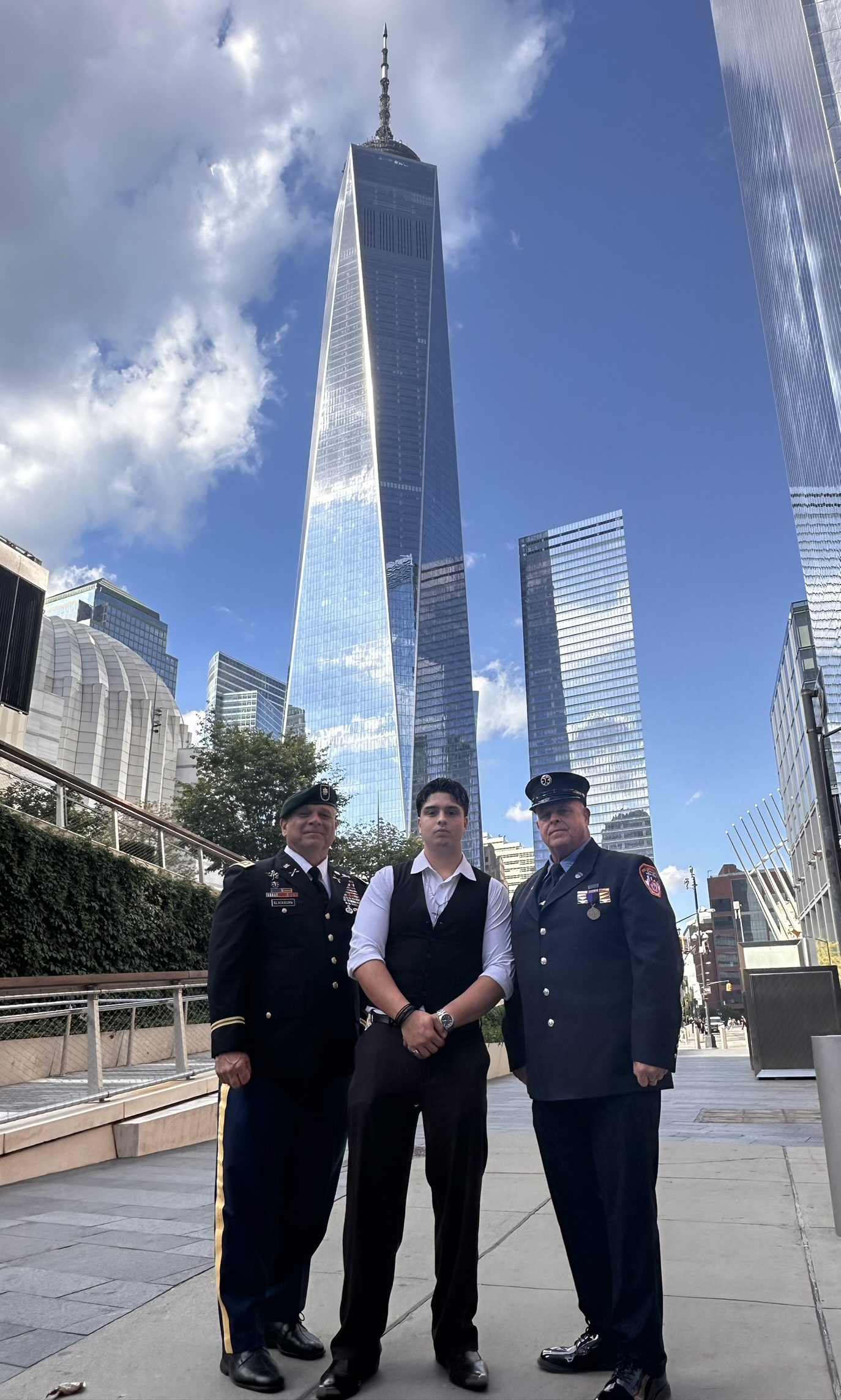
    image-(1).png

     About the National Registry of Emergency Medical Technicians 

    Guided by our mission to support the EMS profession through partnerships, research, and lifelong assessment of clinical competence, the National Registry was established in 1970 as a non-profit organization and serves as the Nation’s Emergency Medical Services certification organization. It is accredited by the National Commission for Certifying Agencies (NCCA), the accreditation body of the Institute for Credentialing Excellence. The National Registry maintains NCCA accreditation for each of the four certification programs: Emergency Medical Responder (NREMR), Emergency Medical Technician (NREMT), Advanced Emergency Medical Technician (NRAEMT), and Paramedic (NRP). Credentialing protects the public, assures consumers that Clinicians have met standards of practice, advances the EMS profession, and establishes standards of professional knowledge, skills, and practice. Additional information is available at NREMT.org, and BlueSky, TikTok, Facebook, Instagram, LinkedIn, Reddit, and YouTube. 

    Media Contact:
    Kelly Schroeder
    Manager of Integrated Content & Communications 
    kschroeder@nremt.org
  • National Registry Opens Call for Speakers for 2027 EMS Association Summit

    2026-08-18T00:00:00+00:00

    Speakers, facilitators and thought leaders invited to share strategies for strengthening EMS associations and nonprofit organizations

    COLUMBUS, Ohio — The organizations hosting the 2027 EAS — the American Ambulance Association, National Association of Emergency Medical Technicians, and the National Registry of Emergency Medical Technicians — have opened the Call for Speakers for the event, taking place February 9–11, 2027, in Lexington, Kentucky.

    Together, the organizations are seeking speakers, facilitators and thought leaders to help shape this year’s program.

    EAS brings together State EMS and Ambulance Association leaders and staff from across the country to share ideas, address common challenges and strengthen the organizations that support the EMS community.

    For 2027, the National Registry is seeking speakers, facilitators and thought leaders who can bring practical experience, fresh ideas, proven strategies, research and meaningful perspectives focused on the business of running, growing and sustaining successful associations and nonprofit organizations.

    “EAS is designed to create meaningful conversations around the challenges association leaders are facing every day,” said Bill Seifarth, chief executive officer for the National Registry of EMTs. “We want participants to leave Lexington not only with new ideas, but with practical strategies, connections and resources they can take back and put to work in their own organizations.”

    Based directly on feedback from 2026 EAS attendees, topics of particular interest for 2027 include:

    • Volunteer recruitment and retention
    • Membership engagement and retention
    • Website and technology management
    • Sponsorship development
    • Marketing and communications
    • Event and conference planning
    • Educational programming
    • Strategic planning
    • Advocacy and government relations
    • Funding and revenue development
    • Board governance and leadership
    • Grant writing
    • Research and data utilization
    • Workforce recruitment and retention

    EAS also welcomes proposals that move beyond the traditional conference presentation. Facilitated discussions, working groups, roundtables, interactive sessions and opportunities to develop practical tools and resources are encouraged.

    Experienced presenters as well as individuals with valuable expertise, successful approaches or lessons learned are invited to submit proposals. Additional ideas addressing the challenges and opportunities involved in leading, managing and growing EMS associations, ambulance associations, and nonprofit organizations are also welcome.

    Get Started

    Deadline for submission is September 15.

  • Learning Has No Retirement Age: How Paul Biddle Earned His EMT Certification at 70 and Expanded His Lifelong Commitment to Service

    2026-08-19T00:00:00+00:00

    When Paul Biddle walked into a testing center in Bangor, Maine, on the afternoon of his 70th birthday, he carried more than months of studying, practice examinations, and preparation. He carried a lifetime of service. 

    By that point, Paul had already lived a life defined by curiosity, resilience, and a commitment to helping others. He had served in the British Army, built a career in law enforcement and intelligence, advised governments in conflict zones, trained military personnel and first responders around the world, and been appointed a Member of the Order of the British Empire (MBE) by Her Majesty, Queen Elizabeth II, for his public service. 

    His work had taken him across the globe, from Afghanistan and Iraq to Haiti, Ukraine, Palestine, Jamaica, Papua New Guinea, and beyond. Yet as he sat down to take the National Registry Emergency Medical Technicians (National Registry) certification examination, none of those accomplishments occupied his thoughts. 

    Instead, he was thinking about his father. 

    “My late father served as an Army medic in the jungles of Malaya,” Paul wrote in a LinkedIn post that first captured the attention of the National Registry. “Growing up, I always admired the quiet professionalism of those who could save lives under the most difficult conditions.” 

    For Paul, becoming an EMT at 70 was never simply about earning another credential. It was about honoring the person who first taught him what it meant to serve others. 

    Lessons From a Father Who Taught Through Stories 

    Long before Paul understood medicine, leadership, or service, he understood the power of a good story. His father rarely offered direct advice. Instead, he shared experiences from his own life and allowed the lessons to reveal themselves. 

    “He was always very much of the opinion that as a father, he should be telling stories based on his life,” Paul recalled. If Paul made a mistake, his father did not lecture him. He told him a story. 

    “If I touched an electric fence, he wouldn’t say, ‘Don’t touch the electric fence,’” Paul explained. “He would tell me the story about when he touched the electric fence.” 

    Every lesson came wrapped inside an experience, and his father had plenty of experiences to draw from. The son of a World War II veteran who was among the first wave to land on D-Day, Paul’s father served with the Royal Army Medical Corps and later worked as an Army medic during the Malayan Emergency, caring for wounded soldiers in one of the world’s most challenging environments.

    Despite the dangers he faced, Paul’s father rarely focused on heroics. Instead, he focused on responsibility and taught his son that understanding the human body, knowing how to respond in an emergency, and being prepared to help others were skills everyone should have. 

    “He said, ‘You’ve got to learn how to fix yourself. If you don’t look after yourself, you’re not going to be able to help anyone else.’” Those words stayed with Paul and became the foundation for a lifetime spent preparing himself and others to respond when people needed help most. 

    A Life Built Around Service 

    At only 15 years old, Paul joined the British Army, beginning a journey that would span decades and take him around the world. Throughout his military and professional career, he specialized in intelligence, reconnaissance, security operations, emergency response, and training. 

    Whether supporting complex operations, strengthening emergency preparedness efforts, or teaching tactical medicine and lifesaving skills, Paul carried one principle with him throughout every chapter of his career. Knowledge is a responsibility.

    His accomplishments earned many recognitions, including his appointment as a Member of the Order of the British Empire in 2002. However, Paul never viewed achievements as a place to stop. “I’ve never been one to rest on my laurels,” he said.

    Even receiving the MBE was not a final destination. “It was wonderful for the family,” he said. “Then I put it in a box and thought, ‘What else can I do?’” That question has guided Paul throughout his life. Rather than looking back on what he had already accomplished, he continued finding ways to expand his skills, support others, and contribute wherever he was needed.

    Starting Over 

    When Paul and his wife, Anne, moved to the United States in 2016, he faced a challenge he never expected. Despite decades of experience and a career built around service, many of his professional qualifications did not transfer. 

    For a brief moment, he was frustrated. “I was very angry for about fifteen minutes,” Paul admitted with a laugh. “Then I sat back and thought, ‘Do you know what? That’s not a bad thing.’” Instead of focusing on what he had lost, Paul focused on what he could build. “It allowed me to draw a line under my previous career,” he said. “I could start fresh without any baggage.” 

    So, he did. Paul earned new certifications, completed emergency management courses, volunteered with local emergency response organizations, and continued teaching preparedness and lifesaving skills throughout Maine. 

    Yet there was still one goal he had carried for years, one certification he had always wanted to earn, and that was to become a National Registry EMT. “I had always wanted to become an EMT,” Paul said. After decades as an instructor, he decided it was time to become a student again. 

    Becoming the Student 

    For much of his career, Paul had stood at the front of the classroom. Now, he was sitting in one. After years of teaching tactical medicine, emergency response, and lifesaving skills, he returned to the fundamentals, studying anatomy and physiology, patient assessment, trauma care, medical emergencies, and everything required to become an EMT. 

    The transition was humbling. Experience gave Paul a foundation, but it did not exempt him from the challenges of learning something new. “There were a few days when I thought, ‘I just can’t do this. It’s too much for me,’” Paul admitted. For the first time in years, he was not the instructor with the answers. He was a student working through unfamiliar material and facing the same challenges as his classmates. 

    Rather than discouraging him, the experience transformed the way he viewed teaching.  “It made me a better teacher,” he said. Sitting on the other side of the classroom gave Paul a renewed appreciation for the patience, encouragement, and adaptability that effective instructors bring to every lesson. “I’ve always been critical of myself if people fail in anything that I’ve trained them in,” he said. “Trying not to fail people is an important aspect of instructing.” 

    Despite his decades of experience, Paul never wanted to be treated differently. When instructors or classmates turned to him and said, “Paul can tell us about that,” his response never changed. “Hey,” he would laugh. “I’m a student.” 

    That mindset became one of the most meaningful lessons of the journey. No matter how much experience he had accumulated, Paul understood there was always something new to learn. 

    Seventy Questions 

    Paul intentionally scheduled his National Registry certification examination for his 70th birthday. The timing was deliberate. “If I was going to fail, I wanted the best psychological thing for me, which was going to be my birthday,” he joked. 

    His wife expected to begin the day celebrating. Instead, she woke up to find Paul already studying. “Anne woke up in the morning to wish me a happy birthday, and I had already gone downstairs and was on the computer,” he said with a chuckle. 

    Later that afternoon, Paul arrived at the testing center ready to face the examination he had spent months preparing for. Question after question appeared on the screen, and then, after 70 questions, the examination ended. Paul knew the test stopping at that point could mean many things, but uncertainty took over. “I panicked,” he admitted. 

    He left the testing center and waited for his results. Another student from his class completed her examination after him and received her notification that she had passed before Paul received his own. He was happy for her, of course, but the wait became even harder as the minutes passed. “It was the worst ten minutes of my life,” he said. Then the notification appeared. He had passed. 

    For someone who had spent decades leading international operations, responding to crises, and receiving one of the United Kingdom’s highest honors for public service, this achievement carried a different kind of meaning. “National Registry certification is one of my biggest achievements,” Paul said. “There’s no question about that.” 

    This was never just about earning another certification. It was about proving that experience creates the foundation for what comes next. 

    Paul also knows he did not reach that moment alone. He expressed his sincere gratitude to Brooks Ambulance Service in Waldo County, Maine, and especially to the instructors who supported him throughout his training. Their patience, professionalism, encouragement, and exceptional teaching made a meaningful difference in helping him successfully pass his examination. Paul is deeply grateful for their dedication and support, as well as for Anne, who stood beside him and supported him throughout the entire adventure. 

    The Hand That Matters Most 

    After a lifetime spent around emergencies, Paul’s view of exceptional patient care is remarkably simple. “The greatest skill a medic has is holding somebody’s hand.” Not the equipment, the procedures, or the complexity of the situation. Just being present. “You don’t have to say anything,” he said. “Just being there and holding their hand.” 

    It is a lesson Paul continues to instill in the students he teaches and demonstrates through the way he carries himself. Drawing from a lifetime of experiences, he reminds others that emergency care is not only about knowing the right procedure or having the right skills, but about recognizing the person behind the emergency and being there when they need someone most. 

    Honoring His Father’s Legacy 

    After passing the examination, Paul’s thoughts immediately turned to the one person he wished he could call. His father. “I just got back that evening and thought, ‘I wish I could speak to Dad. Dad would be so pleased,’” Paul said. 

    When asked what his father would have said if he had been there, Paul did not hesitate. He knew his father would not have delivered a long speech or made a grand celebration out of the moment. Instead, Paul imagined his father offering the same quiet support he always had through a firm handshake, a smile, and likely an invitation to sit down over a beer and talk.

    Paul saw that same understanding after returning home from his first deployment to Northern Ireland. He expected his father to ask about what he had experienced, but instead, his father opened the door and simply said, “Put your bag down there, son. We’re going down to the pub.” 

    Over a drink, his father gave him the space to share whatever he needed to say. “He never said, ‘What was it like?’” Paul recalled. “He just sat down and said, ‘Go on then, son, let it go.’” That was his father’s way of showing he cared. He did not need details or explanations. He simply made sure Paul knew he was home, he was safe, and he did not have to carry everything alone. 

    That quiet understanding has stayed with Paul throughout his life, shaping not only the way he teaches and leads, but also the way he cares for others. 

    A New Chapter of Service 

    For Paul, experience is not something to hold onto. It is something to share, pass forward, and use to help others grow. At 70 years old, Paul became a Nationally Registered EMT for the first time. Yet the significance of that achievement began many years earlier with a father who taught him through personal experience, instilled in him the importance of preparation, and showed him that helping others is a responsibility worth carrying throughout a lifetime. 

    That lesson has guided Paul through every chapter of his life, from the battlefield to the classroom, from teaching others to becoming a student again. Paul continues to carry forward the lessons his father shared throughout his life, including the understanding that learning has no retirement age.  

    For him, it is more than a mindset. It is a legacy passed down, a promise kept, and a way of life built on the conviction that there is always more to learn, more to do, and more opportunities to apply what he has learned along the journey.

    NewsArticles-Paul-Biddle-Header.jpg

     About the National Registry of Emergency Medical Technicians 

    Guided by our mission to support the EMS profession through partnerships, research, and lifelong assessment of clinical competence, the National Registry was established in 1970 as a non-profit organization and serves as the Nation’s Emergency Medical Services certification organization. It is accredited by the National Commission for Certifying Agencies (NCCA), the accreditation body of the Institute for Credentialing Excellence. The National Registry maintains NCCA accreditation for each of the four certification programs: Emergency Medical Responder (NREMR), Emergency Medical Technician (NREMT), Advanced Emergency Medical Technician (NRAEMT), and Paramedic (NRP). Credentialing protects the public, assures consumers that Clinicians have met standards of practice, advances the EMS profession, and establishes standards of professional knowledge, skills, and practice. Additional information is available at NREMT.org, and BlueSky, TikTok, Facebook, Instagram, LinkedIn, Reddit, and YouTube. 

    Media Contact:
    Kelly Schroeder
    Manager of Integrated Content & Communications 
    kschroeder@nremt.org
  • The Call Never Ends: Three Generations of the Burkham Family Have Made EMS a Way of Life

    2026-08-05T00:00:00+00:00

    Most children grow up playing in the backyard or on a playground. David Burkham grew up in an ambulance garage. 

    Long before he earned his EMT certification or even learned to drive, he was surrounded by oxygen tanks, stretchers, and the steady hum of ambulance radios. While other children learned family traditions around the dinner table, Burkham learned his by watching his parents care for neighbors during some of the worst moments of their lives. 

    “My parents founded the ambulance service in 1959,” Burkham said. 

    That service, based in Decatur, Illinois, became the first ambulance service in Macon County. At a time when many communities still relied on funeral homes to transport patients, Burkham’s parents were helping shape what modern EMS would become. 

    For David, none of it felt unusual. “I was going in the garage with oxygen tanks and different things from a young age,” he said. “It was simply home.” 

    By 13, he was riding along on ambulance calls with an American Red Cross Standard First Aid card tucked into his pocket. He wasn’t making life-and-death decisions yet, but he was there to help lift patients, carry equipment, and learn. “I mainly just went to help lift,” he said. “But I learned a lot doing that.” 

    At 16, before he even had a driver’s license, Burkham became an EMT. He spent his high school and college years working on the family ambulance, gaining an education few classrooms could provide. 

    Then came another influence. Like many EMS Clinicians of his generation, Burkham was captivated by the television series Emergency! Unlike most viewers, however, he wasn’t imagining what life on an ambulance might be like, he was already living it. “Between what I was learning in real life and what I was seeing on TV, I knew that was where I wanted to be,” he said. 

    Lessons That Last a Lifetime 

    Burkham-Imgs_01.jpg

    The Burkham family business was never just about operating ambulances, it was about caring for a community. 

    David’s father taught him how to prepare the ambulance, respond to calls, and always be ready for whatever came next. His mother, a registered nurse who specialized in critical care transport, instilled an equally important lesson: the importance of precision and attention to detail. “She was a perfectionist,” Burkham said, and together, they shaped the way he approached every patient and every call. 

    Growing up in a family ambulance service also meant understanding that emergencies do not wait for convenient moments. “We were always subject to being called away, whatever you were doing,” Burkham said. 

    Family plans changed without warning, but helping others came first. The family service covered approximately 525 square miles throughout Macon County and neighboring communities. “We ran everywhere,” Burkham said. 

    Finishing What He Started 

    Although EMS had already become part of his identity, Burkham faced an important decision while he was in college. Halfway through his degree program, he considered leaving school to enroll in paramedic training. Before he made the leap, his Medical Director pulled him aside with some advice. 

    “He said, ‘Don’t do that. Paramedic school will always be here, but if you quit college now, you’ll never go back.’” Burkham listened and stayed in school. Years later, he still considers it one of the best decisions he ever made. “He was right,” Burkham said. 

    Looking back, the experience reinforced a lesson he had learned throughout his life, that sometimes the best decisions come from listening to those who have already walked the path before you. 

    Burkham-Imgs_02.jpg

    Service Finds the Next Generation 

    The family’s connection to EMS naturally became part of David’s own family. When he met his wife Becky, she already understood emergency response from a different perspective. She worked as a dispatcher while David responded in the field. 

    Their first date reflected the life they would build together. “He asked if I wanted to ride along,” Becky said with a laugh. “I said, ‘Sure, why not?’” For many couples, a first date means dinner and a movie. For the future Burkhams, it meant climbing into an ambulance. 

    Working in dispatch gave Becky an appreciation for the challenges EMS families face. She heard the calls, knew where responders were headed, and understood the uncertainty that accompanied every emergency. “I always knew where he was going,” she said. 

    Their family life often revolved around the next call. Plans changed, schedules shifted, and emergencies took priority. “You respond not only for your community, but also to help your fellow workers carrying the load,” Becky said. 

    The next generation followed naturally. David’s daughter began riding along on ambulance calls and quickly discovered the same passion for EMS. Her husband was already a firefighter when they met, and together they encouraged one another to continue growing in emergency services. 

    Today, she serves as an emergency department nurse. Her husband is a career firefighter and paramedic. Watching them choose careers centered on helping others has been one of Burkham’s greatest rewards. When asked what values carried through three generations, his answer was simple. 

    “Do the best basic care you can do. Try to provide the best service.” 

    Those lessons were never written on a wall somewhere. They were learned by example. 

    You Never Stop Being EMS 

    Burkham-Imgs_03.jpg

    Retirement may have ended David’s career, but it did not change the way he sees the world. “I’m glad to be retired,” he said with a chuckle, but neither he nor Becky believes someone truly retires from EMS. “Even though we’re retired, no matter where we go, if there’s ever a situation, we’re still able to figure out how to respond,” Becky said. 

    She has watched David instinctively step in to help strangers during emergencies, including assisting someone who was choking in a restaurant. Their daughter and son-in-law have done the same, stopping at serious crashes while driving through southern Illinois. 

    They never questioned whether they should stop, they simply did. “Whatever you can give or whatever you can assist with, you’re going to do it no matter what,” Becky said. 

    David agreed. “If you see something happen, try to go over and take care of it,” he said. “It was a lifelong thing with me.” 

    That instinct is difficult to explain to someone outside the profession, but it becomes part of who you are. Even now, Becky catches herself thinking like a dispatcher, mentally organizing information for responding crews whenever she comes upon an incident. David still instinctively evaluates scenes, patients, and priorities. Years of service have become second nature. 

    A Legacy Bigger Than One Ambulance 

    The Burkham family eventually sold its ambulance service in 2018 after more than six decades of serving Macon County. David had hoped the service his parents built would continue under new ownership, making its eventual closure especially difficult.  

    Still, he understands that a legacy is not measured by the name painted on the side of an ambulance. It lives in the people who continue answering the call, including the daughter and son-in-law who have built careers of their own. Perhaps one day, Burkham said with a smile, that legacy will continue through a granddaughter who is already growing up surrounded by the same dedication that shaped generations before her.  

    Looking back, Burkham believes one of the biggest misconceptions about EMS is that success is measured only by lives saved. Early in his career, one of his instructors reminded him that no EMS Clinician can save every patient, but what they can do is provide the best possible care, offer compassion during someone’s worst moment, and give every patient the greatest chance possible until they reach definitive treatment. 

    That lesson has guided three generations of the Burkham family, and for more than 65 years, beginning with a small ambulance service in Decatur, that philosophy has shaped the way they have cared for their community. 

    For them, EMS has never been just a career. It has never been confined to a shift, a station, or even a retirement date. It is a calling that has been passed from one generation to the next, rooted in compassion, strengthened by family, and carried forward with every patient they serve. 

    For the Burkhams, the call never truly ends. 


     About the National Registry of Emergency Medical Technicians 

    Guided by our mission to support the EMS profession through partnerships, research, and lifelong assessment of clinical competence, the National Registry was established in 1970 as a non-profit organization and serves as the Nation’s Emergency Medical Services certification organization. It is accredited by the National Commission for Certifying Agencies (NCCA), the accreditation body of the Institute for Credentialing Excellence. The National Registry maintains NCCA accreditation for each of the four certification programs: Emergency Medical Responder (NREMR), Emergency Medical Technician (NREMT), Advanced Emergency Medical Technician (NRAEMT), and Paramedic (NRP). Credentialing protects the public, assures consumers that Clinicians have met standards of practice, advances the EMS profession, and establishes standards of professional knowledge, skills, and practice. Additional information is available at NREMT.org, and BlueSky, TikTok, Facebook, Instagram, LinkedIn, Reddit, and YouTube. 

    Media Contact:
    Kelly Schroeder
    Manager of Integrated Content & Communications 
    kschroeder@nremt.org
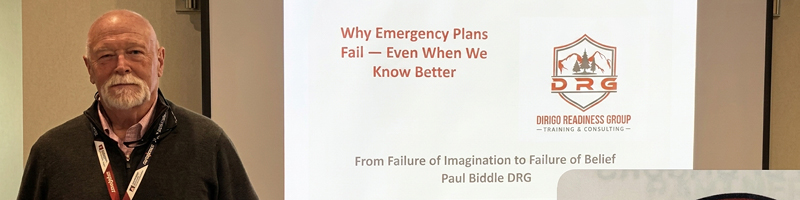
  • The Path That Found Her: How Edith Campa Turned an Unexpected Career Change into a New Purpose

    2026-08-13T00:00:00+00:00

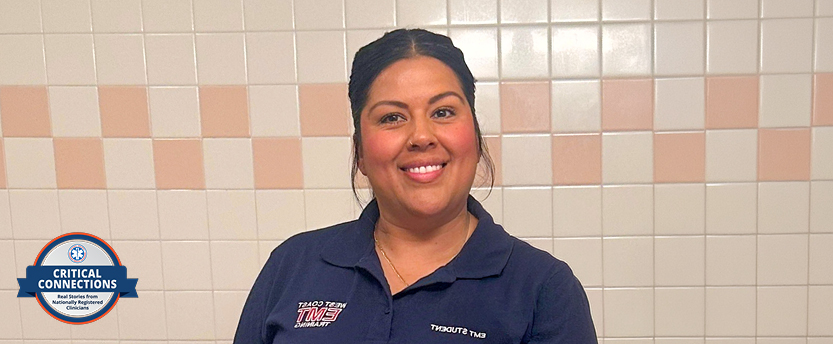
    Long before emergency medical services (EMS) became part of her story, helping people had already been the thread connecting every chapter of Edith Campa’s life. Fresh out of high school, she dreamed of studying psychology, but practical advice and the realities of paying for college led her toward business instead. As a first-generation college student, she earned associate degrees in behavioral sciences and business before completing a bachelor’s degree in business. 

    She started as a bank teller and spent the next 14 years building a career in banking, eventually rising into executive leadership.  

    Despite her professional success, the accomplishments she remembers most were not the promotions or titles she earned, but the opportunities she had to help others. Whether teaching financial literacy to underserved communities, mentoring young people through organizations like the Boys & Girls Club, or leading teams, Campa found purpose in helping people grow. 

    “I’ve always been people-oriented,” she said. “I want to help people succeed.” 

    Then life changed. When her son was presented with an opportunity to pursue his athletic dreams, Campa and her husband packed up their family and moved more than 200 miles from Ventura County to Riverside County, California. The move meant leaving behind the banking career she had spent years building. 

    “It was just one of those moments where you know what you have to do,” she said. 

    With fewer leadership opportunities available in her new community, Campa accepted a role in an entirely different industry, becoming director of people and culture for a construction company. She loved it. Leading people, developing culture, and building something new felt like the perfect next chapter. 

    Then, just a few years later, the company eliminated her position. “I felt like I lost three years of my life trying to find myself again,” she said. At the time, it felt like another setback, but today, she sees it differently. “Sometimes rejection is simply redirection.” 

    Finding EMS 

    Edith-CampaPics_.jpg

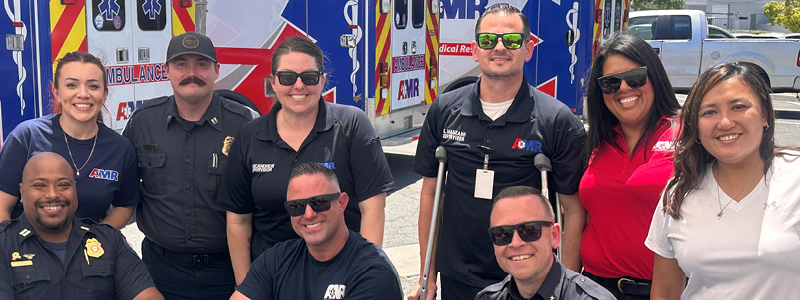
    While searching for her next opportunity, Campa came across a recruiter position with American Medical Response (AMR), one of the nation’s largest ambulance service providers. On paper, it made sense, as she understood recruiting, leadership, and, most importantly, people. 

    EMS, however, was another story. “It was a completely different language,” she said with a laugh. As she traveled to schools, career fairs, and community events, introducing students to careers as EMTs and Paramedics, she found herself wanting to better understand the profession she was representing. 

    The question came up often. “Are you an EMT?” “No,” she would answer. “I’m the recruiter.” The answer never felt like enough. “I wanted to understand what they were experiencing,” she said. “I didn’t want to simply recruit EMS. I wanted to understand their world.” 

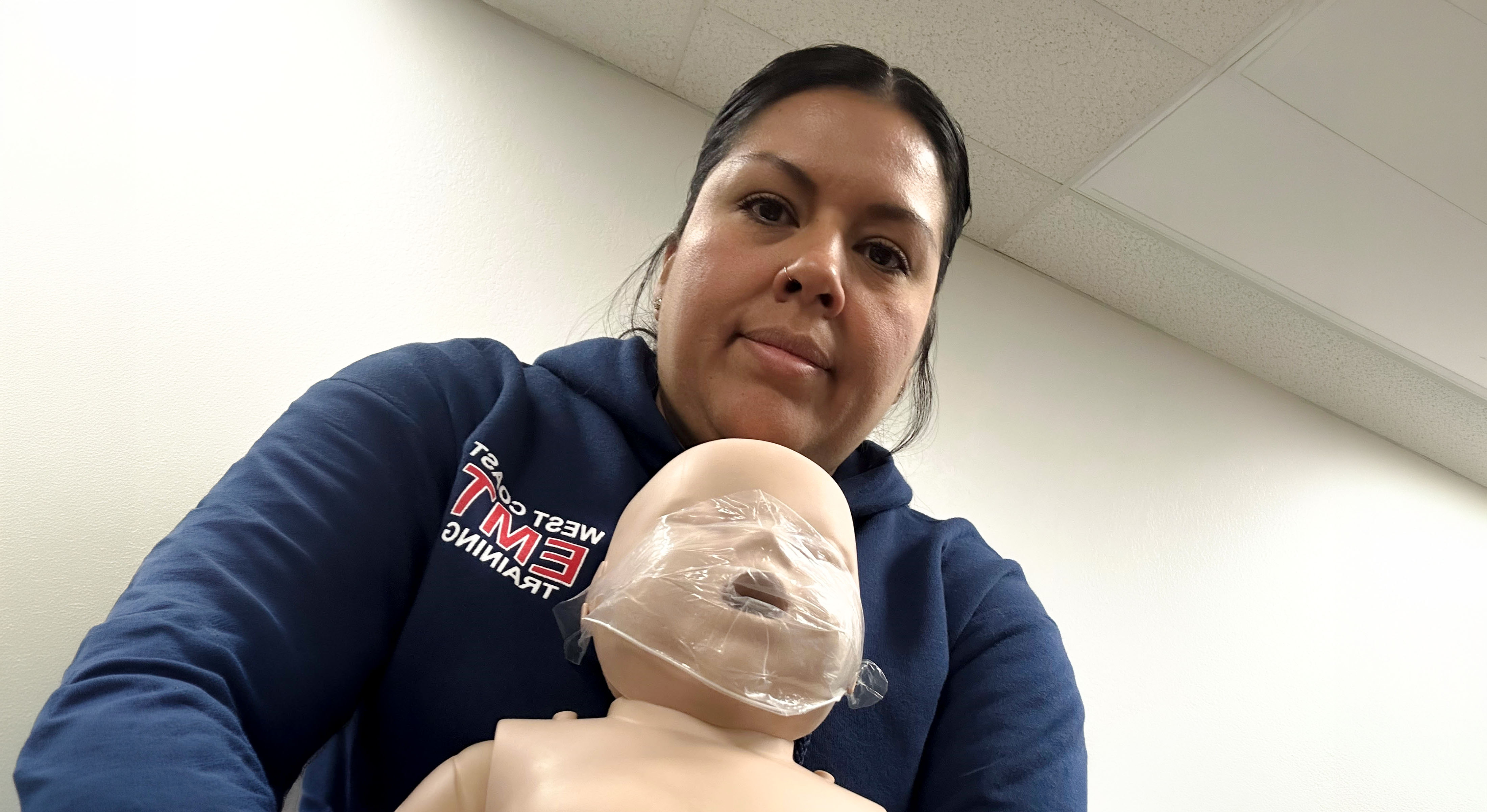
    So, at 40 years old, with a full-time job, five children, and no healthcare background, Campa enrolled in EMT school. She didn’t need the certification to do her job, but she chose it because she believed the best way to support future EMS Clinicians was to experience the journey herself. 

    What began as a way to better connect with Candidates would become something much more. It would become a discovery of where she truly belonged. 

    All In 

    EMT-school-copy.jpg
    Going back to school was both exciting and intimidating. Most of Campa’s classmates were just beginning their careers, while she was balancing a full-time job, a husband who frequently traveled for work, five children, and a household that never slowed down. “I have a busy life,” she laughed. 

    Traditional weekday classes weren’t an option, so she enrolled in a weekend EMT program that met every Saturday for 17 weeks. The schedule demanded nearly every free moment she had. Before class, Campa prepared breakfast for her family. During lunch breaks, she drove home to cook another meal before returning for the afternoon session. After class, she made dinner, spent time with her family, and studied late into the evening. 

    Birthdays, holidays, and family gatherings often gave way to textbooks and flashcards as she remained focused on earning her EMT certification. “When I commit to something, I give it 150%,” she said. 

    One wall in her home soon disappeared beneath handwritten notes, diagrams, and medical terminology. Her husband practiced EMT skills with her, while her oldest daughter helped care for her younger siblings while Campa attended class. Even her children began learning EMS terminology from the study notes covering the walls of their home. 

    “There is a village behind everyone’s success,” Campa said. “Everybody somehow played a small piece in the bigger picture.” 

    That village extended far beyond her family. Her coworkers encouraged her, EMS Clinicians answered questions at community events, her instructors challenged her to keep learning, and classmates formed study groups that reinforced concepts and built her confidence. 

    Looking back, Campa doesn’t see the journey as something she accomplished alone. She sees a community that supported her every step of the way. Together, they helped her achieve a goal that required determination, sacrifice, and an unwavering commitment to learning. 

    For the first time, EMS no longer felt like a profession she was learning about, but one where she truly belonged. 

    Walking in Their Boots 

    Edith-Campa.jpg
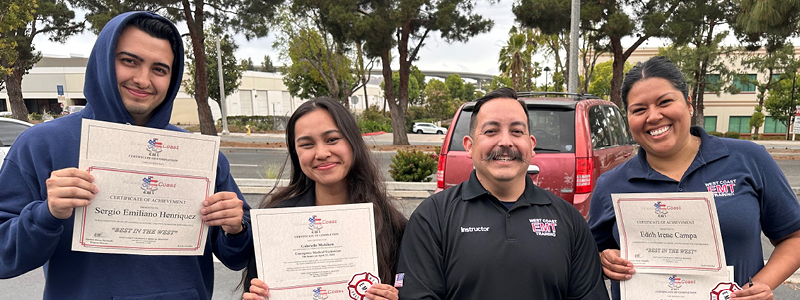
    After finishing EMT school at the top of her class, Campa faced one final milestone, and that was the National Registry certification examination. 

    For months, she had listened to Candidates share stories about the examination. She heard about the nerves, uncertainty, and pressure. Some passed on the first attempt, while others needed more than one try. Like many future EMS Clinicians, she wondered what her own experience would be. “I think I put more pressure on myself because I recruit these Candidates every day,” Campa said. “I wanted to experience exactly what they experience.” 

    She prepared the same way she approached everything else, giving it everything she had. She acquired study resources, joined review sessions, and filled another whiteboard with notes. Still, she couldn’t quiet the doubts. “I was my own worst critic,” she said. “I kept thinking, ‘What if I don’t pass?’” 

    On examination day, Campa quietly left home without telling anyone except her husband where she was going. “I didn’t want everyone asking how it went if I didn’t pass,” she said. When the examination ended, she walked out feeling cautiously optimistic. “I felt good,” she said. “But then you start replaying every question in your head.” 

    Later that afternoon, the email arrived. The first word she saw was “Congratulations!” “I just started crying,” Campa said. The moment was about far more than passing an examination. It represented every early Saturday morning, every late night spent studying after her children went to bed, every family gathering she missed, and every moment her family stepped in so she could continue chasing a goal that once seemed impossible. 

    “My faith, my family, and an incredible community of EMS employees who supported, encouraged, taught, and believed in me made this possible,” she said. 

    For Campa, earning National Registry certification wasn’t simply another accomplishment to add to her résumé. It was proof that she truly understood the experience of the people she now recruits every day. “I don’t just recruit EMS anymore,” she said. “I am EMS.” 

    More Than a Recruiter 

    Edith-Campa2.jpg
    Today, Campa approaches every conversation with future EMS Clinicians from a place of firsthand experience. She knows what it feels like to question whether there is enough time, energy, or confidence to succeed while balancing work, family, and school because she has lived that journey herself. “I understand the journey behind becoming an EMS Clinician,” she said. “It allows me to connect with Candidates in a completely different way because I’ve now walked that path.” 

    She hopes her story reminds others that purpose does not always arrive on the timeline we expect. EMS was never part of her original plan. Then again, neither were banking or construction, but each unexpected chapter gave her the experiences, perspective, and resilience that prepared her for the work she does today. 

    Although her career took unexpected turns, one thing remained constant, and that was her commitment to helping others reach their potential. Whether through financial education, mentorship, leadership, or recruiting the next generation of EMS Clinicians, Campa found meaning in helping people succeed. EMS didn’t change that purpose. It simply gave it a new direction. 

    “I want people to know it’s never too late,” she said. “Sometimes we get comfortable where we are, but stepping outside your comfort zone can lead you exactly where you’re supposed to be.”  

    She continues recruiting the next generation of EMS Clinicians while preparing for the next chapter of her own journey. She hopes to gain field experience, continue learning, and eventually mentor others entering the profession. 

    For Campa, earning National Registry certification wasn’t the finish line. It was the foundation for everything she hopes to accomplish next. 

    The Path That Found Her 

    Edith-Campa.jpgLooking back, Campa no longer sees the career changes, unexpected moves, or setbacks as detours. Instead, she sees each one as a step that led her to a profession that brought together everything she valued: service, leadership, lifelong learning, and helping others realize their potential. 

    “I truly believe everything happens for a reason,” she said. “Sometimes we don’t understand it in the moment, but later you realize you were exactly where you were supposed to be.” 

    Campa didn’t set out to become an EMT. She simply wanted to better understand the people she served. In doing so, she discovered a profession that felt like a natural extension of who she had always been. 

    The path she planned never led to EMS, but the path that found her sure did. 

     About the National Registry of Emergency Medical Technicians 

    Guided by our mission to support the EMS profession through partnerships, research, and lifelong assessment of clinical competence, the National Registry was established in 1970 as a non-profit organization and serves as the Nation’s Emergency Medical Services certification organization. It is accredited by the National Commission for Certifying Agencies (NCCA), the accreditation body of the Institute for Credentialing Excellence. The National Registry maintains NCCA accreditation for each of the four certification programs: Emergency Medical Responder (NREMR), Emergency Medical Technician (NREMT), Advanced Emergency Medical Technician (NRAEMT), and Paramedic (NRP). Credentialing protects the public, assures consumers that Clinicians have met standards of practice, advances the EMS profession, and establishes standards of professional knowledge, skills, and practice. Additional information is available at NREMT.org, and BlueSky, TikTok, Facebook, Instagram, LinkedIn, Reddit, and YouTube. 

    Media Contact:
    Kelly Schroeder
    Manager of Integrated Content & Communications 
    kschroeder@nremt.org
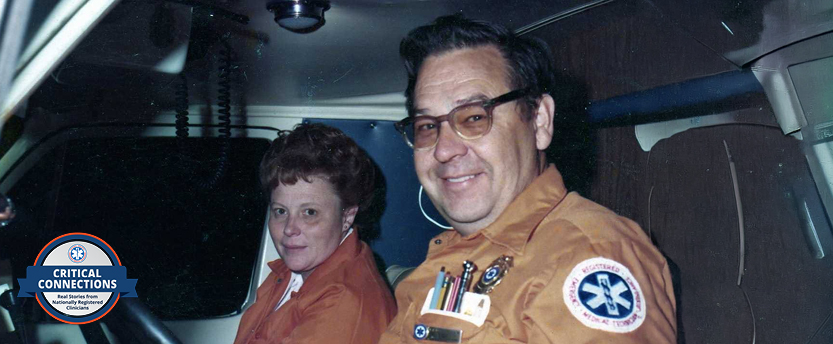
  • National Registry Board of Directors Meeting – Public Notice and Call for Public Comment on Proposed Policy Variance Policy Update

    2026-07-16T00:00:00+00:00

    During a recent National Registry of EMTs Board of Directors Meeting, the Board approved proposed updates to the Policy Variance Policy (Policy 81.19) for public comment.
    Transparency, collaboration, and stakeholder input are essential to the National Registry. As such, the National Registry provides a 60-day stakeholder comment period for feedback on draft resolutions and policies. The public comment period closed on Monday, September 14, 2026. A summary of the proposed policy update is provided below. Click on the buttons to view the full policy and to provide your comment.

    View Full Proposed Policy

    Summary For Public Comment on Policy 81.19

    The National Registry Board of Directors has proposed updates to Policy 81.19, including renaming the policy from Time Extension Policy to Policy Variance Policy, to more clearly define how requests for variances to established certification policies are evaluated. 

    The proposed updates would: 

    • Rename the policy to Policy Variance Policy to better reflect its broader purpose.  

    • Clarify the circumstances under which candidates and certified clinicians may request policy variances, including time extensions, additional examination attempts, and other exceptions to established certification policies.  

    • Clearly identify the certification pathways and policy requirements to which variances may apply, including initial certification and recertification.  

    • Define additional extenuating circumstances that are not eligible for consideration under the policy.  

    The policy establishes consistent criteria for evaluating requests for variances to certification requirements while ensuring fairness, transparency, and the integrity of the National Registry certification process. 

  • National Registry Board of Directors Meeting – Public Notice and Call for Public Comment on Proposed Update to the Policy Variance Policy

    2026-07-16T00:00:00+00:00

    The National Registry Board of Directors has proposed updates to Policy 81.19, including renaming the policy from Time Extension Policy to Policy Variance Policy, to more clearly define how requests for variances to established certification policies are evaluated. 

    The proposed updates would: 

    • Rename the policy to Policy Variance Policy to better reflect its broader purpose.  

    • Clarify the circumstances under which Candidates and certified Clinicians may request policy variances, including time extensions, additional examination attempts, and other exceptions to established certification policies.  

    • Clearly identify the certification pathways and policy requirements to which variances may apply, including initial certification and recertification.  

    • Define additional extenuating circumstances that are not eligible for consideration under the policy.  

    The policy establishes consistent criteria for evaluating requests for variances to certification requirements while ensuring fairness, transparency, and the integrity of the National Registry certification process. 

    View Full Resolution

    The public comment period will close on Monday, September 14, 2026. 

     About the National Registry of Emergency Medical Technicians 

    Guided by our mission to support the EMS profession through partnerships, research, and lifelong assessment of clinical competence, the National Registry was established in 1970 as a non-profit organization and serves as the Nation’s Emergency Medical Services certification organization. It is accredited by the National Commission for Certifying Agencies (NCCA), the accreditation body of the Institute for Credentialing Excellence. The National Registry maintains NCCA accreditation for each of the four certification programs: Emergency Medical Responder (NREMR), Emergency Medical Technician (NREMT), Advanced Emergency Medical Technician (NRAEMT), and Paramedic (NRP). Credentialing protects the public, assures consumers that Clinicians have met standards of practice, advances the EMS profession, and establishes standards of professional knowledge, skills, and practice. Additional information is available at NREMT.org, and BlueSky, TikTok, Facebook, Instagram, LinkedIn, Reddit, and YouTube. 

    Media Contact:
    Kelly Schroeder
    Manager of Integrated Content & Communications 
    kschroeder@nremt.org
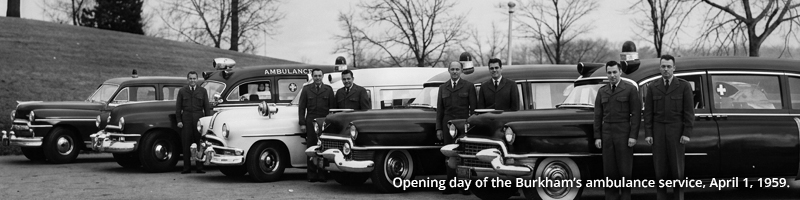
  • National Registry Research Fellow Chris Gage Receives Inaugural Doctoral Research Award from The Ohio State University

    2026-06-15T00:00:00+00:00

    COLUMBUS, OH—The National Registry of Emergency Medical Technicians (National Registry) is proud to announce that EMS Research Fellow and National Registry’s Dr. Craig Manifold EMS Research Scholar, Chris Gage, has been selected as the recipient of the inaugural Doctoral Research Award from The Ohio State University College of Public Health.

    The Doctoral Research Award is part of a newly established set of honors introduced this year by The Ohio State University College of Public Health and recognizes exceptional doctoral research and scholarship. Chris is the first recipient to be recognized for this award, highlighting the impact of his contributions to EMS research and public health.

    “Chris brings intellectual rigor, relentless curiosity, and a true commitment to improving public health. His ability to translate EMS frontline experience into high-impact research using EMS data makes this recognition well deserved,” said Dr. Ashish Panchal, director of research at the National Registry.

    The news of the award came as a surprise. While preparing for a pre-commencement ceremony, his advisor called and instructed him and his wife to arrive early and sit in the front row. “I technically did not know until I showed up, and they called my name,” Chris said. “That was really the moment it became real.”

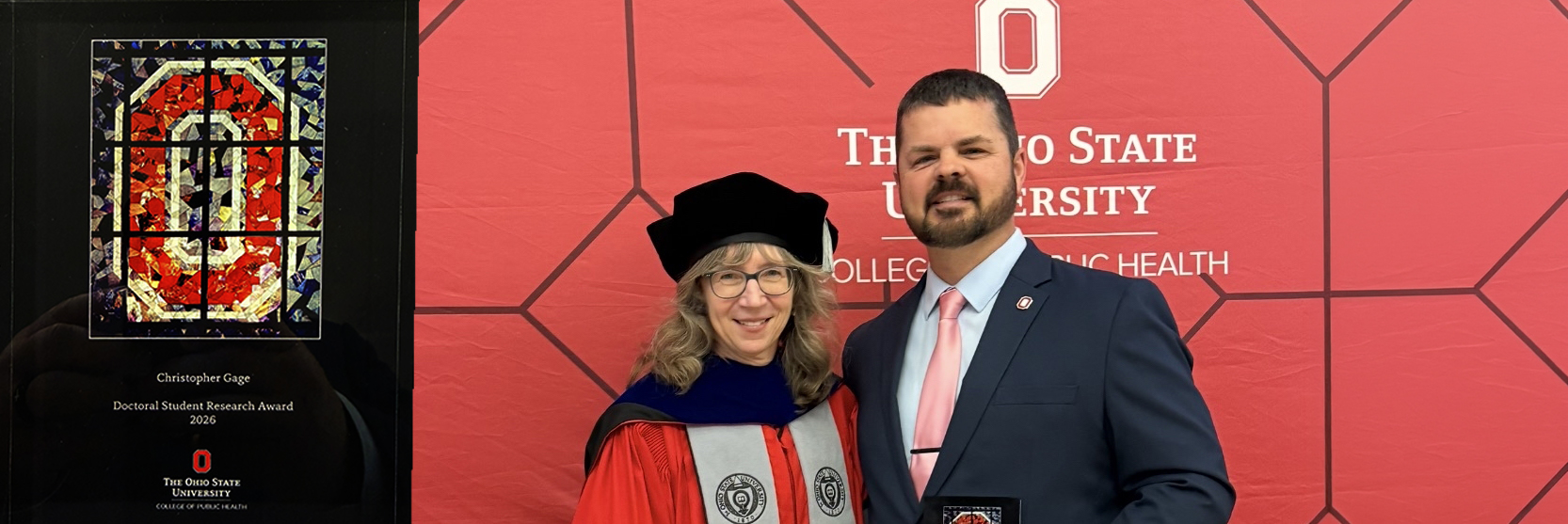
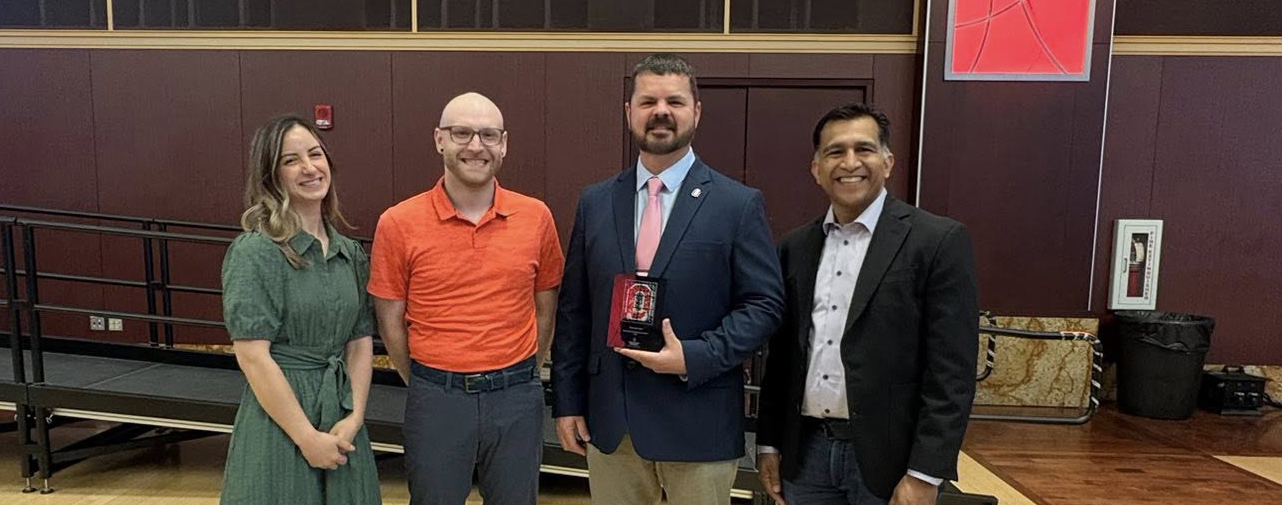
    Chris Gage stands with his doctoral advisor, Amy Ferketich, PhD, after receiving the Doctoral Research Award from The Ohio State University College of Public Health
    Chris Gage appears alongside his doctoral advisor, Amy Ferketich, PhD, after receiving the Doctoral Research Award from The Ohio State University College of Public Health

    The award recognizes a growing body of research that has helped advance understanding of critical issues facing emergency medical services. Among Chris’s most notable research is his work examining layperson naloxone administration and its role in responding to opioid overdoses published in JAMA. Using data from the National EMS Information System, Chris and his collaborators analyzed tens of millions of EMS patient care records and identified a 43 percent increase in layperson-administered naloxone between 2020 and 2022, along with a corresponding decrease in EMS-administered naloxone during the same period.

    The findings highlight the growing role of community members in initiating early overdose responses and reflect broader national efforts to expand access to naloxone through public health initiatives and community distribution programs.

    “By leveraging national EMS data, Chris has produced important insights on naloxone use and overdose outcomes,” Panchal said. “This work helps us better understand the impact of community overdose response efforts and the evolving role of layperson intervention.”

    While the naloxone study is one example of Chris’s impact, it represents only a portion of his growing body of research. Since joining the National Registry’s EMS Research Fellowship, Chris has expanded his research portfolio from one published manuscript prior to entering the program to nearly 50 publications. His work has focused on using large-scale EMS data systems to better understand prehospital care, identify emerging trends, and generate evidence to improve patient care and system performance.

    Chris emphasized that the recognition reflects the efforts of a much larger team. “Ashish Panchal, Michael Lyons, Rebecca Cash, and so many others are powerhouses in this field,” Chris said. “I may be the one receiving the award, but it reflects the strength of our team and the opportunities that the fellowship provides.”

    He also credited mentors and collaborators at The Ohio State University, Harvard University, and across national EMS research networks for supporting his academic and professional development. “From EMT to doctoral-trained researcher, it has been an incredible journey,” Chris said. “The fellowship has opened doors to opportunities I never imagined.”

    Chris is currently preparing for his dissertation defense, scheduled for July 2026. His doctoral research focuses on EMS workforce health, specifically tobacco and nicotine use among EMS Clinicians and the role of agency-level workplace policies. His work examines patterns of use, organizational policy environments, and how policy communication and enforcement may influence tobacco-related norms within EMS agencies.

    690825669_26364004883300381_3449667602182751604_2.jpg
    From left, National Registry Research Fellows Kayla Riel, Jacob Kamholz, and Chris Gage, holding the Doctoral Research Award, stand with Dr. Ash Panchal, Research Director at the National Registry.

    While the award recognizes Chris’s individual achievements, his success also reflects the opportunities provided through the National Registry EMS Research Fellowship. The fellowship was established to develop experienced EMS Clinicians into future leaders in research, data science, and public health by supporting doctoral education and hands-on research experience.

    Through the fellowship, participants are employed by the National Registry while pursuing a Ph.D. at The Ohio State University College of Public Health. Fellows receive full tuition and fee support, competitive salary and benefits, mentorship from national EMS and research leaders, and opportunities to conduct applied EMS research using some of the largest EMS datasets in the country.

    The National Registry created the fellowship to strengthen research capacity within EMS and provide Clinicians with a pathway to advanced education and careers in research. Chris’s accomplishments demonstrate the impact such opportunities can have on both individual researchers and the profession as a whole.

    Recruitment for the next EMS Research Fellow is scheduled to open in August 2026, with the fellowship beginning in June 2027. Candidates typically hold a master’s degree in public health, epidemiology, statistics, or a related field, along with EMS certification at the EMT level or higher and a strong interest in research and data analysis.

    Chris encourages EMS Clinicians interested in research to seek mentorship opportunities, including the National Registry Summer EMS Research Mentorship Program, and explore programs that provide exposure to research methods and collaboration.

    He also emphasized the importance of accurate EMS documentation, which serves as the foundation for research that helps improve patient care and system performance. “People like me are using that data to understand trends and develop solutions,” Chris said. “If it is not accurate, we cannot draw accurate conclusions.”

    The National Registry congratulates Chris Gage on this outstanding achievement and well-deserved recognition of his contributions to EMS research, public health, and the future of the EMS profession.

    About the National Registry of Emergency Medical Technicians 

    Guided by our mission to support the EMS profession through partnerships, research, and lifelong assessment of clinical competence, the National Registry was established in 1970 as a non-profit organization and serves as the Nation’s Emergency Medical Services certification organization. It is accredited by the National Commission for Certifying Agencies (NCCA), the accreditation body of the Institute for Credentialing Excellence. The National Registry maintains NCCA accreditation for each of the four certification programs: Emergency Medical Responder (NREMR), Emergency Medical Technician (NREMT), Advanced Emergency Medical Technician (NRAEMT), and Paramedic (NRP). Credentialing protects the public, assures consumers that Clinicians have met standards of practice, advances the EMS profession, and establishes standards of professional knowledge, skills, and practice. Additional information is available at NREMT.org, and BlueSky, TikTok, Facebook, Instagram, LinkedIn, Reddit, and YouTube. 

    Media Contact:
    Kelly Schroeder
    Manager of Integrated Content & Communications 
    kschroeder@nremt.org
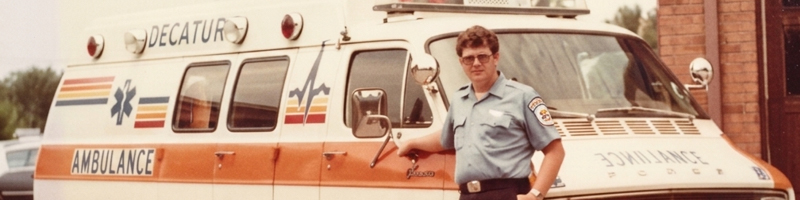
  • Behind the Questions: How EMS Clinicians Help Shape National Registry Examinations

    2026-06-17T00:00:00+00:00

    One of the most common inquiries surrounding National Registry of EmergencyMedical Technicians (National Registry) certification examinations is simple: Where do the test questions come from? For some, the answer may seem mysterious, while others may assume examination questions are written by a small group of people in an office, far removed from the realities of patient care. The truth is very different.

    Behind every question, or item, as they are referred to in the certification industry, is a collaborative process involving subject matter experts (SMEs) from across EMS, including Clinicians, Educators, physicians, and State EMS Officials representing diverse regions, practice settings, and perspectives. Together, they ensure examination content is fair, clinically accurate, and reflective of real-world practice.

    “It’s you in the field who makes the exam, not us,” said Matt Ozanich, senior examinations program manager at the National Registry. “People don’t always understand that. There’s a perception that the exam is just written in an office somewhere, but that’s not the case. It’s you in the field who creates the content.”

    From Field Experience to Examination Item

    Behind-the-question_.jpg
    Before a question ever reaches a Candidate, it begins with EMS Clinicians and Educators who write examination items based on current practice and established references. These items then move through multiple rounds of internal review at the National Registry before ever reaching what is known as an “item review panel.”

    “So, before we talk about the panel process, I’ll back up a little and talk about where these items came from,” said Brian Hamilton, manager of content development at the National Registry. “These are items written by working Paramedics, EMTs, and Educators with whom we’ve contracted. Then we refine them internally before they ever go to a panel.”

    Panel Review: Collaboration in Action

    Behind-the-question_2.jpg
    Once internal review is complete, a panel of EMS Clinicians from across the United States is assembled to evaluate each item in detail. “We have a representative sample from across the country,” Hamilton said. “They come in and look at the items, and we have dialogues about them. We modify them as needed, make sure they’re clinically sound, appropriate for the audience, and measure the knowledge and skills that matter in practice.”

    A typical panel may review hundreds of examination items over several days, with each question carefully evaluated, debated, and refined, and preparation for these sessions begins months in advance. “We’re developing items throughout the year to prepare for the panels,” Ozanich said. “Then there’s recruiting panelists, training, travel arrangements, and all the preparation that happens before anyone even sits down to review a question.”

    Before reviewing examination content, panelists receive training on item development, common testing pitfalls, and what to look for during the review process.

    Every Voice Matters

    Behind-the-question_3.jpg
    Panelists are selected from diverse backgrounds, regions, and practice settings to ensure examination content reflects the national EMS profession.

    Once discussions begin, no question is considered off-limits. Panelists are encouraged to raise concerns, challenge assumptions, and carefully examine each item. “If one panelist had a concern over the question, it was something that we all dissected and talked about, no matter how big or small,” said Jamie Earp, an EMS educator and AEMT from Decatur County Fire and Rescue in Georgia and a first-time participant in an AEMT Item Review Panel held May 19–21 at the National Registry headquarters in Columbus, Ohio. “It was a very respectful, very well-developed area to stop, think, and work together for the goal of making a comprehensive, fair test.”

    Ozanich said one of the biggest surprises for new panelists is realizing how much influence they have. “So many eyes are on every item, and their feedback fully matters,” he said. “The people in that room have real influence over what happens to a question.”

    Panel discussions often explore regional differences and whether items reflect consistent national practice. “We have to strike that middle ground,” Hamilton said. “It’s a national certification. It’s not a Texas certification, a Georgia certification, or an Alaska certification. The only way we can really do that is to have that many perspectives and views.”

    That diversity is essential to the process. “I think that diversity is what brings about understanding,” Earp said. “You have people with different experiences, educational levels, and perspectives. Having the opportunity to sit across from somebody who has experienced the same thing differently provides a perspective that I probably wouldn’t have had otherwise.”

    Looking Behind the Curtain

    Behind-the-question_4.jpg
    For many participants, the panel process reshapes their understanding of how examinations are built. “As an Educator, I wanted to peek behind the curtain,” Earp said. “Are these questions aligned with the textbooks? Are they aligned with the way we teach? Are they good, solid questions within the parameters of what students have learned?”

    What he discovered exceeded expectations. “It was actually more in-depth than what I thought it would be,” Earp said. “I was very impressed with how the material is modeled and used. National Registry was very particular about the level at which material gets used and the evidence supporting it.”

    William Lee, an AEMT from Vermont, arrived with a different assumption. “Before I came here, I literally knew nothing,” Lee said. “I just figured it was a bunch of people sitting in cubicles typing away.”

    That perception quickly changed. “The National Registry doesn’t actually write their questions the way I thought they did,” Lee said. “You’ve got people coming from across the country, and everybody is reviewing the questions to make sure they’re accurate, make sense, and are fair for people taking the test.”

    Maria Barcena, an AEMT from Utah, came away with a greater appreciation for the rigor behind the process. “The experience was great,” Barcena said. “I appreciate how we get to learn about what makes a ‘good’ question and how thorough the National Registry is about the citations for each question. It’s interesting to know how one question moves through an extensive process before even seeing the candidates.”

    The opportunity to collaborate with EMS Clinicians from different regions also stood out to her. “Textbooks can be so obscure sometimes, so it was refreshing to discuss procedures, treatments, and considerations that take place with other states and areas,” Barcena said. “That way, we can evaluate every Candidate without regional bias.”

    Ozanich noted that misunderstandings often stem from the stress of testing itself. “When you’re taking a test, you’re stressed out,” he said. “Sometimes people remember one unfamiliar word or concept and assume that’s what the entire exam was focused on.”

    He encourages Educators and Candidates to rely on official testing resources rather than informal interpretations of exam content.

    Built on Evidence and Collaboration

    Behind-the-question_5.jpg
    According to Hamilton, nearly every item generates discussion. “Most items have some sort of discussion, some sort of refinement,” he said. “By the time it gets to the panel, you’d think there’d be nothing left to talk about, but there always is.”

    Those conversations often lead to meaningful improvements in clarity and fairness. “We take the feedback very seriously,” Hamilton said. “It’s a continual feedback loop of learning for everybody involved.”

    For Ozanich, the process reflects the nature of medicine itself. “I love my job because I get to debate about medicine with people all day long,” he said. “Medicine isn’t black and white. You’re constantly evaluating different perspectives, justifying decisions with rationales, and making sure the question is testing the right thing in the right way.

    The process is grounded in evidence-based references and current EMS practice.

    “I learned that it’s a priority,” Earp said. “National Registry is hyper-focused on doing the right thing and finding information that supports growth in both testing and provider development. Their focus is making sure that we are providing the highest level of providers that we possibly can in the fairest way possible.”

    For Brian Wilson, a physician and EMS Medical Director, the impact is direct. “The quality of the Clinician that comes out and walks into our station to start working for us matters,” Wilson said. “Each question is thoughtfully curated and gone over in excruciating detail to make sure it’s assessing what we’re trying to assess and doing it in a valid way.”

    More Than a Test

    Behind-the-question_6.jpg
    By the end of a panel, many participants leave with a new perspective. “A lot of people come in with a view of the National Registry’s tests that might not be 100% positive,” Hamilton said. “But it’s pretty rare that someone leaves these panels and doesn’t have a new respect for the amount of work, care, judgment, and expertise that goes into every test question.”

    That sentiment is echoed by the participants themselves. “I think it’s a testament to the good work that’s being done,” Earp said. “National Registry is serious about making sure the material meets students’ needs, educators’ needs, and the profession’s needs.”

    At its core, the process ensures Candidates are evaluated fairly while protecting the public and supporting the EMS profession. “It’s not a machine up there spitting out questions,” Hamilton said. “It’s just a whole lot of work and a whole lot of caring.”

    The next time someone asks where National Registry examination questions come from, the answer is simple, they come from the field.

    Through the item writers and panelists, who are working EMS Clinicians, Educators, and physicians from across the country, EMS professionals help shape the certification examinations used to assess the next generation of Clinicians. Behind every question is a team of people committed to ensuring the examination is fair, relevant, and reflective of real-world practice, helping prepare future EMS Clinicians to serve their communities with confidence.

    About the National Registry of Emergency Medical Technicians 

    Guided by our mission to support the EMS profession through partnerships, research, and lifelong assessment of clinical competence, the National Registry was established in 1970 as a non-profit organization and serves as the Nation’s Emergency Medical Services certification organization. It is accredited by the National Commission for Certifying Agencies (NCCA), the accreditation body of the Institute for Credentialing Excellence. The National Registry maintains NCCA accreditation for each of the four certification programs: Emergency Medical Responder (NREMR), Emergency Medical Technician (NREMT), Advanced Emergency Medical Technician (NRAEMT), and Paramedic (NRP). Credentialing protects the public, assures consumers that Clinicians have met standards of practice, advances the EMS profession, and establishes standards of professional knowledge, skills, and practice. Additional information is available at NREMT.org, and BlueSky, TikTok, Facebook, Instagram, LinkedIn, Reddit, and YouTube. 

    Media Contact:
    Kelly Schroeder
    Manager of Integrated Content & Communications 
    kschroeder@nremt.org
  • Cleveland EMS Is Redefining Emergency Care Through Innovation, Community Medicine, and a New Vision for the Future

    2026-05-20T00:00:00+00:00

    Cleveland EMS is redefining emergency medical services as a more proactive, clinical, and community-connected system of care. What was once centered primarily on rapid response and hospital transport is evolving into a broader model focused on prevention, continuity, and long-term patient outcomes.

    In conversations with Dr. Jeremiah Escajeda, Medical Director for Cleveland EMS, Commissioner Orlando Wheeler, and Commander Ellen Kazimer, a shared vision emerged. Cleveland EMS is building a system grounded in innovation, prevention, education, clinical excellence, and sustained community trust.

    That vision is already reflected in daily operations across the organization. 

    Moving EMS Beyond Response

    Dr. Escajeda described a clear shift in EMS toward prevention and community-based care. “We’re going to see EMS move more toward preventative medicine,” he said, pointing to community paramedicine and mobile integrated health as central to the future.

    In Cleveland, that shift is already underway. Outreach teams now follow up after 911 calls, connect frequent users to care, and support residents facing chronic illness, substance use disorder, housing instability, or limited access to primary care.

    Commissioner Wheeler noted that this work is closing a long-standing gap in continuity of care. “EMS is no longer only responding in the moment,” he said. “It is helping address what happens next, and that continuity is what builds trust in the community.” 

    Innovation That Changes Outcomes

    ambulance-speed.jpg
    Cleveland EMS has introduced several clinical advancements that are already improving care in the field. One of the most significant is the whole blood program, which allows paramedics to administer blood to patients in hemorrhagic shock before hospital arrival. Cleveland EMS became the first major city in Ohio to deploy the program, now expanded across all field captain vehicles.

    Dr. Escajeda called it a major step forward in prehospital medicine. “The earlier we can intervene with definitive care, the better chance we have to change the outcome,” he said. “Whole blood gives us the ability to begin lifesaving treatment before the patient ever reaches the emergency department.”

    Commander Kazimer noted that innovations like this only succeed when they are supported by strong training and culture in the field. “These advancements raise the level of care we can provide, but they also depend on consistency, preparation, and Clinicians who are confident in applying them under pressure,” she said.

    Additional advancements include field ventilators, video-assisted intubation, automated CPR devices, and expanded research partnerships focused on critical care outcomes.

    Commissioner Wheeler said these changes reflect more than new tools. “We’re changing the mindset of what EMS can be,” he said. “This is about building a system that delivers higher levels of care, supports our Clinicians, and improves outcomes for those we serve.” 

    A System Built on Community Connection

    Cleveland EMS is expanding its role in community health through proactive engagement and follow-up care. Commissioner Wheeler described biweekly call reviews and outreach efforts focused on frequent 911 callers. These efforts connect individuals to resources such as insurance support, healthcare navigation, elder services, and substance use treatment programs.

    “We realized that many calls are tied to larger issues that won’t be solved in a single emergency response,” Wheeler said. “If we can connect people to support systems before the next crisis, we can improve outcomes medically, personally, and socially.”

    The agency also conducts outreach in shelters and community spaces to ensure individuals experiencing homelessness continue to receive care. Follow-up after EMS calls is now a standard part of operations, reinforcing that care does not end at the scene. 

    Culture, Trust, and Clinical Excellence

    ambulance-speed.jpg
    Across Cleveland EMS, culture is central to how care is delivered and how the system evolves. Commander Kazimer emphasized that trust is built through every interaction. “People remember how you made them feel on their worst day,” she said. “Trust is earned through every interaction, every decision, and every moment of care.”

    That expectation shapes how EMS is defined internally. It is viewed as a calling rooted in accountability, compassion, and clinical excellence, reinforced through rigorous training, continuing education, and ongoing professional development.

    Dr. Escajeda highlighted the human responsibility behind that standard. “We see people in some of the hardest moments of their lives, sometimes more than once,” he said. “Our responsibility is to show up with consistency, empathy, and clinical excellence every time.”

    Commissioner Wheeler connected that culture to organizational performance. “What makes Cleveland EMS strong is that everyone from the field to leadership is working toward the same mission,” he said. “That alignment is what allows us to innovate while staying grounded in patient care.”

    Together, these perspectives reflect a system in which culture is not separate from care, but rather what enables it. 

    Celebrating 50 Years, Building the Next Model of EMS

    Screenshot-2026-05-18-at-12-13-55 PM.png
    In October 2025, Cleveland EMS marked 50 years of service. Leadership is now focused on the next phase of evolution, including expanded telehealth capabilities and treat-in-place models designed to reduce unnecessary transport.

    “We’re looking at how we evolve the system, so care doesn’t always have to start and end in the back of an ambulance,” Wheeler said. “If we can safely treat patients in place or connect them to the right level of care sooner, we improve the experience for patients and strengthen the system.”

    The goal remains consistent in delivering the right care in the right place at the right time.

    Redefining What EMS Can Be

    Cleveland EMS is not simply adapting to change, it is helping define it. Through clinical innovation, community medicine, rigorous training, and a growing focus on prevention, the agency is reshaping what emergency medical services can look like in a modern healthcare system.

    It is no longer defined only by response. No longer limited to transport.

    It is emerging as a trusted, community-connected healthcare partner focused on improving outcomes long before and long after the 911 call ends.
    ambulance-speed.jpg

     About the National Registry of Emergency Medical Technicians 

    Guided by our mission to support the EMS profession through partnerships, research, and lifelong assessment of clinical competence, the National Registry was established in 1970 as a non-profit organization and serves as the Nation’s Emergency Medical Services certification organization. It is accredited by the National Commission for Certifying Agencies (NCCA), the accreditation body of the Institute for Credentialing Excellence. The National Registry maintains NCCA accreditation for each of the four certification programs: Emergency Medical Responder (NREMR), Emergency Medical Technician (NREMT), Advanced Emergency Medical Technician (NRAEMT), and Paramedic (NRP). Credentialing protects the public, assures consumers that Clinicians have met standards of practice, advances the EMS profession, and establishes standards of professional knowledge, skills, and practice. Additional information is available at NREMT.org, and BlueSky, TikTok, Facebook, Instagram, LinkedIn, Reddit, and YouTube. 

    Media Contact:
    Kelly Schroeder
    Manager of Integrated Content & Communications 
    kschroeder@nremt.org