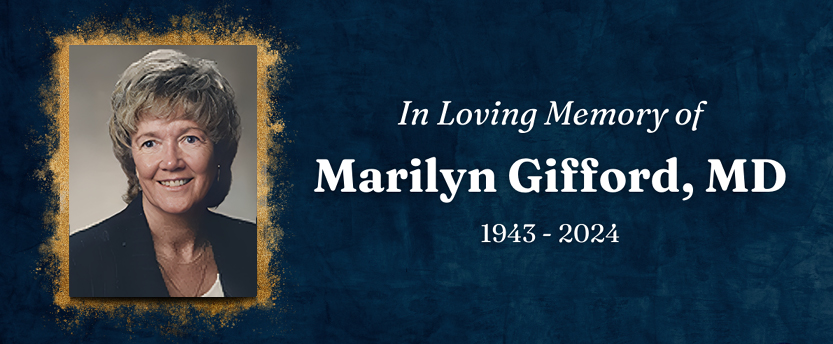
We extend our heartfelt condolences to the family, friends, and colleagues of the late Dr. Marilyn Gifford, former Board Chair of the National Registry of EMTs, who passed away earlier this week in Colorado Springs, Colorado.
Dr. Gifford played a crucial role as a member of the National Registry’s Board of Directors during a period of significant transformation for the organization. As the first woman to hold the position of board chair and one of only three individuals to serve in that capacity for two terms (1992-1993 and 1998-1999), her impact was profound. During her tenure, the National Registry Board of Directors endorsed the EMS Education and Practice Blueprint and pledged support to CAAHEP, the Commission on Accreditation of Allied Health Professionals, as the accrediting body. In her second term, Dr. Gifford spearheaded substantial revisions to the practical examinations for EMT-I/85, EMT-I/99, and EMT-Paramedic.
Beyond her contributions to the National Registry of EMTs, Dr. Gifford served as an emergency room physician in Colorado Springs from 1980 to 2013. Later, she assumed the role of Medical Director of Emergency Services, earning a reputation as a staunch advocate for her colleagues, staff, patients, EMS personnel, and the community at large.
Dr. Gifford’s exceptional guidance and unwavering commitment to prehospital care and emergency medicine were a true blessing to our world. We remain forever grateful for her exemplary leadership and invaluable contributions.
Media Contact: Shane Cartmill Public Relations and Media Manager scartmill@nremt.org
The following information is archived for transparency and historical purposes.
During the February 21, 2024 National Registry Assessment Committee meeting, the committee approved 24-Resolution-01 Resolution on ALS Certification Re-Entry Requirements. The resolution has been reviewed by the full National Registry Board of Directors and has been approved for a 60-day public comment period. The comment period closed on May 26, 2024.
Transparency, collaboration, and stakeholder input are essential to the National Registry. As such, the National Registry provides a 60-day stakeholder comment period to comment on the resolutions. Please see the full summary and an explanation of 24-Resolution-01 below (updated April 11, 2024 for further explanation).
Comment on 24-Resolution-01 (Public Comment closed on May 26, 2024)
Summary of 24-Resolution-01: As part of discontinuing the ALS (AEMT and Paramedic) Psychomotor Examination, the National Registry must update its State-Licensed Entry and Re-Entry processes for the AEMT and Paramedic Certifications to remove the requirement for the ALS Psychomotor Examination.
For the state-licensed entry pathway under 24-Resolution-01, a current and active, unrestricted state license now demonstrates minimum skill competency, as required by a state licensing body. The candidate will not be required to provide additional skills verification.
Upon meeting all application and eligibility criteria, the Candidate must then complete the National Registry’s certification examination at the appropriate level for National EMS Certification.
For the Re-Entry candidates, in addition to the eligibility criteria, the psychomotor and cognitive examination had to be complete prior to issuance of national certification. With 24-Resolution-01, the skills verification can now be completed through one of the following mechanisms after passing the certification examination and before the first recertification. Those mechanisms include providing a current, valid, and unrestricted state license, or skills verification by a state EMS office, accredited or state approved EMS program, or agency training officer or medical director.
Page was updated on May 28, 2024 to indicate the public comment period had closed.
Columbus, Ohio – In response to the growing concern over the health and wellness of firefighters and emergency medical services (EMS) clinicians, a groundbreaking initiative is underway to comprehensively evaluate the occupational risks associated with their daily activities. This landmark project, known as the Longitudinal Inquiry into Fire and EMS Health Study (LIFE Study), today took a vital step forward by securing $249,000 in initial funding to support its critical mission.
Over the past decade, there has been a growing awareness of the occupational hazards encountered by over 1 million career and volunteer firefighters and an additional 1 million EMS clinicians in the United States. The National Registry of Emergency Medical Technicians is partnering with leading universities, including The Ohio State University, to examine these risks with the ultimate goal of protecting our first responders and the vital work they do each day.
“These professionals face daily exposures, workplace violence, and on-the-job injuries, which can have far-reaching effects on their cardiovascular health, cancer risk, and mental well-being,” said Dr. Ashish Panchal, Research Director for the National Registry. “While some individual efforts have been made to assess these risks, there has been no large-scale, long-term study to comprehensively examine the combined challenges faced by firefighters and EMS clinicians.”
The $249,000 in initial funding, provided by the Florida Department of Health, Division of Emergency Preparedness and Community Support, marks a crucial step in advancing the LIFE Study’s mission. This funding will support the study’s Phase 1 development, which includes the formation of an oversight committee, the assembly of a collaborative research team, the design of a comprehensive study plan, the selection of study sites, the development of data collection tools, and the preparation of applications for federal funding.
Media Contact: Shane Cartmill Public Relations and Media Manager scartmill@nremt.org
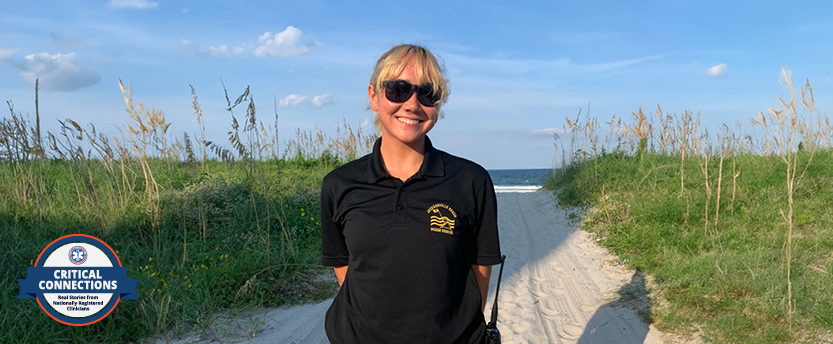
“Shark bite!” This is likely the mental image that comes to mind for many when picturing an emergency medical technician on a beach. However, the truth is that such incidents are actually quite rare.
“Heart attacks, strokes, gnarly abrasions, fractures, skimboard, and surfboard injuries,” says Lieutenant Savanna Coker, a Nationally Registered Emergency Medical Technician (EMT) with the Jacksonville Beach Ocean Rescue Division. “People would be surprised at what we see on a daily basis and the training that we have to go through to keep you safe for your day at the beach.”
First things first. Coker says the journey begins as a lifeguard. This role involves a range of physical activities like swimming, running, and other demanding tasks. Tryouts include a 550-yard open water swim in the Atlantic Ocean and a quarter-mile run on the beach. However, these are not leisurely endeavors – the swim must be accomplished within 10 minutes, and the run must be completed within four minutes. Additionally, there are several more physical benchmarks to meet. Only after achieving these standards, Coker explains, can individuals proceed to learn about emergency medical response.
At Jacksonville Beach, lifeguards undergo training at the Emergency Medical Responder (Basic Life Support) level. They are then stationed at various lifeguard towers along the beach. Emergency Medical Technicians usually serve as officers within the Jacksonville Beach Ocean Rescue Division. They are equipped to respond to emergencies using dedicated vehicles with a wide array of response equipment. This ensures they are prepared for the wide variety of situations they might be called upon to address.
“Our calls can encompass emergencies both in the water and on land, and they might range from unique to quite similar to what our land-based colleagues handle,” explains Coker. “For emergency calls, we aim to dispatch a team of at least two officers (or EMTs) along with an additional four lifeguards.” Coker highlights the significance of this additional staff, especially in busy and densely populated beach settings. One of the Basic Life Support (BLS) lifeguards assumes the role of “taking the tower” – a phrase used when stepping in for the lifeguard who reported the emergency. The two officers immediately initiate emergency care, while the remaining lifeguards contribute by managing equipment, crowd control, and aiding in moving the patient to safety, whether it’s on land or in a shaded area.
“Our beach attracts tourists from various places – out of town, out of state, or even out of the country,” explains Lt. Coker. “Due to their unfamiliarity with the environment, our patients often experience heightened anxiety as they find themselves caught in unexpected predicaments.” Lt. Coker highlights that many beachgoers tend to overestimate their swimming capabilities in the ocean or underestimate their fluid intake before spending a hot day at the beach.
Armed with this knowledge, Lt. Coker explains that Jacksonville Beach Ocean Rescue places significant emphasis on proactive measures, aiming to forestall the necessity for reactionary actions. “We train our lifeguards and EMTs to watch for signs of potential distress, including weaker swimmers, rip currents, or issues on the beach that we know can lead to illness or injury.”
“I want to help people the best way I can, and that begins with staying up to date on procedures, techniques, and best practices for patient care,” says Lt. Coker. “I owe that to the people visiting our beaches because they are here to have fun and have the time of their lives.” Lt. Coker says she places high importance on compassion and empathy for her patients because she interacts with them on the worst day of their lives when they are hoping for a great day.
“The National Registry is a badge of pride to me,” says Lt. Coker. “I am keeping up with patient care and doing my best. It also gives me more opportunities down the road in my career. That is important to me.” Coker’s enthusiasm for her role, unwavering pursuit of ongoing education, and steadfast dedication to patient care have yielded remarkable results. Just last year, she achieved a significant milestone by becoming the agency’s inaugural female lieutenant.
However, serving as an EMT or EMR at the beach comes with its challenges. “Think about it – we are responding to emergencies barefooted and in shorts, a swimsuit, or a bikini,” says Lt. Coker. “We place so much importance on our PPE, including gowns, glasses, and gloves, to give us an extra layer of protection.” Coker says the hot environment can also lead to dehydration and heat exhaustion. “We have to be in peak condition and constantly prepared – there is no downtime on the beach.”
Still, Lt. Coker says she is extremely proud of the work she and her colleagues do. “I have the best job in the world – 100% recommend it. Who wouldn’t want to work on the beach and know that you are going to be the first person on the scene for every call?”
During the offseason, which spans from November 1 to the second week in March, Lt. Coker spends her time engaging in various educational endeavors. She teaches first aid to the public, specifically assisting Girl Scout and Boy Scout troops in obtaining their badges. Additionally, she educates schools on Beach and Ocean Safety while also training prospective lifeguard recruits. Her commitment to these activities underscores her dedication to enhancing community safety.
Furthermore, Lieutenant Coker emphasizes that working as an EMT at the beach not only offers the mentioned advantages but also serves as excellent preparation for pursuing remarkable opportunities in the field of Emergency Medical Services in the future. Many of our team members transition into roles such as paramedics or firefighters, and some even choose to remain at the beach, forging a lasting career dedicated to ensuring safety amidst the idyllic vacation setting.
“And that’s when I realized I’m kind of made for tough situations.”
Meryah Wilson recalls the exact moment she was put here to help others.
“When I was younger, my brother was riding his bike in front of our house when he was hit by a car,” said Wilson. “I remember it vividly. My mom was crying and freaking out. My dad was freaking out. My sister was, too. And there I was – cool and collected and trying to calm everyone down.”
A few years later, Wilson was leaving a college nursing class when she saw the fire and EMS class running through drills. Though she had initially enrolled to become a nurse, she now knew there was a new calling for her.
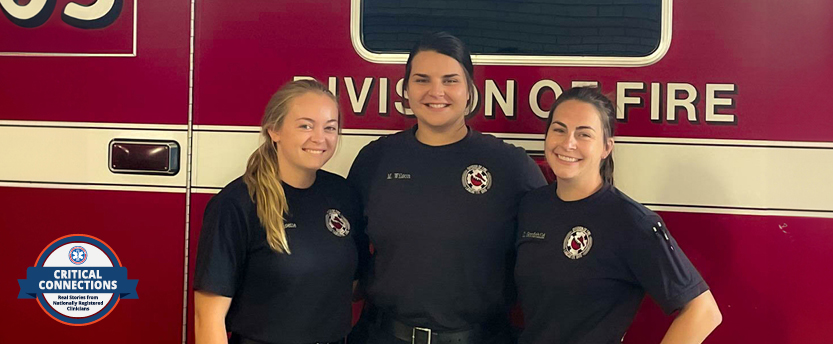
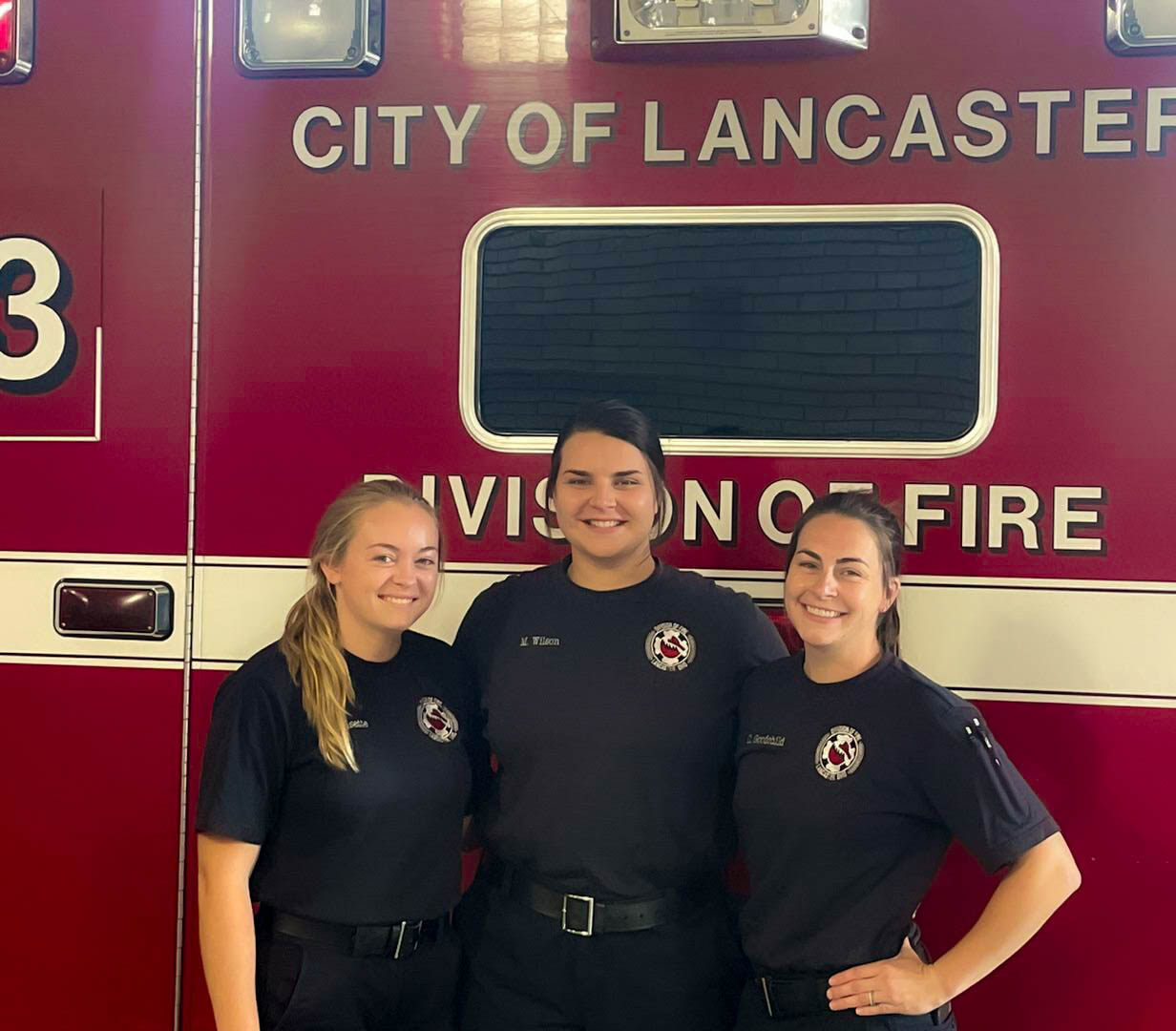
What Wilson could not have known that day, though, is that she would make department history shortly into her career as a paramedic/firefighter with the Lancaster (Ohio) Division of Fire. On July 6, 2023, a remarkable moment unfolded as she, along with two other female colleagues, formed an all-female team to serve on the ambulance for the city’s east side. This groundbreaking event marked a historic first in the department’s 132-year history.
“We just showed up for work and didn’t think it was anything more than that,” Wilson said. “To us, it was three people ready to do our job when someone needed us.” Though she tried to downplay the spotlight placed on her and her colleagues that day, she also acknowledged the significance it could have on young girls. “A little girl was watching us. Her mom came up to us and asked if she could have an autograph and if her daughter could talk to me. That was a special moment.”
History-making runs in Wilson’s family, with her grandmother, Jo Faye Wilson, proudly claiming the title of the first female paramedic at the nearby Bloom Township Fire Department in Lithopolis, Ohio. In an inspiring newspaper clipping dating back to 1973, her grandmother displays remarkable stature as a crucial member of an all-female rescue squad, selflessly volunteering during the day when, as the newspaper so eloquently phrased it, “the male members are at work.” Check out the clipping on Bloom Township Fire Department’s website.
“We sure have come a long way,” said Wilson. “I was proud to learn that my grandma did so much for her community at a time when not many women served on ambulances or fire departments.”
Wilson admits it was not easy becoming a paramedic but stresses the importance of the National Registry, continuing education and staying on top of an ever-changing field.
“Yes, the National Registry exam is hard, but medicine and prehospital care is so advanced nowadays, and it is always changing,” Wilson said. “We can’t rely on the notion that this is the way it has always been. You need to constantly sharpen your skills. You always need to learn and improve. Your patients need that from you, and they deserve it.”
Like anyone in EMS, Wilson says there can be challenges, too. She sometimes grows weary of minor medical issues that likely didn’t require an urgent response or calls to 911 that were not really emergencies at all. At the end of the day, she said it is her responsibility to shift her attitude.
“Oh no, here we go again, or oh goodness, we got woken up for this,” said Wilson. “I could easily think that, but I have to remember this is their emergency. They may not have any family – no one to call or no one to help them. This is my job, and I may make a difference to them in that moment.”
Just recently, Wilson responded to a call where an elderly lady’s oxygen tube had fallen off her face. The lady did not know how to fix her oxygen and was becoming anxious and agitated, so she called the fire department. “I think about those who call 911, especially the elderly. What if this was my grandma or grandpa,” Wilson wondered. “If I couldn’t be there for them, how would I want the responding EMT or paramedic to react to them?”
“I tell people every day that I have the best job in the entire world. And it honestly is the best job because you get to make a difference in someone’s life every single day,” said Wilson. “It may be as simple as a gentle reassuring touch on their arm, or it could be responding to something that is a major emergency – but I know I get to help people.”
Oh, and by the way, Wilson’s brother made a full recovery from his bicycle accident. And her family members all agree. She made the correct decision about her career that day.
City of Lancaster’s first all-female EMS crew: FF Breanna Blansette, FFP Meryah Wilson, and FFP Carlie Goodchild. (Photo credit: Lancaster Division of Fire)
Did you know that we have no database of all practicing EMS clinicians in the United States (US)? It’s true! Although the National Registry is an excellent tool for capturing new entries into the field, it doesn’t effectively quantify the existing workforce or identify those exiting the profession. Why? Because being certified doesn’t necessarily mean one is currently employed in EMS.
To truly understand our EMS workforce, we must examine the influx of new clinicians and those who leave. State-level recertification data is starting to shine a light on this, but we still lack comprehensive national data.
Think of a system for EMS clinicians like the National Provider Identifier (NPI), used by health care providers (e.g., physicians and advanced practice providers). The new EMS-ID, while in its early stages, could be the key to understanding true EMS workforce dynamics. Implementing a robust, nationwide EMS-ID system would allow us to accurately quantify our EMS workforce, paving the way for improved stability and resilience in this vital healthcare sector.
Many aspire to become Paramedics, driven by the noble calling to aid those in need. Polls tell us that EMS clinicians are highly valued in the community and respected by fellow citizens. However, there is growing concern that we face workforce challenges in EMS in many communities across the United States.
These workforce concerns we face are fueled by the discussion of having more students complete EMS educational programs and, in turn, more clinicians providing direct patient care. A recent study by the Committee on Accreditation of Educational Programs for the Emergency Medical Services Professions (CoAEMSP), in collaboration with the National Registry of Emergency Medical Technicians, found that 21% of paramedic students were lost from the potentially available workforce due to attrition, or not completing the paramedic program. This finding signals that attrition from paramedic educational programs represents a significant barrier among the interventions sought to help stabilize the workforce.
Researchers examined data from 640 accredited paramedic educational programs with students enrolled in 2019. Of those enrolled, only 69% obtained certification as a paramedic. Attrition accounted for 21% of the students exiting the potential workforce. Not passing the certification examination accounted for an 11% loss of workforce.
“The National Registry is taking a comprehensive look at the workforce, from educational programs to job satisfaction – even our certification examination,” said Bill Seifarth, CEO and executive director of the National Registry. “For several years, we have heard anecdotes and theories. It was time for a thorough look at what really was happening.”
“To be clear, this is not a solitary study,” said Dr. Ashish Panchal, the National Registry’s research director and one of the study’s authors. “For the past several years and the foreseeable future, our research team has invested heavily in analyzing the EMS workforce. This is deeper than a simple conversation. We are letting science guide us to potential answers and solutions.”
Researchers say this study serves as a foundation for further studies.
“There is more work to be done,” said Seifarth. “Rather than point fingers at what or who may be to blame, we need to find solutions and answers that will help us strengthen EMS. I am proud of the work our team is doing in conjunction with the larger EMS community and other researchers.”
The peer-reviewed Paramedic Educational Program Attrition Accounts for Significant Loss of Potential EMS Workforce was authored by Matthew Ball, MD; Jonathan Powell, MPA, NRP; Christopher Gage, MHS, HRP; Katelynn A. Kapalo, PhD; Jordan Kurth, PhD; Lisa Collard, AS; Michael G. Miller EdD, RN; and Ashish Panchal, MD, PhD. It was published earlier this year and is now available publicly through the Journal of the American College of Physicians.
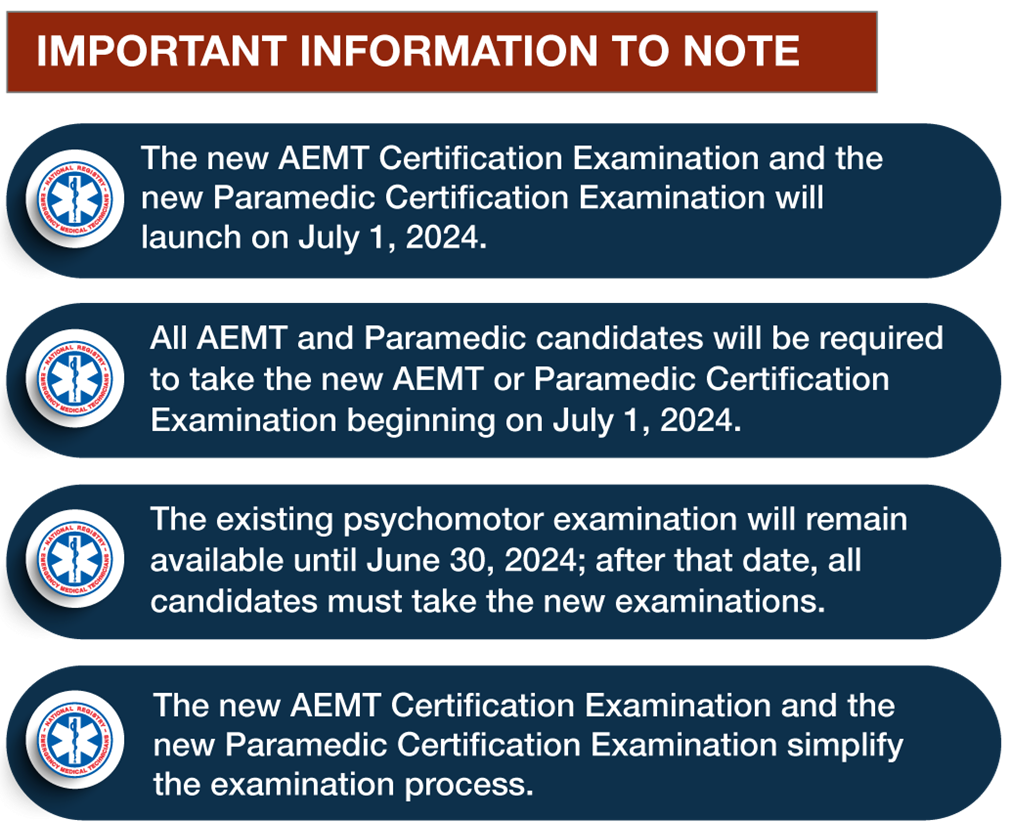
For more than a year the National Registry of EMTs has been communicating the planned transition from the current psychomotor examination to the new AEMT Certification Examination and new Paramedic Certification Examination. Our priority has been to provide this information early and transparently to ensure the transition goes as smoothly as possible.
Based on your feedback, and ongoing conversations with our accreditor, National Commission for Certifying Agencies (NCCA), we are making the following update to the transition plan. The last day that the psychomotor examination will be administered will be June 30, 2024. Beginning on July 1, 2024, and continuing on from that date, every Paramedic and AEMT examination conducted will be the AEMT Certification Examination and the Paramedic Certification Examination.
This change is in direct response to the feedback we have received from the EMS community. We have heard that you wanted an easier process for the Advanced Life Support (ALS) examination, and this change does just that by moving to one exam on one date. It also brings our Paramedic and AEMT examinations in line with most other health-based professions, which have made similar updates in recent years, and matches the best research and science that’s currently available.
We believe this change will simplify the examination process for AEMTs and Paramedics, removing much of the potential confusion we’ve heard. To be clear, we will continue to ensure the existing psychomotor examination remains available and accessible for any candidate throughout the transition period. However, as of July 1, 2024, there will be one examination and one consistent process for everyone seeking this certification.
We appreciate your patience and your feedback letting us know we needed to do a better job clearly articulating this period of change. We will continue to keep you updated and will be posting the most current information here on our website at www.nremt.org and to social media channels.
Columbus, Ohio – The strength and stability of the emergency medical services (EMS) workforce are critical for ensuring the seamless delivery of prehospital care to communities across the United States. Recent concerns over workforce stability have prompted a comprehensive retrospective study using the National EMS Certification database to shed light on workforce dynamics within the EMS workforce. This study, spanning a 4-year period from 2017 to 2021 and encompassing nine states, provides valuable insights into the dynamics of the EMS workforce.
Key findings from the study include:
Turnover Rates: The study found that EMS professionals leaving the workforce ranged from 16% to 26% in the nine states examined. This variation underscores the need for consistent and transparent measures to evaluate workforce stability.
Positive Growth: Despite the concerns regarding turnover, there was a notable 47% increase in EMS professionals entering the workforce compared to those leaving. This resulted in an overall 30% increase in the EMS workforce during the study period.
Patient Care Workforce: Among the subset of EMS clinicians who reported providing patient care, 74% to 77% remained in the workforce, while 29% to 30% entered during the study period.
State-Level Variation: State-level rates of clinicians leaving the workforce ranged from 16% to 19% among certified EMS clinicians and from 19% to 33% among those providing patient care.
The study’s objective was to comprehensively evaluate changes in the EMS workforce, including the number of clinicians entering, staying, and leaving the profession. By providing a detailed analysis of EMS workforce dynamics, this research aims to serve as a foundation for addressing workforce challenges and improving the stability of emergency medical care.
Dr. Ashish Panchal, the National Registry of EMT’s Research Director, stated, “This comprehensive evaluation offers valuable insights into the EMS workforce dynamics in nine states, providing a baseline for further research and initiatives aimed at enhancing workforce stability. Understanding the entry and retention of clinicians in the workforce is crucial for ensuring the consistent delivery of high-quality prehospital care.”
The findings underscore the importance of continued efforts to support and strengthen the EMS workforce, which plays a pivotal role in saving lives and maintaining public health and safety.
National Registry announces article series celebrating EMS personnel across the nation
Columbus, Ohio – The National Registry of Emergency Medical Technicians is proud to announce the awarding of its first-ever 50 Years of National Registry certificate to Bill Wood, a New Hampshire paramedic/firefighter. The award also kicks off an article series highlighting Nationally Registered personnel across the nation.
The National Registry’s emerging article series will highlight Bill Wood and several other Nationally Registered personnel across the nation, from departments large and small, including the military.
“We see you,” says Bill Seifarth, Executive Director and CEO of the National Registry. “Every day you are making important decisions that impact the lives of people and their families who have dialed 9-1-1 in a time of need. It is important that we celebrate what our Nationally Registered EMRs, EMTs, AEMTs and Paramedics do.”
The article series run monthly during the certification window ending March 31 and then every other month during the summer.
If you would like to celebrate your National Registry service, or the service of a fellow provider, we invite you to partake in this series by sharing your experience. Please contact us at CommDept@nremt.org with any inquiries.