During the National Registry of EMT’s Assessment Committee Meeting, held in February 2025 in Columbus, Ohio, the Assessment Committee ratified Resolution 25-01 (Proficiency Evaluation Pathway). Related to the draft resolution, Policy 81.22 and Policy 81.24 have been drafted and updated, respectively. The draft policies are now ready for public comment.
Transparency, collaboration, and stakeholder input are essential to the National Registry. As such, the National Registry provides a 60-day stakeholder comment period to comment on draft resolutions and draft policies. The public comment period closed on July 27, 2025.
Summary For Public Comment on Policy 81.22 (Proficiency Evaluation Pathway)
The National Registry’s Board of Directors has proposed a new policy regarding the use of proficiency evaluations for individuals who are not eligible for National Registry certification. This policy outlines how these evaluations are specifically intended for professionals whose original education did not include EMS training, such as EMS instructors, nurses or other healthcare providers, and are required by their state to demonstrate EMS competency. It is important to note that proficiency evaluations do not lead to National Registry certification.
This policy helps ensure consistent standards for approval, testing, security, and data handling, while supporting the needs of states and candidates. The public is invited to review the proposed policy and provide comments to help shape this process and ensure it serves both the healthcare system and public interest effectively.
Summary For Public Comment on Policy 81.24 (Examination Result Transfer)
Additionally, the National Registry’s Board of Directors has proposed an update to this policy that defines how computer-based certification examination results may be transferred from one application type to another within the same certification level. This policy is designed to support EMS clinicians who may need to change the purpose of their application, such as switching from an initial certification to a recertification by examination, while still honoring valid, previously earned examination results. The policy establishes clear eligibility criteria, timeframes, and procedures for requesting a transfer and excludes results from proficiency evaluations and certain outdated examinations.
This policy is important because it helps qualified EMS clinicians avoid repeating valid assessments unnecessarily, provided all eligibility requirements are met. It also ensures the integrity of the certification process by restricting transfers only to appropriate situations and within valid time periods. The public is encouraged to review this proposed policy and offer comments to help ensure it supports workforce flexibility while maintaining high standards for EMS certification and public safety.
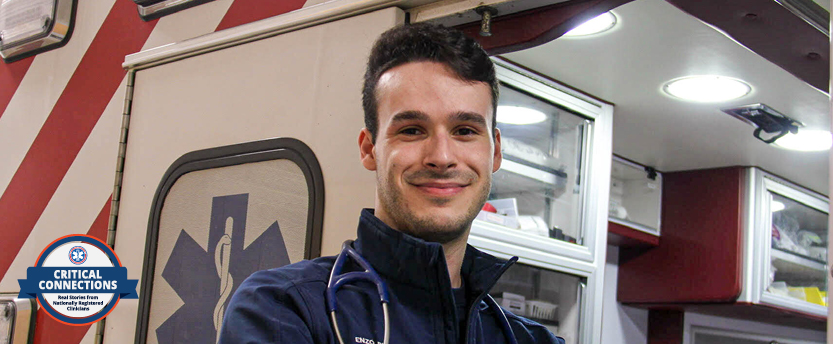
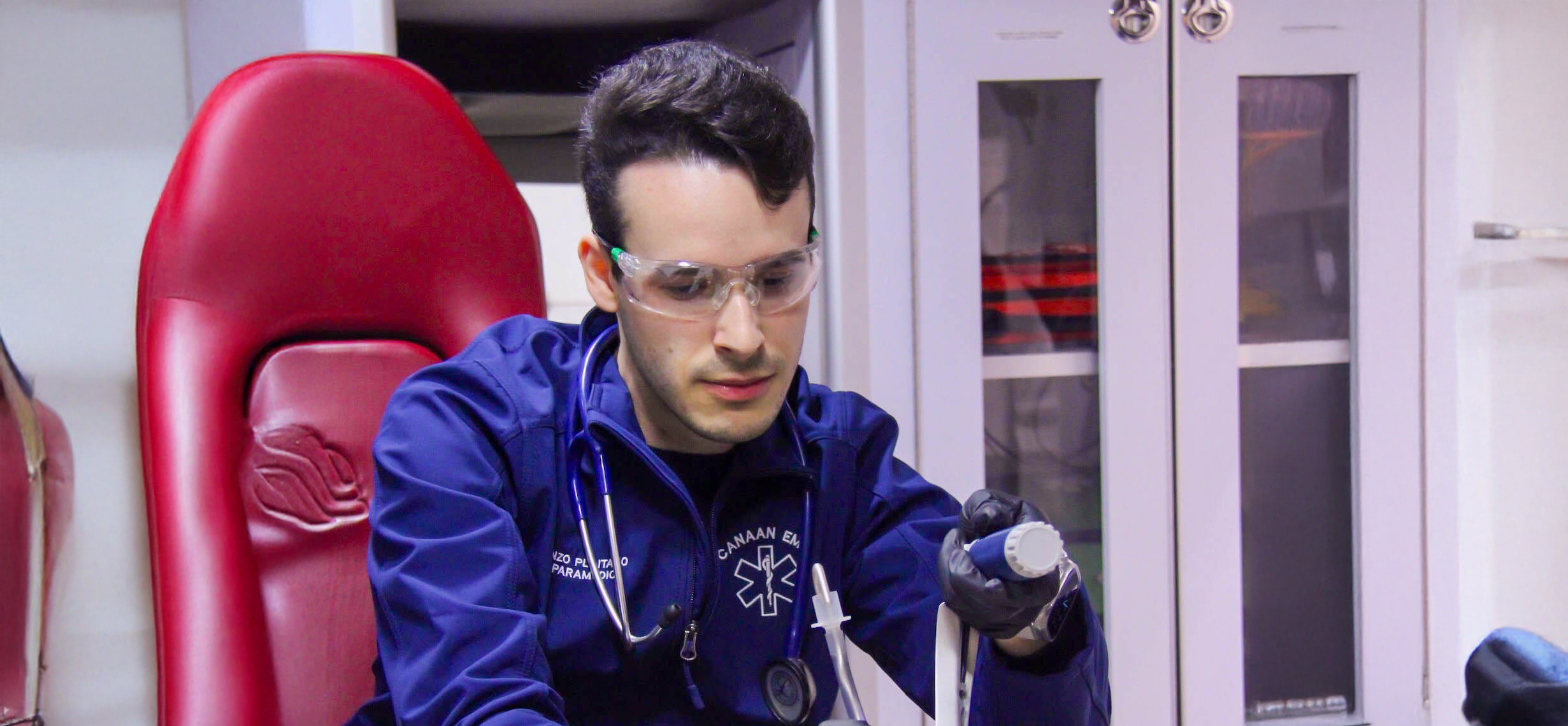
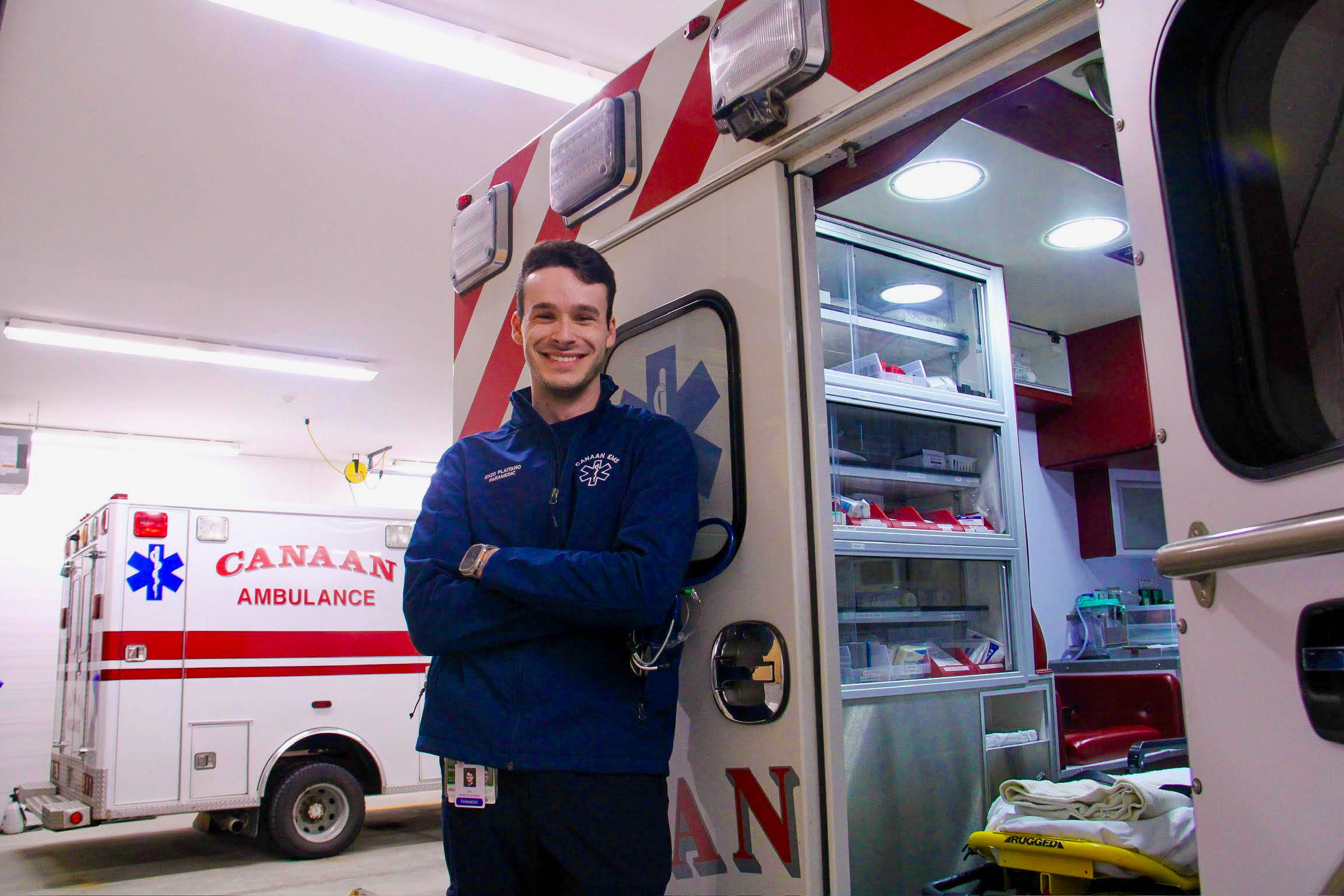
Emergency Medical Services (EMS) clinicians are often hailed as heroes, delivering life-saving care in the most challenging and unpredictable circumstances. Yet, the demands of the job come with a heavy toll. Enzo Plaitano, a licensed paramedic and third-year PhD candidate in the Center for Technology and Behavioral Health (CTBH) at Dartmouth College, is on a mission to address the unique and difficult challenges faced by EMS clinicians. Through innovative research and lived experience, Enzo is working to create tools and strategies that support the mental health and well-being of his peers.
For Enzo, this mission is deeply personal. “I routinely experience how this tough profession impacts our stress and mental health, but I also recognize how extremely rewarding it is to play a part in people’s individual life-changing moments,” he says. “However, I’ve seen the stress of this job contribute to serious mental health and substance use ramifications in my coworkers which can really affect their entire lives.” These experiences inspired Enzo to pursue his line of research aimed at understanding and eventually improving coping strategies and health risk behaviors in EMS clinicians.
Enzo and his mentors at Dartmouth College were recently awarded a prestigious National Research Fellowship Award (1F31DA062393-01) from the National Institute on Drug Abuse (NIDA), one of the key institutes at the National Institutes of Health (NIH). This NIH fellowship provides Enzo with expanded access to an interdisciplinary team of experts at the National Registry of EMTs and the National Center for PTSD to support his structured research training. It also gives Enzo the opportunity to lead his own study.
With funding from the NIH, Enzo’s research focuses on understanding the relationships between stress, emotion-regulation, and health risk behaviors in the daily lives of EMS clinicians. In collaboration with researchers at the National Registry of EMTs, Enzo’s longitudinal study recruited 110 full-time EMS clinicians from across the country. Over the course of an entire month, participants completed brief surveys five times per day to understand relationships between real-time changes in stress, emotion-regulation, and health-risk behaviors. This cutting-edge approach, known as ecological momentary assessments, offered a unique window into the challenges faced by EMS professionals.
Dr. Ashish Panchal, Research and Fellowship Director at the National Registry of EMTs, is a mentor on Enzo’s study and NIH-funded Research Fellowship Training Award. Dr. Panchal emphasizes the importance of this research for the entire EMS community. “Enzo’s work is groundbreaking,” says Dr. Panchal. “By examining how changes in stress and emotion-regulation impact health-risk behaviors before, during, and after an EMS shift, we can use this data to develop future tools that provide real-time support and promote healthier coping strategies for EMS clinicians in this high-stress career.”
Enzo’s ultimate goal is to design a data-informed digital health application tailored to EMS clinicians. This app would offer real-time resources to help manage stress as it occurs, improving emotion-regulation and reducing health risk behaviors. “Stress is inevitable in our high-risk profession,” Enzo explains. “My overall goal is to give EMS clinicians tools to navigate those moments and improve their ability to cope effectively.”
This work builds on Enzo’s decade-long experience in EMS, currently as a nationally registered paramedic, and his passion for advancing the overall health of his peers. This EMS journey began at the age of 16 years old when he was encouraged to complete a local EMT course during highschool. Currently, Enzo still runs calls as a paramedic and believes that his time out in the field with his coworkers is integral to his research efforts. “I have this really unique opportunity where I often experience these challenges of EMS firsthand and can bring these experiences back to my research to help find solutions.”
Enzo’s long-term career goal is to continue this line of research as an NIH-funded investigator at a large, academic institution. He plans to continue learning how different risk factors impact EMS clinicians across time and in real-life environments, then using these findings to develop and test robust digital health interventions in this population. The National Registry’s collaboration ensures that these findings will reach the broader EMS community, and make a lasting and national impact on the entire EMS profession.
Enzo’s story is a powerful reminder of the dedication and innovation within the EMS profession. By combining his personal EMS experience with cutting-edge research and training, he is helping to pave the way for a healthier and more resilient EMS workforce. “There are many challenges in EMS that we cannot change, but this research will allow us to better understand how variation in stress may impact health risk behaviors, and if improving emotion regulation through a future digital health app might reduce risky behaviors.” Through our initiatives supporting Enzo’s research, education, and training, EMS clinicians can look forward to a future where their mental health and well-being are prioritized, enabling them to continue their life-saving work with confidence and support.
This EMS Week, we celebrate more than just a tradition. We celebrate a community of dedicated professionals who bring calm to chaos, care to crisis, and hope to the most difficult moments.
On behalf of the National Registry of Emergency Medical Technicians, we extend our deepest gratitude to every EMS clinician, educator, medical director, employer, and organization working tirelessly to protect and serve. Your expertise, resilience, and compassion are the foundation of emergency care in our nation, our territories, and our military.
This year, we also proudly recognize a very special milestone: the 50th Anniversary of the National Association of Emergency Medical Technicians (NAEMT). For five decades, NAEMT has been a tireless advocate for EMS professionals, supporting you through education, advocacy, and advancement of the profession. We are grateful for the collaboration and shared mission we have enjoyed over the years, and we look forward to many more decades of partnership and progress together.
At the National Registry, we remain steadfast in our purpose: to support and uphold the excellence of EMS clinicians. While the world and the field of EMS continue to evolve, one thing remains unchanged and that is our commitment to you, and to being the Nation’s Emergency Medical Services Certification Organization.
To all who answer the call, thank you! You are where emergency care begins, and the impact you make is immeasurable. As we celebrate this week and these remarkable anniversaries, know that your service and sacrifice do not go unnoticed.
Happy EMS Week, and congratulations to NAEMT on 50 years of extraordinary service.
With gratitude,
Bill Seifarth CEO and Executive Director Mike McEvoy Board Chair
Media Contact: Shane Cartmill Public Relations and Media Manager scartmill@nremt.org
About the National Registry of Emergency Medical Technicians The National Registry, established in 1970 as a non-profit organization, is the Nation’s Emergency Medical Services Certification organization. The National Registry is accredited by the National Commission for Certifying Agencies (NCCA), the accreditation body of the Institute for Credentialing Excellence. The National Registry maintains NCCA accreditation for each of the four certification programs: Emergency Medical Responder (NREMR), Emergency Medical Technician (NREMT), Advanced Emergency Medical Technician (NRAEMT), and Paramedic (NRP). Credentialing protects the public, assures consumers that professionals have met standards of practice, advances the EMS profession, and establishes standards of professional knowledge, skills, and practice. Additional information is available at NREMT.org and LinkedIn, Facebook, Instagram, YouTube, and Reddit.
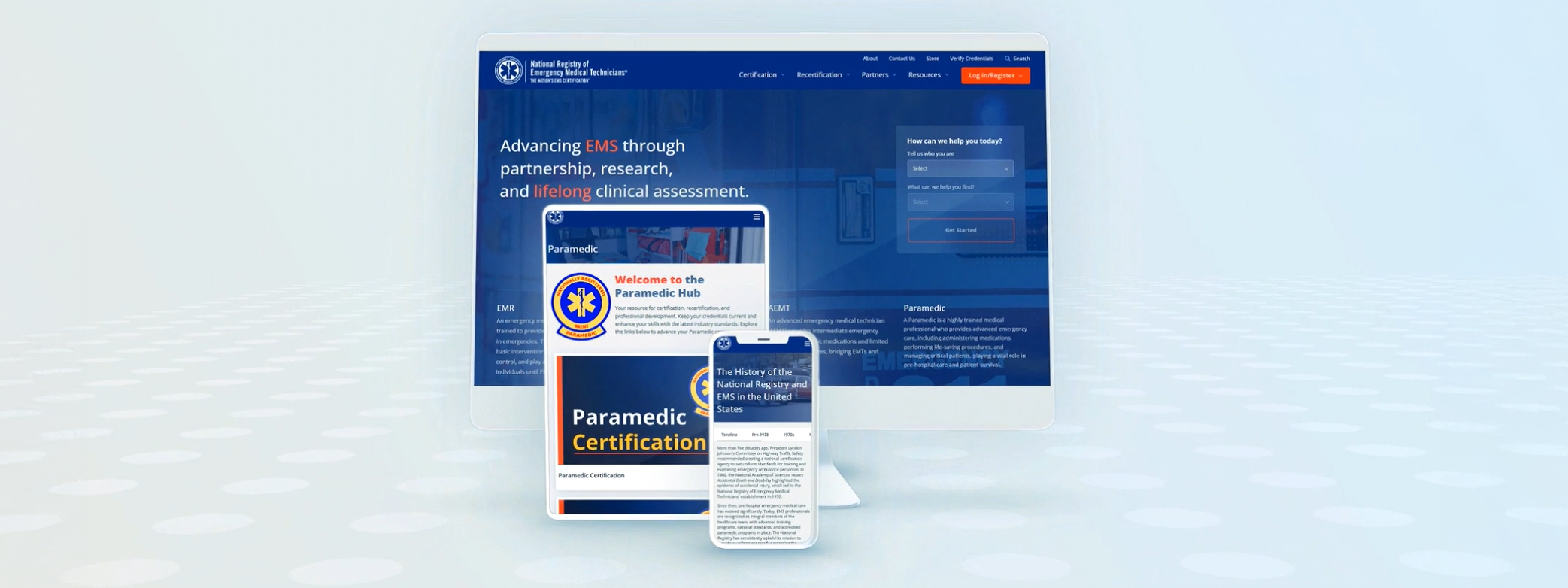
The National Registry of Emergency Medical Technicians (National Registry) has teamed up with Franklin University in Columbus, Ohio, to create a new, modernized public-facing website (www.nremt.org). This collaboration is designed to benefit both organizations while supporting students and the broader EMS community.
Through this collaboration, the National Registry will maintain a fresh, dynamic online presence while offering Franklin University’s students the chance to gain valuable real-world experience. “This initiative allows us to improve our website and make it modern and engaging while also supporting future professionals by giving them hands-on opportunities,” said Bill Seifarth, CEO and Executive Director of the National Registry.
Beyond the website project, the collaboration is expanding to include future Franklin University online B.S. in Communications classes working with the National Registry’s Marketing and Communications team. Together, they will analyze the impact of the National Registry’s social media presence and its messaging to the EMS community.
“Our students will have the chance to work on a high-impact project that directly supports the EMS community,” said Dr. Brenda Jones, Chair of the Communications, Behavioral, & Natural Sciences Department at Franklin University. “It’s a meaningful way to bridge classroom learning with practical application.”
By working together, the National Registry and Franklin University are fostering a collaboration that enhances digital engagement for EMS professionals while also strengthening career pathways for students. The project underscores the importance of collaboration between educational institutions and organizations dedicated to public service.
Media Contact: Shane Cartmill Public Relations and Media Manager scartmill@nremt.org
About the National Registry of Emergency Medical Technicians The National Registry, established in 1970 as a non-profit organization, is the Nation’s Emergency Medical Services Certification organization. The National Registry is accredited by the National Commission for Certifying Agencies (NCCA), the accreditation body of the Institute for Credentialing Excellence. The National Registry maintains NCCA accreditation for each of the four certification programs: Emergency Medical Responder (NREMR), Emergency Medical Technician (NREMT), Advanced Emergency Medical Technician (NRAEMT), and Paramedic (NRP). Credentialing protects the public, assures consumers that professionals have met standards of practice, advances the EMS profession, and establishes standards of professional knowledge, skills, and practice. Additional information is available at NREMT.org and LinkedIn, Facebook, Instagram, YouTube, and Reddit.
Columbus, Ohio – The National Registry of Emergency Medical Technicians (National Registry) today announced that the updated Basic Life Support (BLS) Certification Examinations for Emergency Medical Responders (EMR) and Emergency Medical Technicians (EMT) went live Monday, April 7, 2025. Following a planned first week of implementation, we are now excited to share the news and highlight the improvements that ensure the certification process reflects the current skills and knowledge required of today’s emergency medical services (EMS) clinicians.
Key Updates to the BLS Certification Examinations
The National Registry conducted an extensive BLS practice analysis to ensure the new examination blueprint reflects the evolving landscape of EMS practice. Notable updates include:
Modernized Examination Domains:
Scene Size-Up and Safety
Primary Assessment
Secondary Assessment
Patient Treatment and Transport
Operations
Revised Content: The content has been updated to better align with the real-world tasks performed by EMRs and EMTs, based on insights from industry-based subject matter experts (SMEs).
No Cost Increase: Examination fees remain unchanged.
Familiar Testing Format: The computer adaptive examinations will continue to be delivered via Pearson VUE testing centers or OnVUE remote proctoring.
“Ensuring that EMS professionals are equipped with the most current knowledge and skills is critical to public safety and effective patient care,” said Bill Seifarth, Executive Director of the National Registry. “These updated examinations reflect the latest advancements in emergency medical practice, reinforcing our commitment to setting a high standard for EMS certification.”
Stay Informed for more detailed information about the updates, the following resources are available:
Webinars: Two comprehensive webinars from the National Association of EMS Educators (NAEMSE) and the National Registry are avaiable to watch on demand.
Why These Updates Matter
These changes are important to ensure that the certification examinations remain relevant and reflective of the competencies necessary for safe and effective EMS practice. The updates are the result of extensive collaboration with EMS professionals, including ride-alongs, event reviews, observational studies, validation surveys, and interviews. This evidence-based approach underscores the National Registry’s commitment to maintaining rigorous and up-to-date certification standards for the EMS community.
Media Contact: Shane Cartmill Public Relations and Media Manager scartmill@nremt.org
About the National Registry of Emergency Medical Technicians The National Registry, established in 1970 as a non-profit organization, is the Nation’s Emergency Medical Services Certification organization. The National Registry is accredited by the National Commission for Certifying Agencies (NCCA), the accreditation body of the Institute for Credentialing Excellence. The National Registry maintains NCCA accreditation for each of the four certification programs: Emergency Medical Responder (NREMR), Emergency Medical Technician (NREMT), Advanced Emergency Medical Technician (NRAEMT), and Paramedic (NRP). Credentialing protects the public, assures consumers that professionals have met standards of practice, advances the EMS profession, and establishes standards of professional knowledge, skills, and practice. Additional information is available at NREMT.org and LinkedIn, Facebook, Instagram, YouTube, and Reddit.
“A strong program requires a strong educational foundation. Dedicated and passionate instructors, along with supportive ancillary staff, are essential because everyone plays a vital role in this process.”
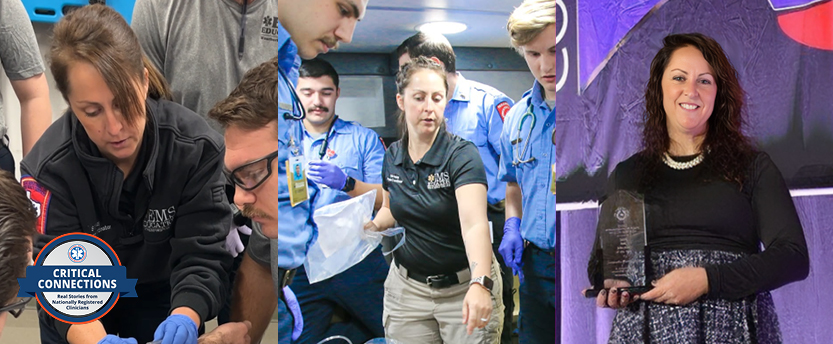
When Samantha Grimsley was named the 2024 Texas EMS Educator of the Year, her first thought was simple: They must have made a mistake. “I thought they had the wrong person,” she admits. But to the people who know her best—her colleagues and students—it was obvious why she was chosen. She doesn’t just teach EMS. She reimagines how it’s done.
As the program director at Weatherford College in Texas, Grimsley has built a reputation for setting high expectations, offering demanding hands-on training, and fostering a deep sense of community. Her path from paramedic to award-winning educator is proof that great teachers don’t just prepare students for a job—they prepare them for a life-changing profession.
From the Field to the Classroom
In 2006, fresh out of high school, Grimsley stepped into her first EMS class. What started as a career path quickly turned into a calling. She became an EMT, then a paramedic, and eventually a field instructor. She’s been the rookie terrified on her first call. She’s been the experienced medic making split-second decisions. And now, she’s the educator ensuring her students are ready for both.
“I’ve dabbled in just about every area of medicine you possibly could,” she says. “That helps me answer their questions and point them in the right direction—whether they want to work on ambulances, go into flight medicine, or do hospital care.”
EMS is tough. Grimsley can’t sugarcoat things as mistakes have real consequences. A missed symptom, a delayed decision, or a moment of hesitation can mean everything. From day one, she makes sure her students feel that responsibility.
Her approach is simple: If they can handle the pressure in training, they’ll be ready when the real moment comes.
A New Approach to EMS Education
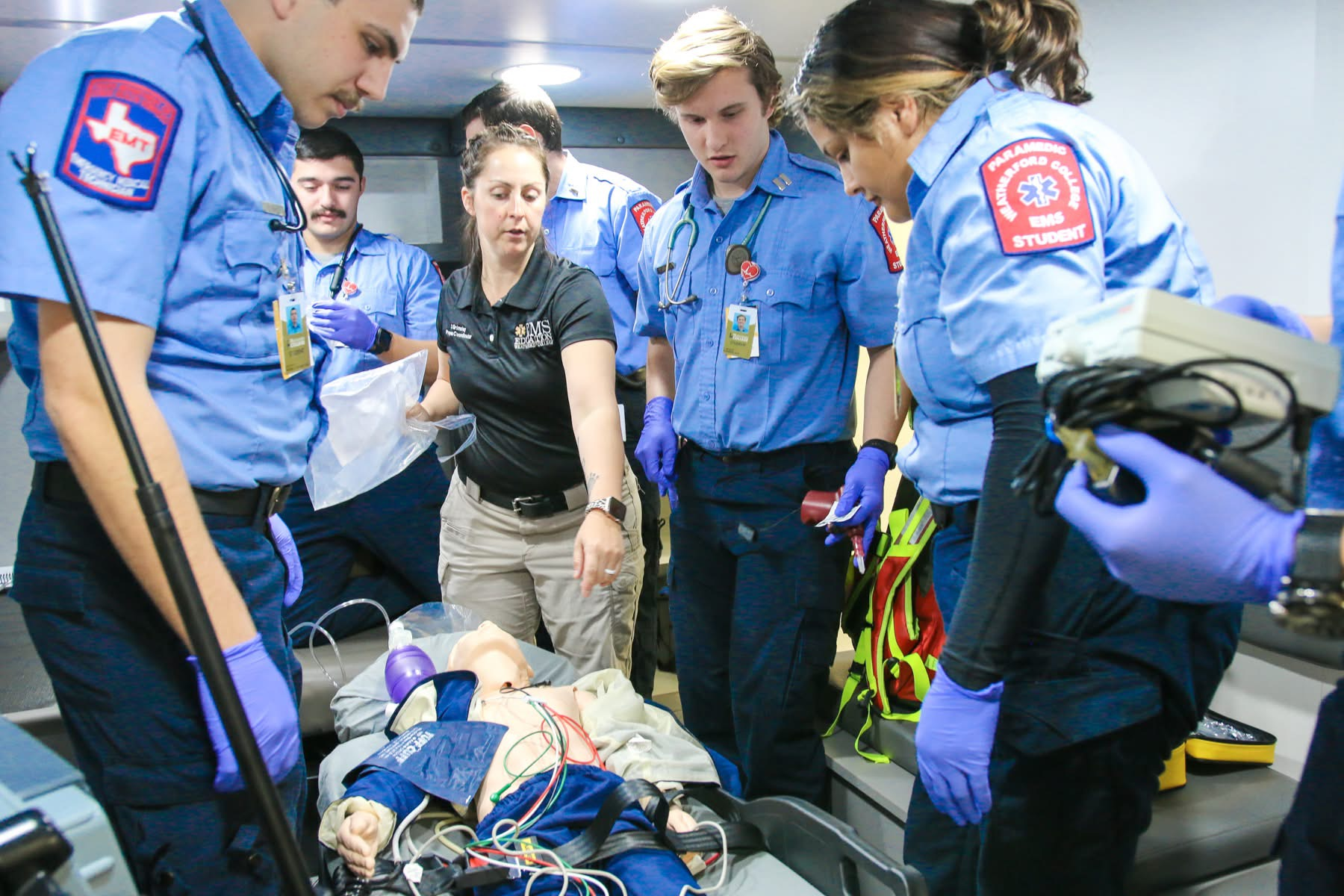
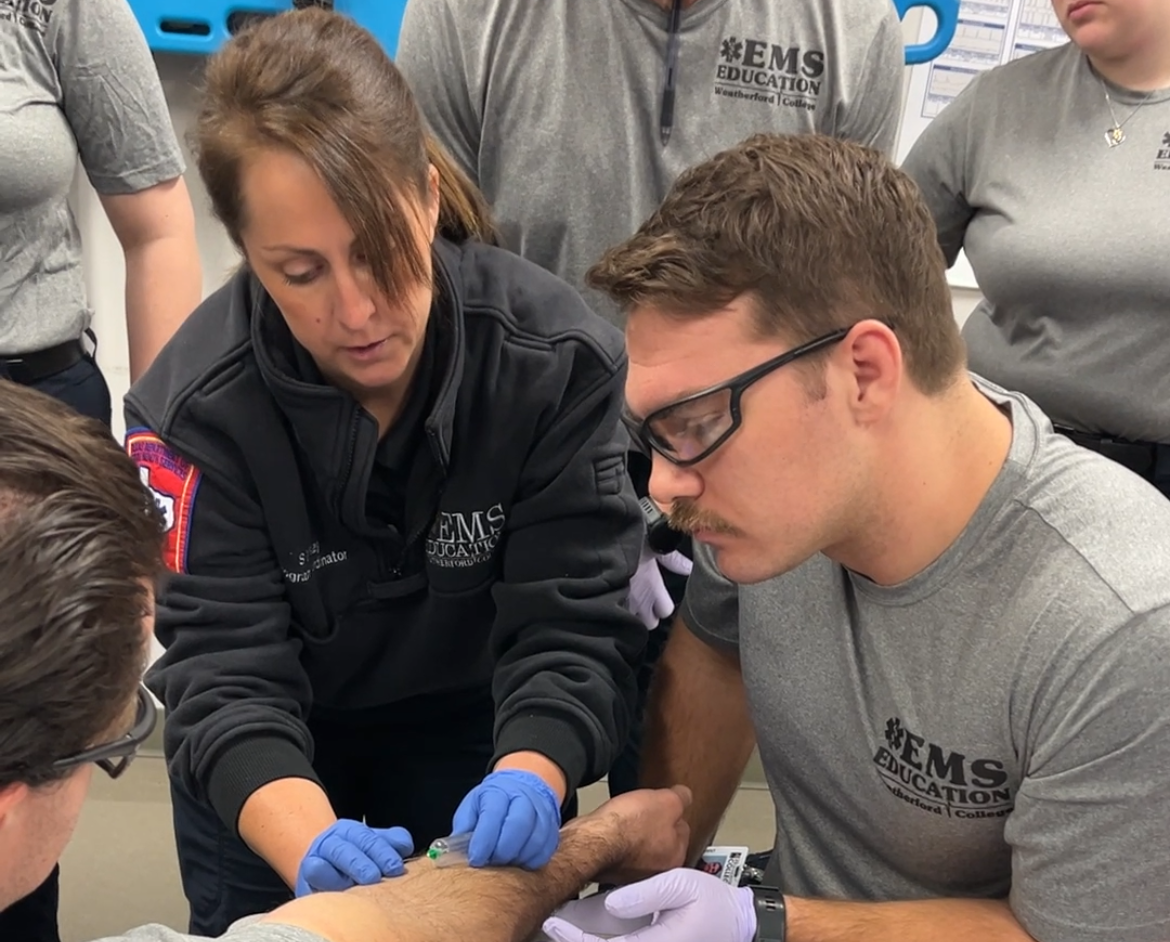
A lecture can only teach so much. A PowerPoint presentation won’t teach a student’s hands to stop shaking when they have to start an IV in the back of a moving ambulance. That’s why Grimsley’s students don’t just sit in a classroom. They’re in hospitals, firehouses, and ambulance shifts, treating real patients under real pressures.
For every question a student asks, she doesn’t just give an answer—she gives them a scenario, a real-world case that forces them to think. “I don’t want them just passing an exam,” she says. “I want them stepping into their first call with confidence.”
The program at Weatherford College isn’t about checking boxes to pass a test. It’s about creating EMS professionals who can walk into their first shift knowing they belong there. “We’re not just training EMTs and paramedics, we’re building a family,” she says. From the first day, she emphasizes teamwork, problem-solving, and pushing past the bare minimum. “Once you walk through this door, we take care of one another.”
Known as the “mom” of the program, she keeps her door open—whether it’s to talk through an academic struggle, a personal challenge, or the weight of their first tough call. She answers emails at midnight, takes phone calls from graduates on their first shifts, and makes sure no one in her program feels alone.
Grimsley’s work also doesn’t end when the class bell rings. She regularly brings together EMS program directors from across North Texas, sharing ideas and tackling industry-wide challenges like recruitment and retention.
“I try to shake them up a little,” Grimsley shares. “I call it the fear factor because I want them to understand—this job isn’t all rainbows and sunshine. One day, someone might hand you their baby who isn’t breathing, and in that moment, it’s all on you.”
Pushing for High Standards
EMS isn’t a profession where “good enough” is an option. Grimsley is a fierce advocate of the National Registry of Emergency Medical Technicians (National Registry) and emphasizes the importance of maintaining national certification. She knows certification isn’t just a formality—it’s a safeguard for both providers and the public.
“It’s not just about passing a test,” she says. “The National Registry sets the bar for what’s expected in this field. It ensures EMS providers are ready for the job and can protect the public.”
Beyond that, she believes national certification makes the profession stronger. It creates consistency across EMS programs, allowing providers to move between states or agencies without gaps in training. High standards don’t just help individuals, they push the whole field forward.
As an item writer for the National Registry, she plays a direct role in shaping those standards, helping to craft exam questions that reflect the real challenges EMTs and paramedics will face in the field.
A Lasting Legacy
For Grimsley, nothing beats graduation day. Watching her students walk across the stage, she doesn’t just see future EMTs and paramedics. She sees people ready to handle the toughest days of someone’s life.
“Seeing how far they’ve come and knowing the difference they’ll make—that’s why I do this,” she says.
But her influence doesn’t stop there. Many of her former students return as instructors or preceptors, training the next wave of EMS professionals. Some check in with career updates, seeking advice as they move forward. Others run into her on calls, now experienced paramedics guiding fresh recruits—just like she once did.
She knows EMS education is about more than skills. It’s about building a mindset—one that values teamwork, adaptability, and the drive to be better every day. EMS is unpredictable. It changes constantly. That mindset is what keeps it strong. As the field faces staffing shortages and evolving demands, educators like Grimsley are essential. She’s not just training students for a job. She’s preparing them for a career where every second counts, and every call is a chance to change a life.
EMS needs professionals who push limits, demand better, and refuse to settle. Grimsley isn’t just answering that call, she’s making sure the next generation is ready to do the same.
Columbus, Ohio – The National Registry of Emergency Medical Technicians (NREMT) today announced the forthcoming launch of updated Basic Life Support (BLS) Certification Examinations for Emergency Medical Responders (EMR) and Emergency Medical Technicians (EMT), effective April 7, 2025. This update marks a significant advancement in ensuring that the certification process aligns with the current skills and knowledge required of today’s emergency medical services (EMS) professionals.
Key Updates to the BLS Certification Examinations The National Registry conducted an extensive BLS practice analysis to ensure the new examination blueprint reflects the evolving landscape of EMS practice. Notable updates include:
Modernized Examination Domains:
Scene Size-Up and Safety
Primary Assessment
Secondary Assessment
Patient Treatment and Transport
Operations
Revised Content: The content has been updated to better align with the real-world tasks performed by EMRs and EMTs, based on insights from subject matter experts (SMEs).
No Cost Increase: Examination fees remain unchanged.
Familiar Testing Format: The computer adaptive examinations will continue to be delivered via Pearson VUE testing centers or OnVUE remote proctoring.
Stay Informed For more detailed information about the upcoming updates, the following resources are available:
Podcast: Listen to the Registry Insider podcast/vodcast, where experts discuss the updates and their implications for those preparing for the EMR or EMT certification examination.
Webinars: Register for two upcoming webinars to gain an in-depth understanding of the new examination blueprint and ask questions directly.
Why These Updates Matter These changes ensure that the certification examinations remain relevant and reflective of the competencies necessary for safe and effective EMS practice. The updates are the result of extensive collaboration with EMS professionals, including ride-alongs, event reviews, observational studies, surveys, and interviews. This evidence-based approach underscores the National Registry’s commitment to maintaining rigorous and up-to-date certification standards for the EMS community.
Media Contact: Shane Cartmill Public Relations and Media Manager scartmill@nremt.org
About the National Registry of Emergency Medical Technicians
The National Registry, established in 1970 as a non-profit organization, is the Nation’s Emergency Medical Services Certification organization. The National Registry is accredited by the National Commission for Certifying Agencies (NCCA), the accreditation body of the Institute for Credentialing Excellence. The National Registry maintains NCCA accreditation for each of the four certification programs: Emergency Medical Responder (NREMR), Emergency Medical Technician (NREMT), Advanced Emergency Medical Technician (NRAEMT), and Paramedic (NRP). Credentialing protects the public, assures consumers that professionals have met standards of practice, advances the EMS profession, and establishes standards of professional knowledge, skills, and practice. Additional information is available at NREMT.org and LinkedIn, Facebook, Instagram, YouTube, Reddit, and X.
(Columbus, Ohio) – The Board of Directors of the National Registry of Emergency Medical Technicians recently approved a resolution and a motion for public comment. Resolution 24-14 (Discontinuation of the MKI Initiative) and Motion 24-12 are now available for a 60-day public comment period.
Summary of Resolution 24-14: The Board of Directors of the National Registry of Emergency Medical Technicians proposes sunsetting the Mark King Initiative (MKI) as a certification pathway.
The Registry will update policies, phase out MKI, and maintain a database for those who are “State Licensed Only” clinicians. This change reinforces the Registry’s commitment to integrity, fairness, and credibility within our certification process.
Those who are interested may read the full resolution and provide feedback here.
Summary of Motion 24-12: The National Registry’s Board of Director’s Assessment Committee moves to update the Appeals Policy to eliminate the provision for in-person meetings and establish virtual meetings as the sole method for conducting appeals.
This update aims to streamline the appeals process, increase accessibility, enhance safety, and ensure efficiency and consistency in how appeals are conducted.
“The National Registry acknowledges that transparency, collaboration, and stakeholder input are fundamental to our operations and are highly valued by you,” said Bill Seifarth, executive director and CEO of the National Registry. “We invite you to review and provide feedback on the resolution.”
The 60-day public comment period ends on January 19, 2025.
The following information is archived for transparency and historical purposes.
During the Board Meeting, held November 13 and 14, 2024 in Columbus, Ohio, the National Registry’s Board of Directors approved Resolution 24-14 (Discontinuation of the MKI Initiative) and Motion 24-12 (Modification of Appeals Policy) for public comment.
Transparency, collaboration, and stakeholder input are essential to the National Registry. As such, the National Registry provides a 60-day stakeholder comment period to comment on resolutions. Please see the full summary and an explanation of Resolution 24-14 and Motion 24-12 below. The comment period closed January 19, 2025.
Summary of 24-Resolution 24-14 (Public Comment closed on January 19, 2025): The Board of Directors of the National Registry of Emergency Medical Technicians proposes sunsetting the Mark King Initiative (MKI) as a certification pathway.
The Registry will update policies, phase out MKI, and maintain a database for those who are “State Licensed Only” clinicians. This change reinforces the Registry’s commitment to integrity, fairness and credibility within our certification process. At this time, the National Registry has established certification pathways that meet NCCA accreditation standards
Summary of Motion 24-12 (Public Comment closed on January 19, 2025): The National Registry’s Board of Director’s Assessment Committee moves to update the Appeals Policy to eliminate the provision for in-person meetings and establish virtual meetings as the sole method for conducting appeals.
This update aims to streamline the appeals process, increase accessibility, enhance safety, and ensure efficiency and consistency in how appeals are conducted. Since the COVID-19 pandemic virtual meetings are cost-effective and widely accepted for the certificant as well as the National Registry.
COLUMBUS, OH — The Board of Directors of the National Registry of Emergency Technicians is seeking qualified applicants for the Physician-at-large Board position.
Board members serve four-year terms and are required to attend two in-person NREMT Board of Directors meetings each year. Members-at-large may also sit on up to three Board committees that require additional in-person meetings or conference calls.
Candidates for this position are expected to have demonstrable experience in EMS leadership and education in the provision of emergency care. Previous involvement in NREMT initiatives is preferred.
To be considered for this position, interested parties should send a cover letter and CV to the Board Nominations Committee Chair, Debbi Cason, at board@nremt.org. Submissions received after October 7, 2018 will not be considered.
From the received applications, the Nominations Committee will select a slate of qualified candidates. Elections for the position will be held at the November meeting of the NREMT Board of Directors, and terms will begin January 1, 2019.
About the National Registry
Since its founding in 1970, the National Registry of EMTs (National Registry) has offered the nation assurance that the men and women providing emergency treatment in the out-of-hospital setting are capable of providing the care that patients and their loved ones deserve. As the Nation’s EMS Certification organization, the National Registry provides psychometrically-valid proof of entry-level competence for Nationally Certified EMS personnel through rigorous cognitive and psychomotor examinations. National EMS Certification is offered at four levels and must be maintained biennially by demonstrating continued education and skills competence. To date, the National Registry has certified more than 1.8 million EMS professionals. To learn more about the National Registry please visit www.nremt.org.